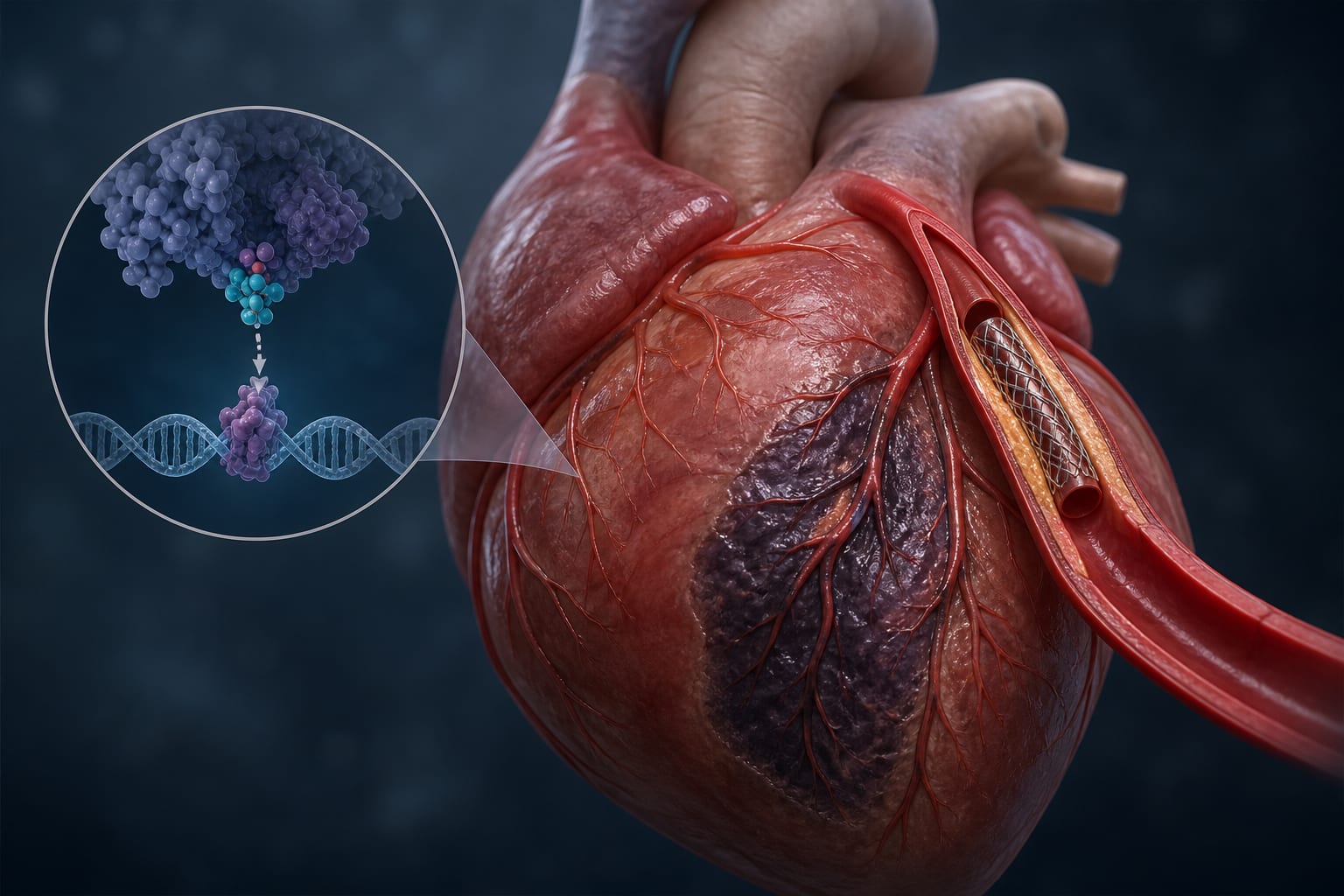
Clinical Scorecard: Takotsubo Syndrome Revisited: Findings From a Multicenter Cohort Study
At a Glance
Category
Detail
Condition
Takotsubo syndrome (TTS), a cardiac syndrome characterized in this study by wall motion abnormalities and new ECG changes or troponin elevation.
Key Mechanisms
Pathophysiology remains incompletely understood; proposed contributors include excess circulating or locally released catecholamines, adrenoreceptor modulation, coronary spasm, endothelial dysfunction, and brain–heart axis interactions.
Target Population
Adults aged 18 years or older diagnosed with TTS at 13 German tertiary care centers from January 2013 through December 2024.
Care Setting
Retrospective multicenter study in German tertiary care centers, examining in-hospital complications and short-term cardiac recovery.
Key Highlights
The study classified presumed triggers as acute neurologic, other physical, emotional, or not identifiable.
Acute neurologic triggers included stroke, subarachnoid hemorrhage, seizure or status epilepticus, other intracranial hemorrhage, and acute migraine.
The composite in-hospital cardiac-complication endpoint included new atrial fibrillation, VT/VF, pulmonary edema, cardiogenic shock, or death.
Admission assessment recorded LVEF, wall motion pattern, and right ventricular function.
The study aimed to compare cardiac dysfunction by trigger type, examine short-term recovery, and identify patients vulnerable to critical in-hospital courses.
Guideline-Based Recommendations
Diagnosis
In the study, TTS was identified by wall motion abnormalities together with new ECG changes or troponin elevation.
Admission assessment included left ventricular ejection fraction (LVEF), wall motion pattern, and right ventricular function.
Presumed triggers were categorized as acute neurologic, other physical, emotional, or not identifiable.
Management
The provided source describes study design and assessment methods, not specific treatment recommendations.
Management should not be inferred from this study excerpt; it does not compare therapies or establish a treatment protocol.
Monitoring & Follow-up
The study assessed in-hospital cardiac complications, including new atrial fibrillation, VT/VF, pulmonary edema, cardiogenic shock, and death.
Short-term cardiac recovery was examined, including changes in cardiac function; the excerpt does not specify a follow-up schedule or monitoring protocol.
Risks
Potential in-hospital complications assessed included arrhythmias (new atrial fibrillation and VT/VF), pulmonary edema, cardiogenic shock, and death.
The study sought to identify patients vulnerable to critical in-hospital courses and compare cardiac dysfunction across trigger categories.
Patient & Prescribing Data
Adults aged 18 years or older with TTS treated at 13 German tertiary care centers between January 2013 and December 2024.
The provided article excerpt reports study design and assessment methods but does not provide medication or treatment recommendations.
Clinical Best Practices
Assess cardiac function at admission, including LVEF, wall motion pattern, and right ventricular function.
Document the presumed trigger, distinguishing acute neurologic, other physical, emotional, and unidentified triggers.
Monitor for the in-hospital complications evaluated in the study: new atrial fibrillation, VT/VF, pulmonary edema, cardiogenic shock, and death.
Evaluate short-term cardiac recovery, while recognizing that the study excerpt does not specify a monitoring schedule or treatment protocol.
Related Resources & Content
Original multicenter cohort study: “Takotsubo Syndrome Revisited: Findings From a Multicenter Cohort Study.”
Related topics in the source include neurologic and physical triggers of TTS, cardiac dysfunction and recovery, and in-hospital complications.
by Hugo Lanz, Endrit Cekaj, Lucas Bacmeister, Christian Jung, Samuel Muli, Sabine Hoffmann, Matthias Schmid, Marcelo Galdos-Bejar, Daniel Hoyer, Lisa Crusius, Norman Mangner, Lisa Reinhardt, Loubna Yahsaly, Lars Michel, Victoria Pfeiffer, Mostafa Salem, Rafael Henrique Rangel, Johannes Terporten, Fabian Heindl, Marcus Brugger, Sebastian Zimmer, Tienush Rassaf, David Leistner, Dirk Westermann, Benjamin Meder, Malte Kelm, Stephan Baldus, Christian Schulze, Georg Nickenig, Franz Haertel, Enzo Lüsebrink