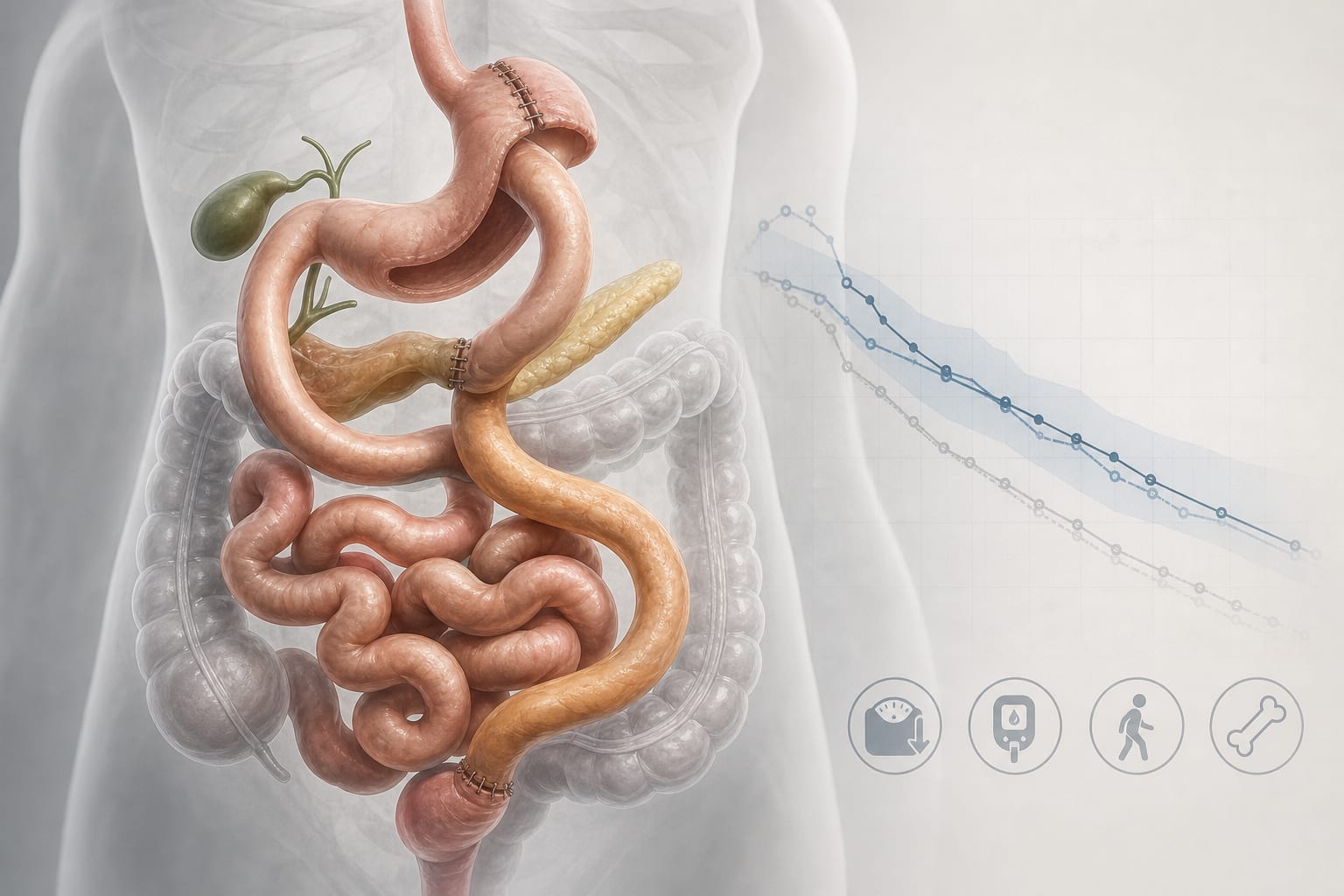
Clinical Scorecard: Liver-Related Complications Following Bariatric Surgery and Their Resolution: A Case Series Analysis
At a Glance
Category
Detail
Condition
Liver dysfunction including fibrosis and steatohepatitis following bariatric surgery
Key Mechanisms
Postoperative weight loss, malnutrition, malabsorption, and type of bariatric procedure affecting liver histology and function
Target Population
Patients undergoing bariatric surgery for obesity and related metabolic syndrome
Care Setting
Specialized bariatric surgery centers and hepatology clinics managing postoperative complications
Key Highlights
Bariatric surgery generally improves NAFLD but can cause mild liver fibrosis or dysfunction in up to 16% of cases.
Jejunoileal bypass and biliopancreatic diversion are linked to higher liver morbidity; currently avoided.
Roux-en-Y gastric bypass, sleeve gastrectomy, and one-anastomosis gastric bypass are common procedures with rare reported liver deterioration.
Guideline-Based Recommendations
Diagnosis
Screen for liver dysfunction post-bariatric surgery using liver imaging, histology, and laboratory parameters.
Grade NAFLD using NAFLD Activity Score (NAS) and assess fibrosis stage histologically.
Monitor clinical signs of malnutrition and liver function deterioration.
Management
Avoid jejunoileal bypass due to high liver-related morbidity and mortality.
Consider surgical revision or reversal in cases of severe liver dysfunction or malnutrition.
Address malnutrition and malabsorption aggressively to prevent liver deterioration.
Monitoring & Follow-up
Regular follow-up for weight loss efficacy and liver function tests postoperatively.
Monitor for weight regain and secondary surgical interventions if needed.
Long-term surveillance for liver fibrosis progression or resolution.
Risks
Risk of liver fibrosis progression or de novo fibrosis post-surgery, though usually mild.
Potential for acute liver failure especially after jejunoileal bypass.
Malnutrition and malabsorption contributing to liver dysfunction.
Patient & Prescribing Data
Morbidly obese patients undergoing primary or secondary bariatric surgery procedures including RYGB, OAGB, and gastric banding.
Significant weight loss (%EWL median >100%) achieved in most patients; however, liver dysfunction may develop within months to years postoperatively, necessitating close monitoring and possible surgical revision.
Clinical Best Practices
Prefer RYGB, SG, or OAGB over jejunoileal bypass to minimize liver complications.
Perform comprehensive preoperative liver assessment and document baseline liver status.
Implement multidisciplinary follow-up including nutritional support to detect and manage liver dysfunction early.
Consider secondary surgical procedures for weight regain while monitoring liver health.
Use liver biopsy selectively to guide diagnosis and management of postoperative liver alterations.