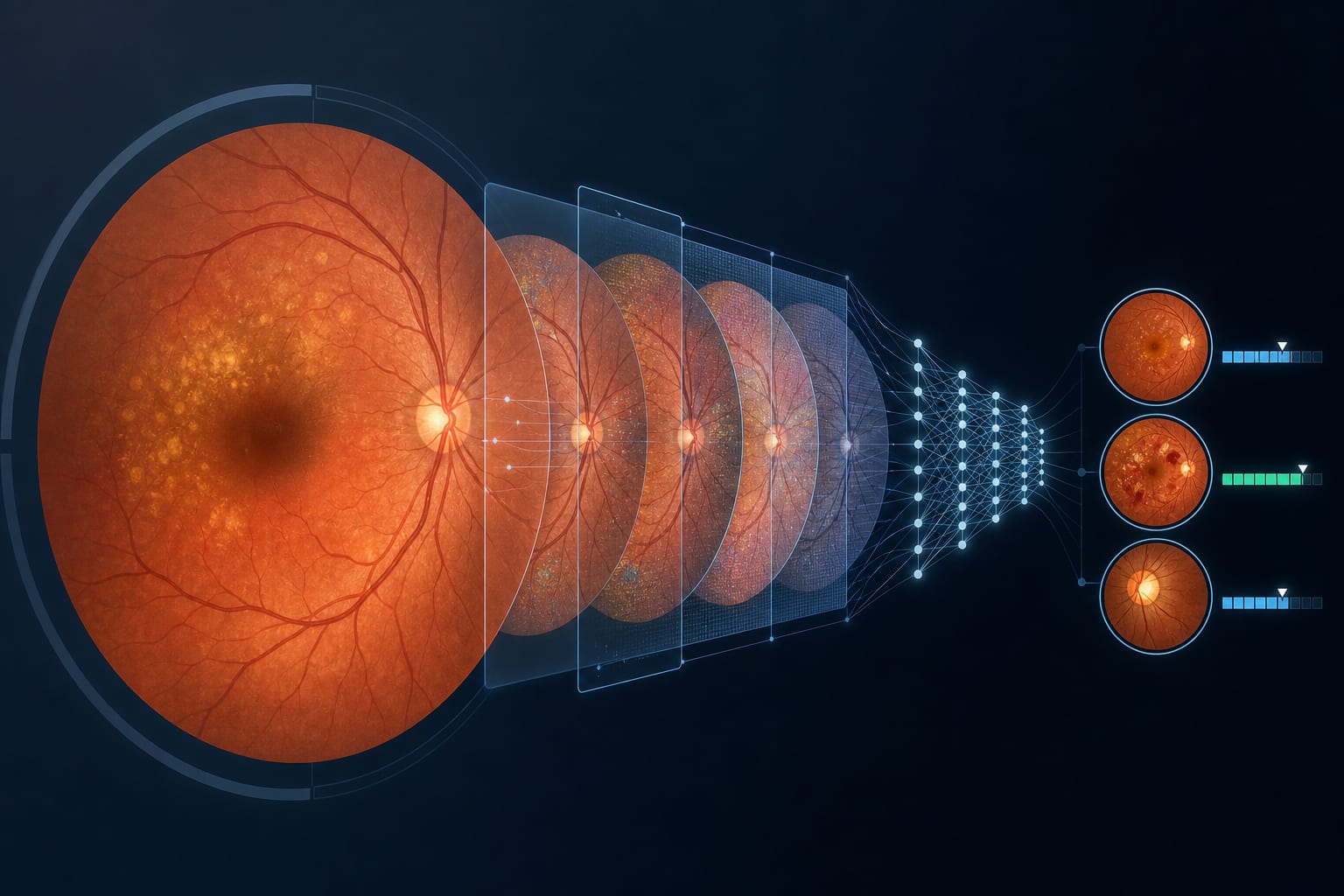
Glaucoma: Applying Glaucoma Strategies to AMD Care
Any glaucoma clinician knows that a robust VF strategy, coupled with structural measures, such as optical coherence tomography (OCT), provides a richer understanding of a patient’s disease than anatomical structure alone. Yet when it comes to age-related macular degeneration (AMD), I would argue that our diagnostic habits are quite different.
By
Mike Cymbor, OD, FAAO
October 1, 2025
Clinical Scorecard: Glaucoma: Applying Glaucoma Strategies to AMD Care
At a Glance
Category Detail
Condition Age-Related Macular Degeneration (AMD)
Key Mechanisms Functional testing (contrast sensitivity, dark adaptometry, microperimetry) alongside structural imaging (OCT) enhances understanding and management of AMD.
Target Population Patients with Age-Related Macular Degeneration.
Care Setting Ophthalmology clinics and practices.
Key Highlights
Functional testing is underutilized in AMD diagnosis and management. Contrast sensitivity testing reveals daily visual system reactions. Dark adaptometry can identify subclinical disease before structural changes. Microperimetry assesses fixation and central visual field defects. Combining structural and functional testing can improve AMD care.
Guideline-Based Recommendations
Diagnosis
Incorporate functional tests such as contrast sensitivity and dark adaptometry in AMD diagnosis.
Management
Utilize microperimetry to monitor functional changes and treatment effects in AMD.
Monitoring & Follow-up
Regularly assess contrast sensitivity and dark adaptation to track disease progression.
Risks
Delayed diagnosis due to reliance on structural imaging alone.
Patient & Prescribing Data
Individuals diagnosed with or at risk for Age-Related Macular Degeneration.
Functional testing can predict conversion to advanced AMD and monitor treatment efficacy.
Clinical Best Practices
Adopt a dual approach of structural and functional testing in AMD management. Educate patients on the importance of functional tests for early detection.
References