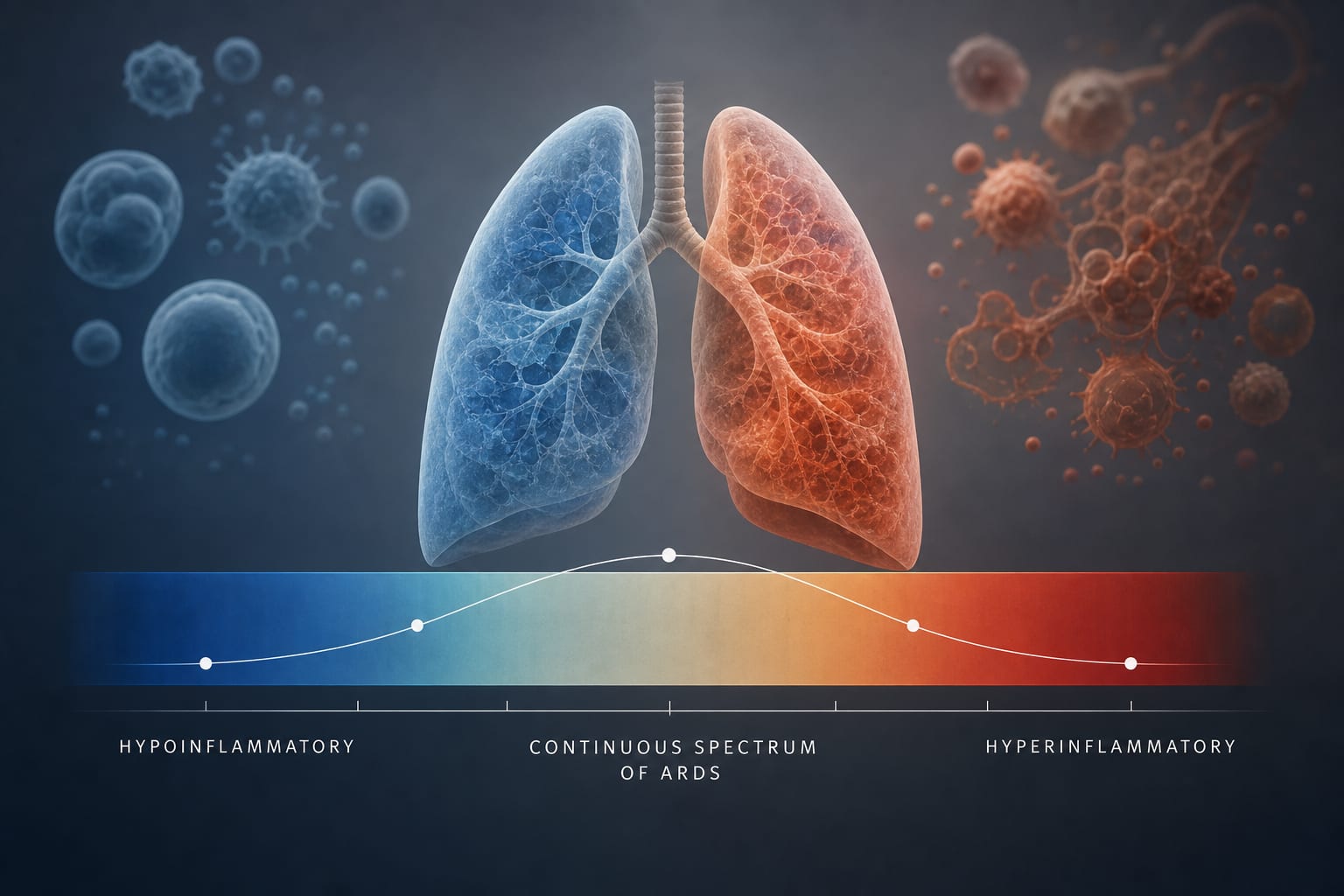
Beyond binary: rethinking subphenotyping in ARDS as a continuous spectrum
-
By
-
Prashant Nasa
-
Ken Kuljit S. Parhar
-
Ryuichi Nakayama
-
June 24, 2026
-
Clinical Scorecard: Reevaluating Subphenotyping in ARDS: Viewing the Condition as a Continuous Spectrum Rather Than a Binary Classification
At a Glance
| Category | Detail |
|---|
| Condition | Acute Respiratory Distress Syndrome (ARDS) |
| Key Mechanisms | Heterogeneity of treatment effect and dynamic subphenotyping based on inflammatory profiles. |
| Target Population | Patients with ARDS and acute hypoxemic respiratory failure (AHRF). |
| Care Setting | Intensive Care Units (ICUs) |
Key Highlights
- ARDS is characterized by acute onset of tachypnoea, hypoxaemia, and reduced lung compliance.
- Subphenotypes of ARDS include hyperinflammatory and hypoinflammatory groups with distinct prognostic differences.
- Dynamic changes in inflammatory phenotype may provide important prognostic information.
- Real-time bedside subphenotyping remains challenging but is being addressed with parsimonious classifier algorithms.
- Binary classification may overlook meaningful within-group heterogeneity.
Guideline-Based Recommendations
Diagnosis
- Utilize high-flow nasal oxygen, SpO2/FiO2 thresholds, chest CT, and lung ultrasound for ARDS diagnosis.
Management
- Consider heterogeneity of treatment effects in fluid management, corticosteroids, and ventilatory strategies.
Monitoring & Follow-up
- Implement longitudinal monitoring of inflammatory subphenotypes for better prognostication.
Risks
- Binary classification may exclude high-risk patients from beneficial therapies.
Patient & Prescribing Data
Patients diagnosed with ARDS or AHRF within 72 hours of ICU admission.
Dynamic subphenotyping may enhance risk stratification and treatment personalization.
Clinical Best Practices
- Employ parsimonious biomarker models for real-time stratification of ARDS subphenotypes.
- Monitor patients longitudinally to capture dynamic changes in inflammatory profiles.
Related Resources & Content