Systems perspectives on pediatric otitis media: environmental exposures, genetic susceptibility, and biomarker-guided interventions - Scorecard - MDSpire

Systems perspectives on pediatric otitis media: environmental exposures, genetic susceptibility, and biomarker-guided interventions

  • By

  • Ya Yu

  • Rui Yuan

  • Jingqi Zhang

  • Lu Wang

  • Tao Guo

  • Hanchao Shen

  • Hui Xie

  • May 11, 2026

  • 0 min

Share

Clinical Scorecard: A Comprehensive Approach to Pediatric Otitis Media: The Impact of Environmental Factors, Genetic Predisposition, and Biomarkers in Treatment Strategies

At a Glance

CategoryDetail
ConditionPediatric Otitis Media
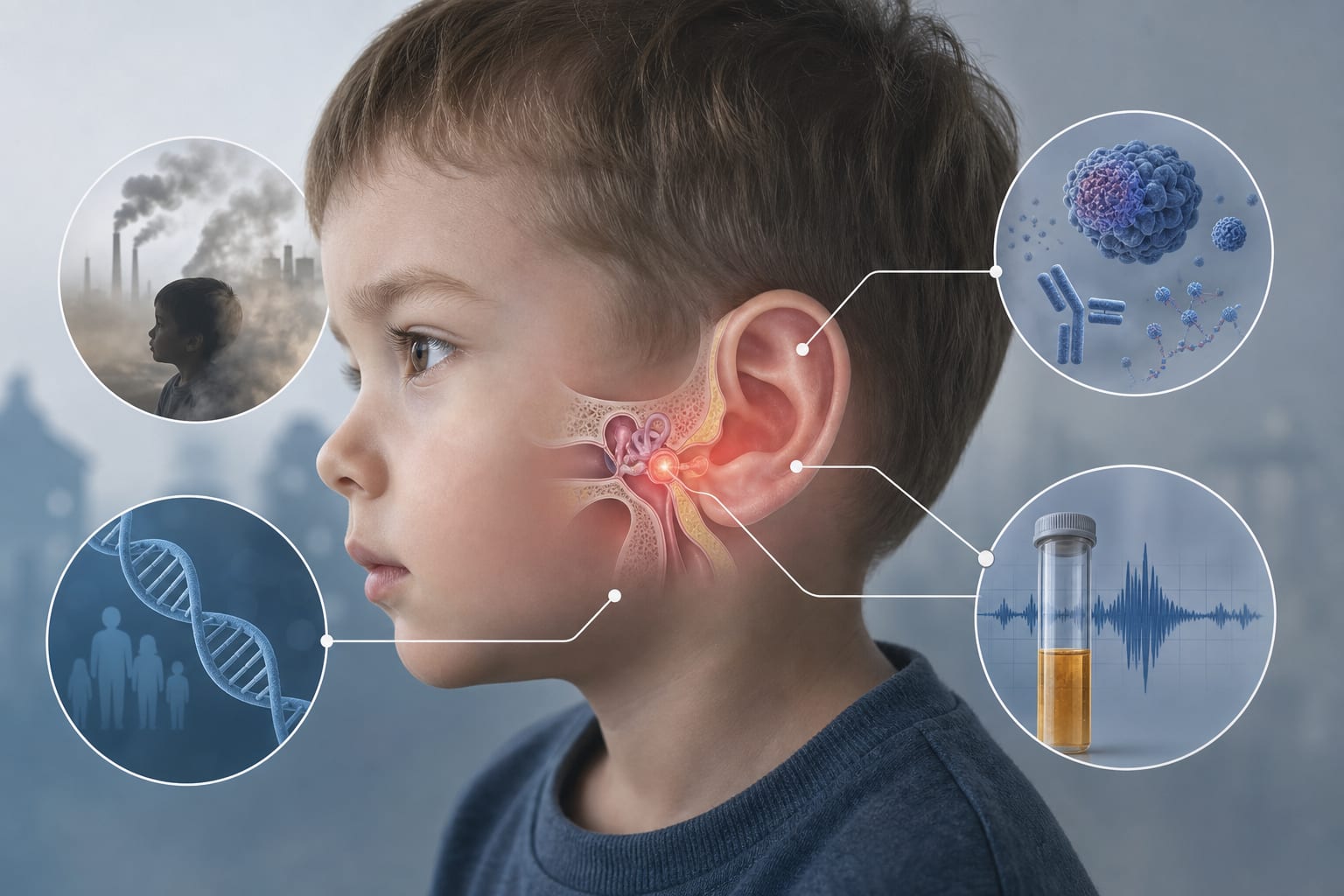
Key MechanismsEnvironmental exposures, host genetic susceptibility, microbial factors
Target PopulationChildren, particularly infants and toddlers
Care SettingPrimary care and pediatric healthcare settings

Key Highlights

  • 80% of children experience at least one episode of otitis media by age three
  • Pediatric otitis media is a leading cause of preventable hearing loss
  • Environmental pollutants like PM2.5 and O3 are linked to increased risk
  • The condition is multifactorial, involving environmental, genetic, and microbial interactions
  • Emerging biomarkers may guide personalized treatment strategies

Guideline-Based Recommendations

Diagnosis

  • Consider environmental and genetic factors in diagnosis
  • Utilize clinical history and symptom assessment for diagnosis

Management

  • Implement tailored intervention strategies based on individual risk profiles
  • Consider the role of environmental modifications in management

Monitoring & Follow-up

  • Regular follow-up for recurrent cases
  • Monitor environmental exposures and their impact on disease progression

Risks

  • Risk of hearing impairment and developmental delays
  • Increased healthcare utilization and antibiotic exposure

Patient & Prescribing Data

Children with recurrent or chronic otitis media

Focus on precision medicine and biomarker-guided therapies

Clinical Best Practices

  • Assess environmental exposures in pediatric patients
  • Incorporate genetic susceptibility into treatment planning
  • Utilize multi-omics approaches for personalized medicine

References

Original Source(s)

Related Content