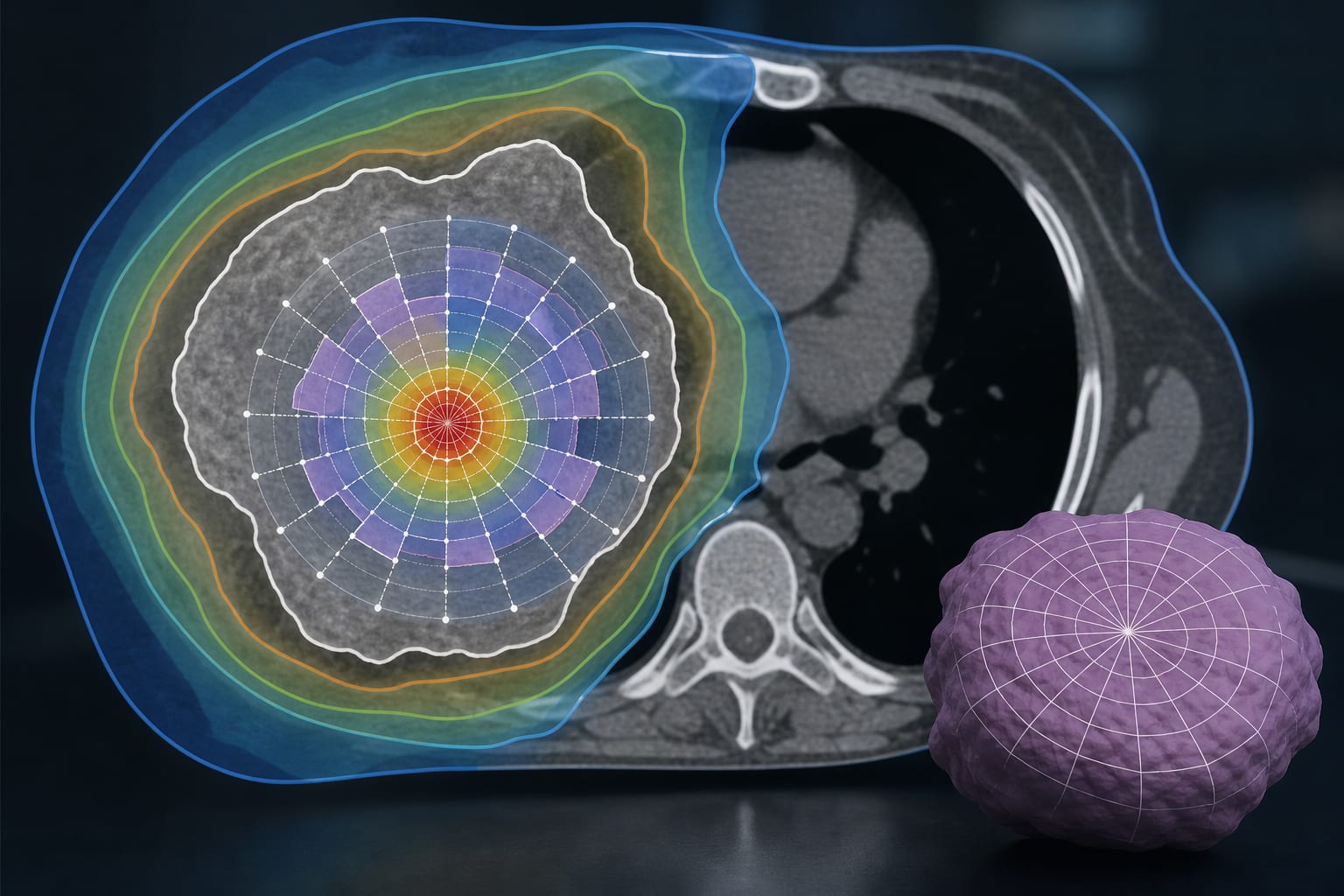
Polar-coordinated contour processing algorithm in optimizing SCART treatment volume
-
By
-
Junqi Song
-
Japan Patel
-
Weihua Qi
-
Xuebing Shi
-
Yazhi Wang
-
Matthew Schmidt
-
Jun Yang
-
Dawei Wu
-
May 14, 2026
-
Clinical Scorecard: Algorithm for Polar-Coordinate Contour Processing to Enhance SCART Treatment Volume Optimization
At a Glance
| Category | Detail |
|---|
| Condition | Bulky or radio-resistant tumors |
| Key Mechanisms | Spatially Fractionated Radiation Therapy (SFRT) with non-uniform dosing to enhance tumor control while preserving normal tissues. |
| Target Population | Patients with bulky or metastatic tumors |
| Care Setting | Radiation oncology |
Key Highlights
- SCART Treatment Volumes (STVs) generated using a novel polar-coordinate algorithm improve efficiency by 90%.
- STVs show a 15% increase in volume and enhanced conformality compared to manual contouring.
- SCART allows for ablative doses of 15-24 Gy while maintaining low doses at the GTV periphery.
Guideline-Based Recommendations
Diagnosis
- Identify bulky or radio-resistant tumors suitable for SCART.
Management
- Utilize the polar-coordinate algorithm for STV generation to optimize treatment planning.
Monitoring & Follow-up
- Assess tumor response and toxicity following SCART treatment.
Risks
- Monitor for potential adverse events, though no grade III+ toxicities were observed in initial studies.
Patient & Prescribing Data
Patients with bulky or metastatic tumors receiving SCART regimens.
Initial studies show a median tumor volume reduction of 49.5% with local control rates of 95%.
Clinical Best Practices
- Implement standardized guidelines for SCART to enhance reproducibility across treatment centers.
- Utilize advanced treatment planning strategies to manage the complexity of SFRT.
Related Resources & Content