Distinct prognostic value of aspartate-to-alanine aminotransferase ratio (AAR) in traumatic brain injury versus hemorrhagic stroke: a cohort study of 1,069 patients - Scorecard - MDSpire

Distinct prognostic value of aspartate-to-alanine aminotransferase ratio (AAR) in traumatic brain injury versus hemorrhagic stroke: a cohort study of 1,069 patients

  • By

  • Dilmurat Gheyret

  • Xiaotao Gao

  • Ziwei Zhou

  • Lei Li

  • Jinchao Wang

  • Xu Zhang

  • Haoran Jia

  • Shu Zhang

  • Mirzat Turhon

  • Maimaitili Aisha

  • Cong Wang

  • Yuhan Li

  • Yingsheng Wei

  • Shuo An

  • Jian Sun

  • Jianning Zhang

  • Hengjie Yuan

  • Ye Tian

  • June 4, 2026

  • 0 min

Share

Clinical Scorecard: Prognostic Implications of Aspartate-to-Alanine Aminotransferase Ratio (AAR) in Traumatic Brain Injury Compared to Hemorrhagic Stroke: Analysis of a Cohort of 1,069 Patients
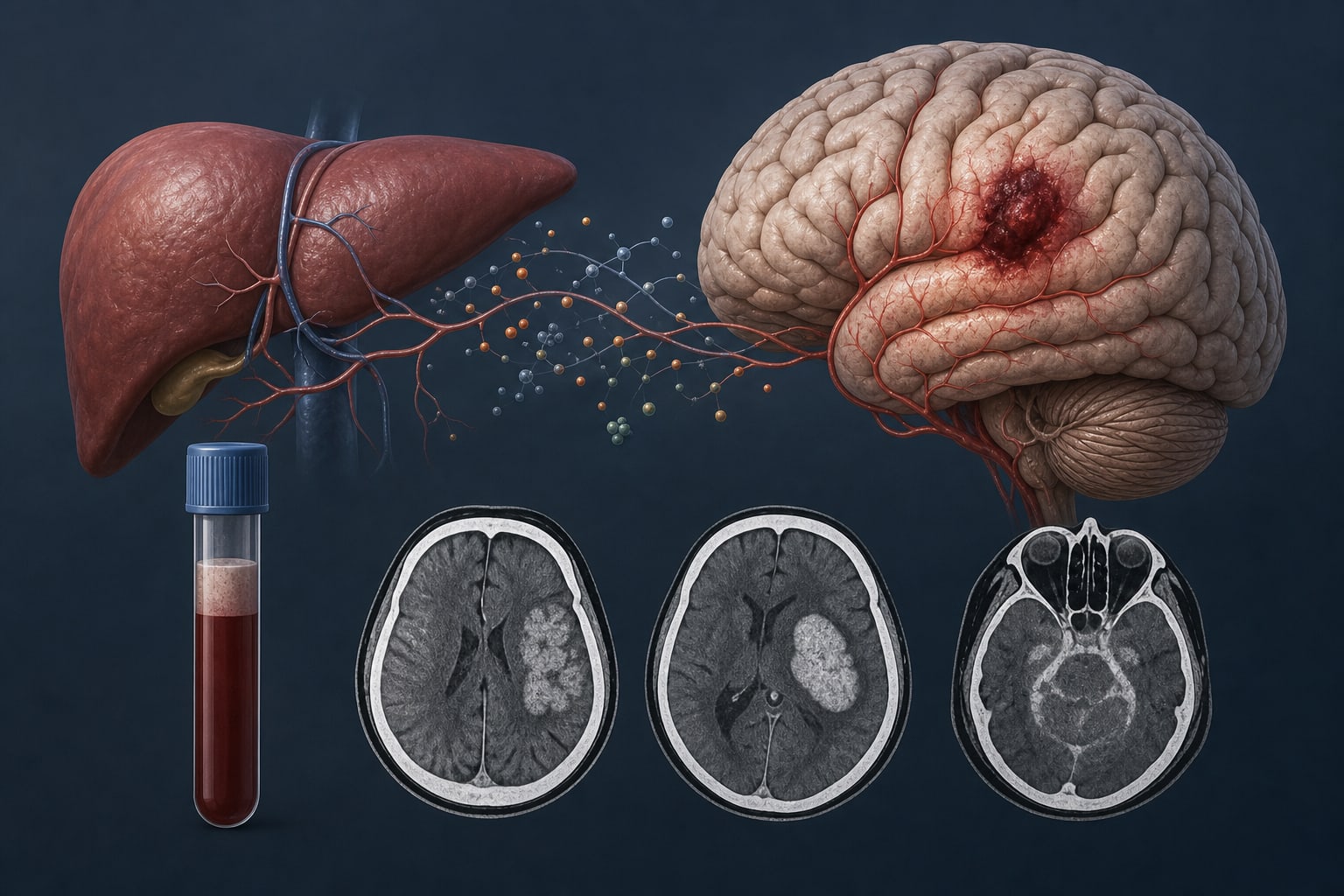

At a Glance

CategoryDetail
ConditionTraumatic Brain Injury (TBI), Intracerebral Hemorrhage (ICH), Aneurysmal Subarachnoid Hemorrhage (aSAH)
Key MechanismsLiver-brain axis, systemic metabolic stress, mitochondrial dysfunction
Target PopulationPatients aged 18 years or older with TBI, ICH, or aSAH
Care SettingNeurosurgery department, Tianjin Medical University General Hospital, China

Key Highlights

  • Elevated AAR is a robust independent predictor of poor outcomes in TBI (adjusted OR 2.15).
  • AAR shows no significant prognostic value in ICH or aSAH.
  • A significant dose–response relationship exists between AAR and unfavorable outcomes.
  • Prognostic effect of AAR in TBI escalates with injury severity (Severe TBI: adjusted OR 5.38).
  • 39.3% of patients experienced unfavorable outcomes at discharge.

Guideline-Based Recommendations

Diagnosis

  • Use AAR as a prognostic marker in TBI.

Management

  • Monitor AAR levels in TBI patients to assess prognosis.

Monitoring & Follow-up

  • Evaluate AAR in conjunction with other clinical parameters.

Risks

  • Caution against using AAR as a prognostic marker in ICH and aSAH.

Patient & Prescribing Data

1,069 consecutive patients with TBI, ICH, or aSAH.

AAR may reflect systemic metabolic stress in TBI.

Clinical Best Practices

  • Consider AAR in the context of overall clinical assessment in TBI.
  • Avoid reliance on AAR for prognostication in hemorrhagic strokes.

Related Resources & Content

Original Source(s)

Related Content