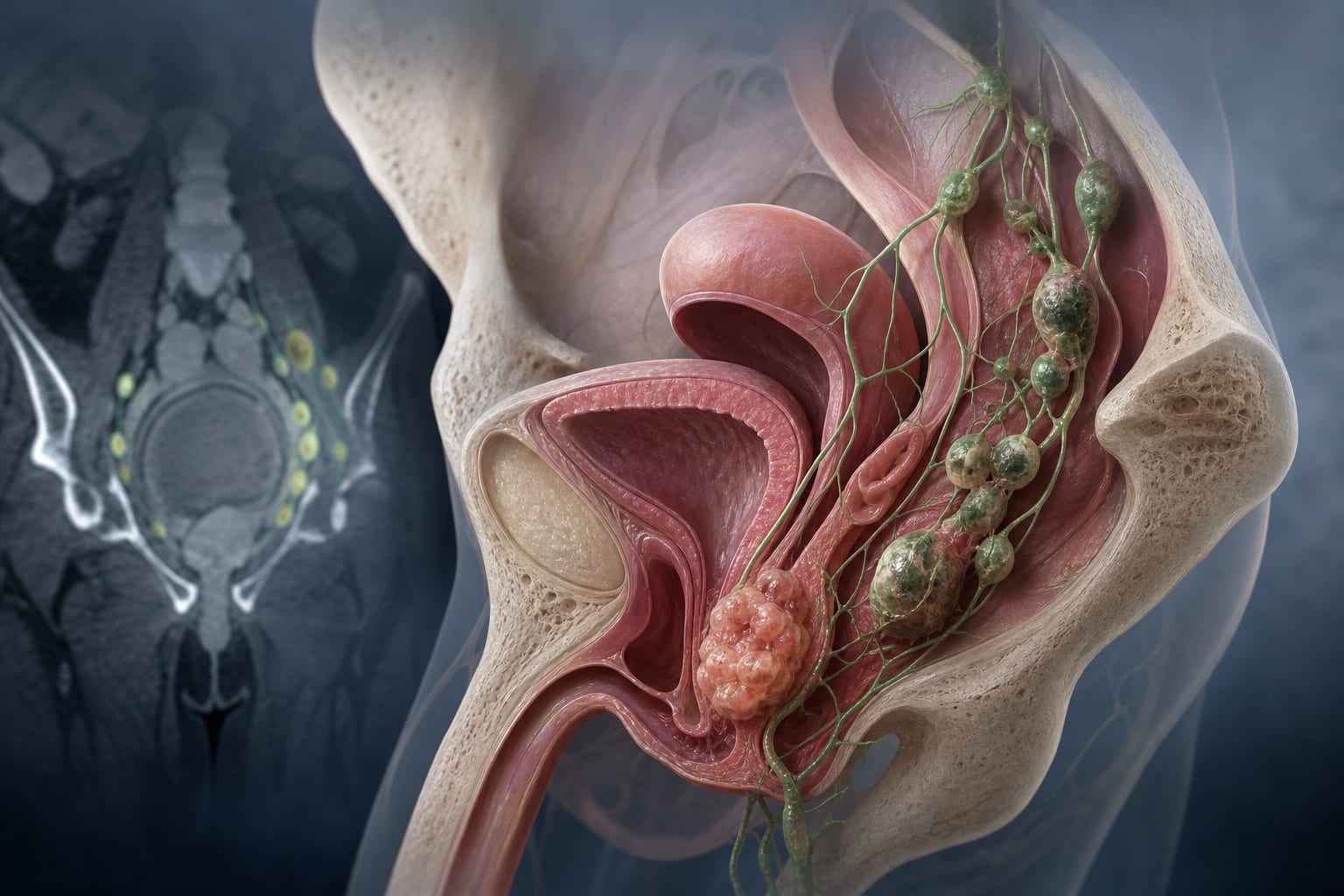
Distribution analysis of gynecological carcinomas with concurrent second primary carcinomas
-
By
-
Si-yi Li
-
Chen-ying Liu
-
Xing-yun Xie
-
Lan-lan Chen
-
Wen-juan Chen
-
June 23, 2026
-
Clinical Scorecard: Analysis of the Occurrence and Distribution of Second Primary Carcinomas in Patients with Gynecological Malignancies
At a Glance
| Category | Detail |
|---|
| Condition | Second Primary Carcinomas in Gynecological Malignancies |
| Key Mechanisms | Pathological classification and staging of cervical and endometrial cancers influence the occurrence of SPC. |
| Target Population | Patients diagnosed with cervical carcinoma and endometrial carcinoma. |
| Care Setting | Oncology clinics and cancer hospitals. |
Key Highlights
- 253 patients with cervical cancer and 102 patients with endometrial cancer were evaluated.
- Median age at first diagnosis: 52 years for CC, 55 years for EC.
- SPC occurred predominantly in stages I-II for both CC (69.1%) and EC (82.4%).
- Common SPC sites for CC: lung (25.3%), thyroid (22.5%), breast (11.1%).
- Common SPC sites for EC: thyroid (20.6%), ovary (16.7%), cervix (15.7%).
Guideline-Based Recommendations
Diagnosis
- Pathological assessment is essential to confirm SPC distinct from metastasis.
Management
- Long-term follow-up and personalized monitoring approaches are recommended.
Monitoring & Follow-up
- Regular surveillance for SPC in patients with cervical and endometrial cancers.
Risks
- Overweight and obesity are identified as risk factors for SPC in gynecological malignancies.
Patient & Prescribing Data
Individuals diagnosed with cervical and endometrial cancers.
The prognosis for patients with SPC is poorer compared to those with a solitary primary cancer.
Clinical Best Practices
- Utilize comprehensive clinical data for assessing SPC occurrence patterns.
- Implement systematic epidemiological assessments for gynecological tumors.
Related Resources & Content