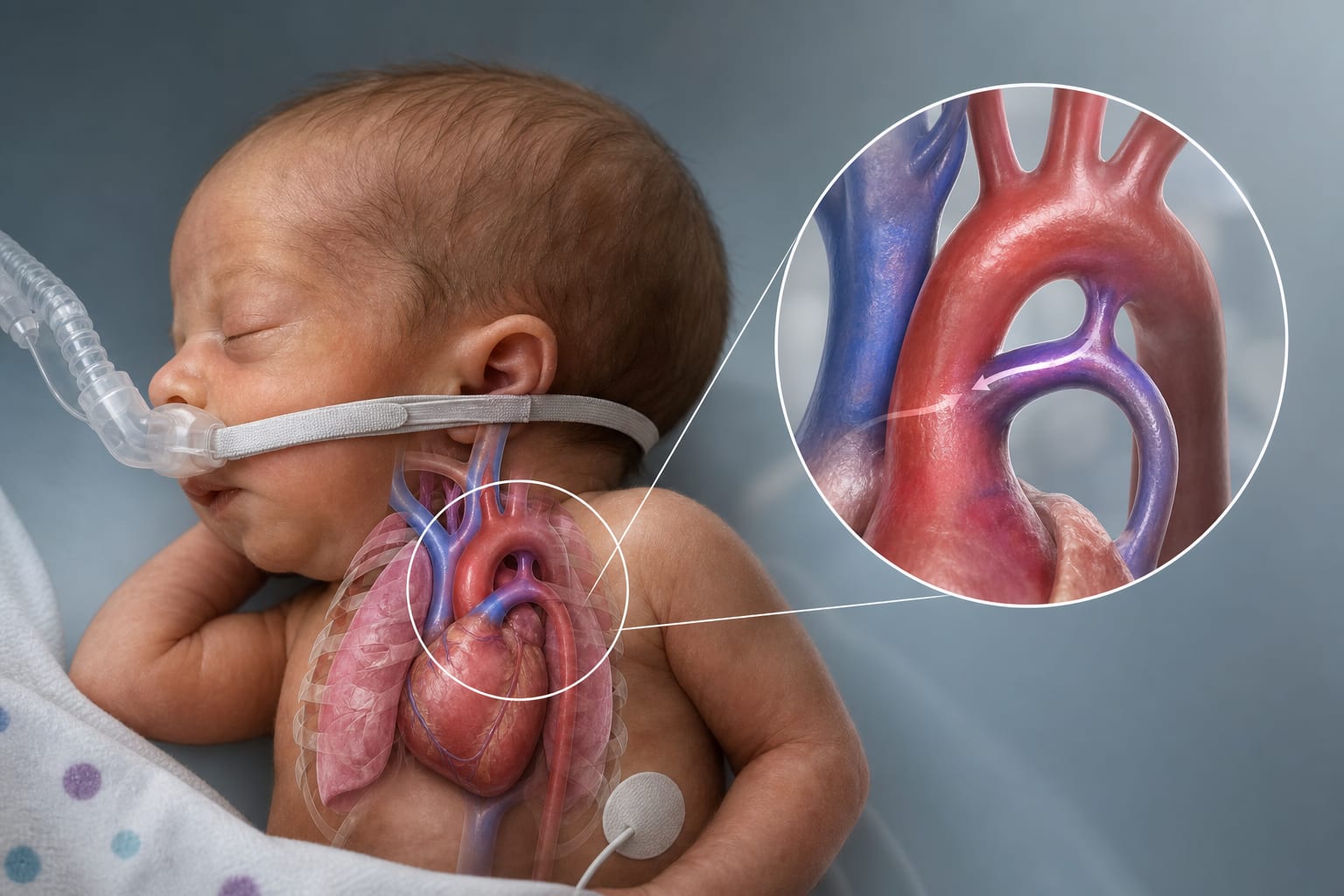
Hemodynamic Complexity of Patent Ductus Arteriosus Management in Preterm Infants
-
By
-
Marjorie M. Makoni
-
June 9, 2026
-
Clinical Scorecard: Complex Hemodynamic Considerations in Managing Patent Ductus Arteriosus in Premature Infants
At a Glance
| Category | Detail |
|---|
| Condition | |
| Key Mechanisms | Hemodynamic burden varies with gestational age and lung development. |
| Target Population | |
| Care Setting | |
Key Highlights
- 42.3% treatment failure rate in infants treated for PDA.
- No significant differences in closure effectiveness among pharmacological regimens.
- Acetaminophen associated with increased mortality odds compared to standard-dose ibuprofen.
- Indomethacin linked to reduced sepsis but increased BPD odds.
Guideline-Based Recommendations
Diagnosis
- Echocardiography-confirmed moderate to large PDA (≥1.5 mm).
Management
- Consider individualized, physiologically based management.
Monitoring & Follow-up
- Utilize longitudinal echocardiographic data.
Risks
- Higher odds of NEC with treated infants.
Patient & Prescribing Data
Preterm infants (<29 weeks’ gestation) with echocardiography-confirmed PDA.
Pharmacotherapy effectiveness may vary based on lung maturity and hemodynamic impact.
Clinical Best Practices
- Implement early, serial, standardized neonatal echocardiography.
- Match therapy to the right infant at the right time.
Related Resources & Content