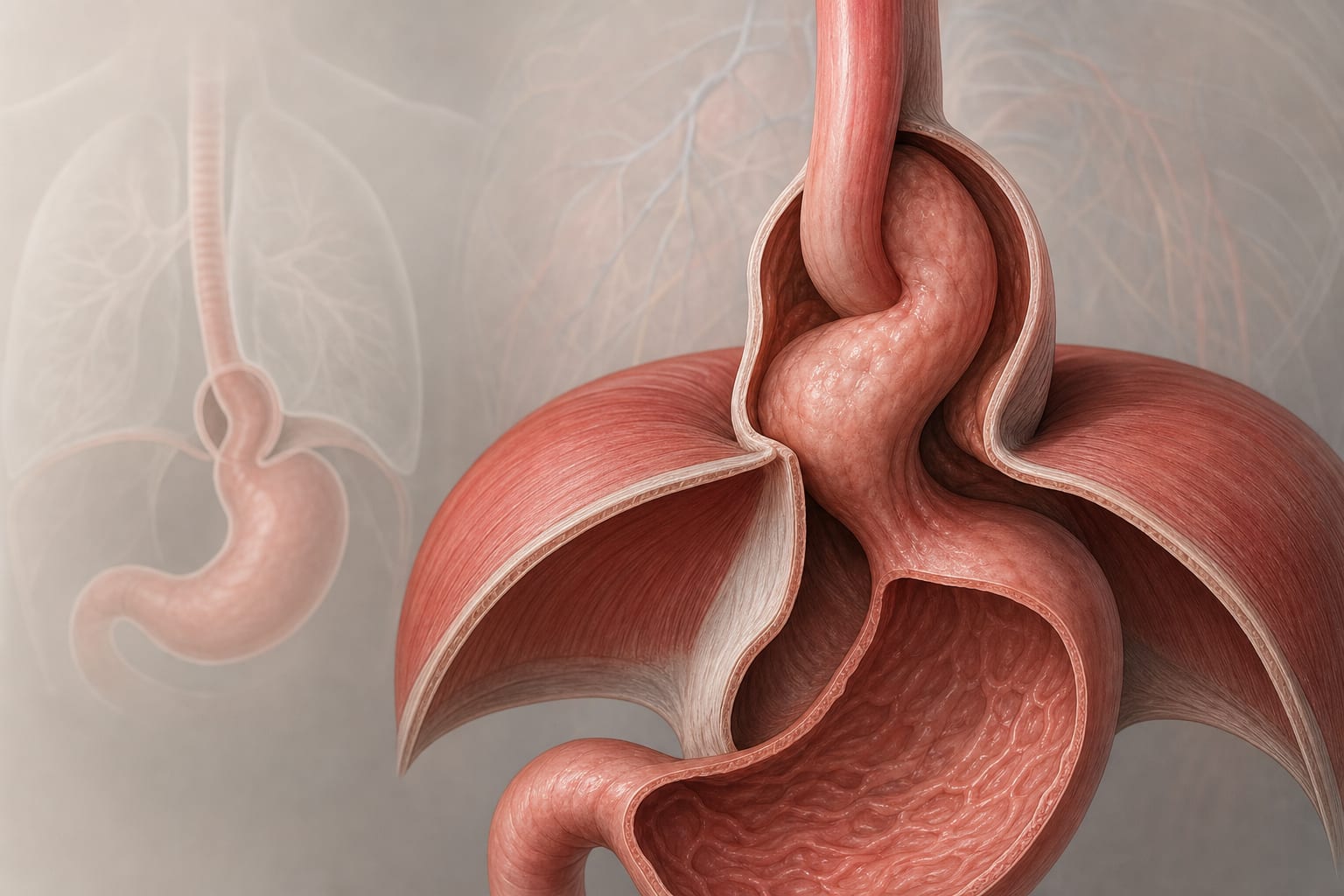
Mid-Esophageal Mucosal Impedance as an Indicator of Mucosal Integrity and Phenotypes Associated with Refractory Reflux Symptoms
-
By
-
Bo Li
-
Ye Chen
-
Ying Chen
-
Zhenxiang Wang
-
Yan Zhang
-
Huihui Sun
-
Shuchang Xu
-
February 9, 2026
Clinical Scorecard: Mid-Esophageal Mucosal Impedance as an Indicator of Mucosal Integrity and Phenotypes Associated with Refractory Reflux Symptoms
At a Glance
| Category | Detail |
|---|
| Condition | |
| Key Mechanisms | |
| Target Population | Adults aged 18 years or older with reflux-like symptoms. |
| Care Setting | |
Key Highlights
- Persistent symptoms observed in 20-46% of patients despite treatment.
Guideline-Based Recommendations
Diagnosis
Management
Monitoring & Follow-up
- C
- o
- n
- d
- u
- c
- t
-
- f
- o
- l
- l
- o
- w
- -
- u
- p
-
- a
- s
- s
- e
- s
- s
- m
- e
- n
- t
- s
-
- v
- i
- a
-
- p
- h
- o
- n
- e
-
- i
- n
- t
- e
- r
- v
- i
- e
- w
- s
-
- a
- n
- d
-
- i
- m
- p
- e
- d
- a
- n
- c
- e
-
- m
- o
- n
- i
- t
- o
- r
- i
- n
- g
-
- a
- t
-
- s
- p
- e
- c
- i
- f
- i
- e
- d
-
- i
- n
- t
- e
- r
- v
- a
- l
- s
- .
Risks
Patient & Prescribing Data
Adherence to PPI therapy should be confirmed through patient self-report and ideally supplemented with pharmacy records.
Clinical Best Practices
- Utilize validated patient-reported outcome measures in assessments.
Related Resources & Content