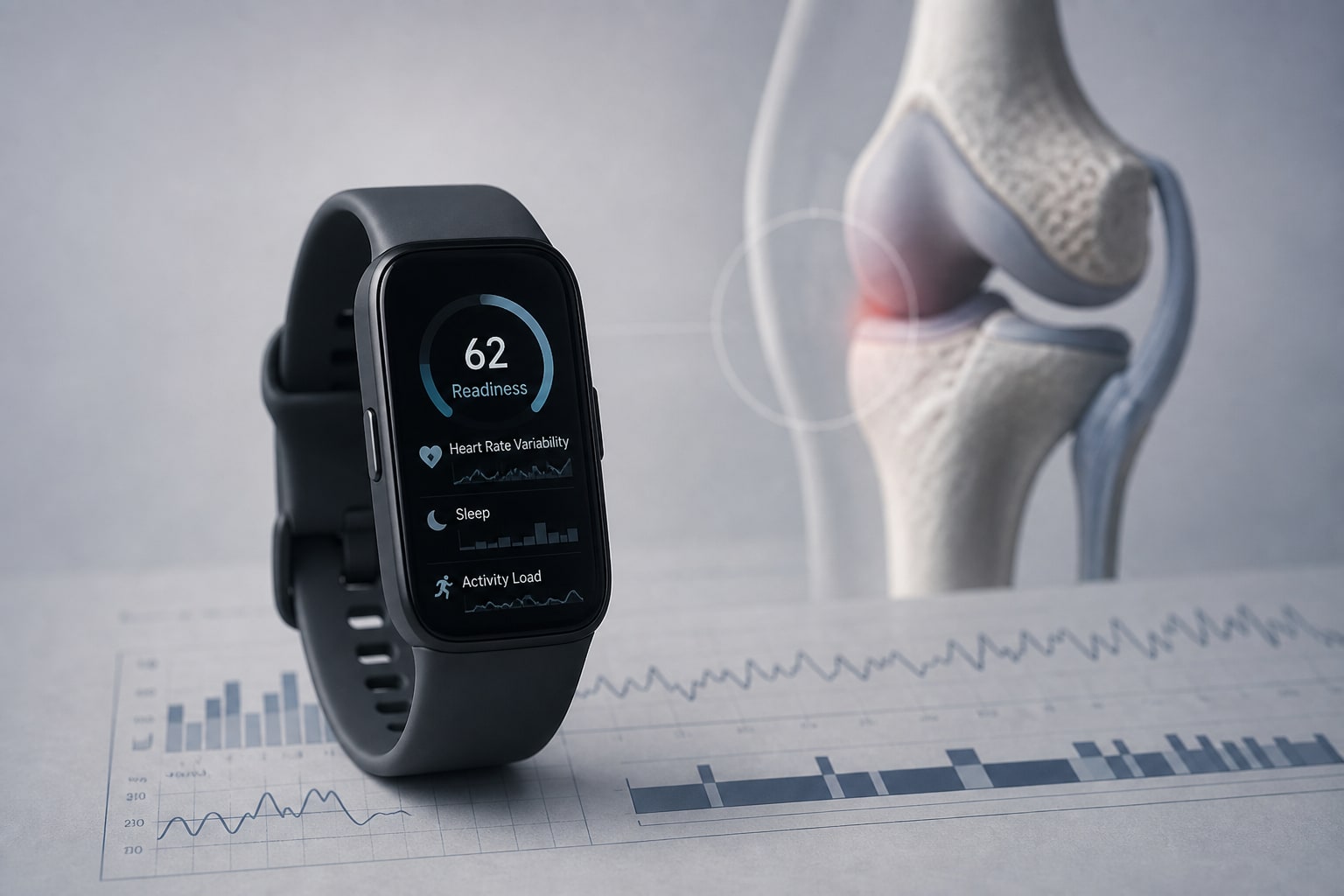
Do Fitness Trackers Have the Ability to Forecast Injuries?
By
Anna Zucker
August 26, 2026
Clinical Scorecard: Do Fitness Trackers Have the Ability to Forecast Injuries?
At a Glance
Category Detail
Condition Wearable Fitness Device Data Interpretation Key Mechanisms Heart rate variability (HRV), sleep, and workload metrics Target Population Physically active individuals using wearable devices Care Setting Sports medicine and orthopedic clinics
Key Highlights
Wearable devices provide a 'readiness' score but do not directly predict injuries. HRV, sleep, and workload metrics are key components in assessing injury risk. Trends in data over time are more informative than single data points. Patients often trust HRV data excessively, which may not be fully accurate. 80% of wearable users are willing to share data with clinicians, but few do. Guideline-Based Recommendations
Diagnosis
Assess recent workload and recovery in patients reporting overuse symptoms. Management
Incorporate wearable data cautiously with clinical history and examination. Monitoring & Follow-up
Track HRV trends alongside workload and sleep patterns. Risks
Inaccurate self-reported training history may lead to misinterpretation of injury risk. Patient & Prescribing Data
Individuals using wearable fitness devices for activity tracking
Consider HRV, sleep, and workload trends in relation to recovery and load exposure.
Clinical Best Practices
Use wearable data as patient-generated context to inform clinical reasoning. Evaluate the consistency between self-reported training and recorded data. Focus on trends rather than isolated data points for better injury risk assessment. Related Resources & Content