Association between neutrophil percentage-to-albumin ratio and adverse clinical outcomes after successful percutaneous coronary intervention for chronic total occlusion: a cohort study - Scorecard - MDSpire

Association between neutrophil percentage-to-albumin ratio and adverse clinical outcomes after successful percutaneous coronary intervention for chronic total occlusion: a cohort study

  • By

  • Song Wen

  • Xingjie Huang

  • Zehan Huang

  • Yuqing Huang

  • Hua Yang

  • Bin Zhang

  • July 9, 2026

  • 0 min

Share

Clinical Scorecard: Relationship Between Neutrophil Percentage-to-Albumin Ratio and Long-Term Adverse Outcomes Following Successful Percutaneous Coronary Intervention for Chronic Total Occlusion: A Retrospective Cohort Analysis

At a Glance

CategoryDetail
ConditionChronic Total Occlusion (CTO)
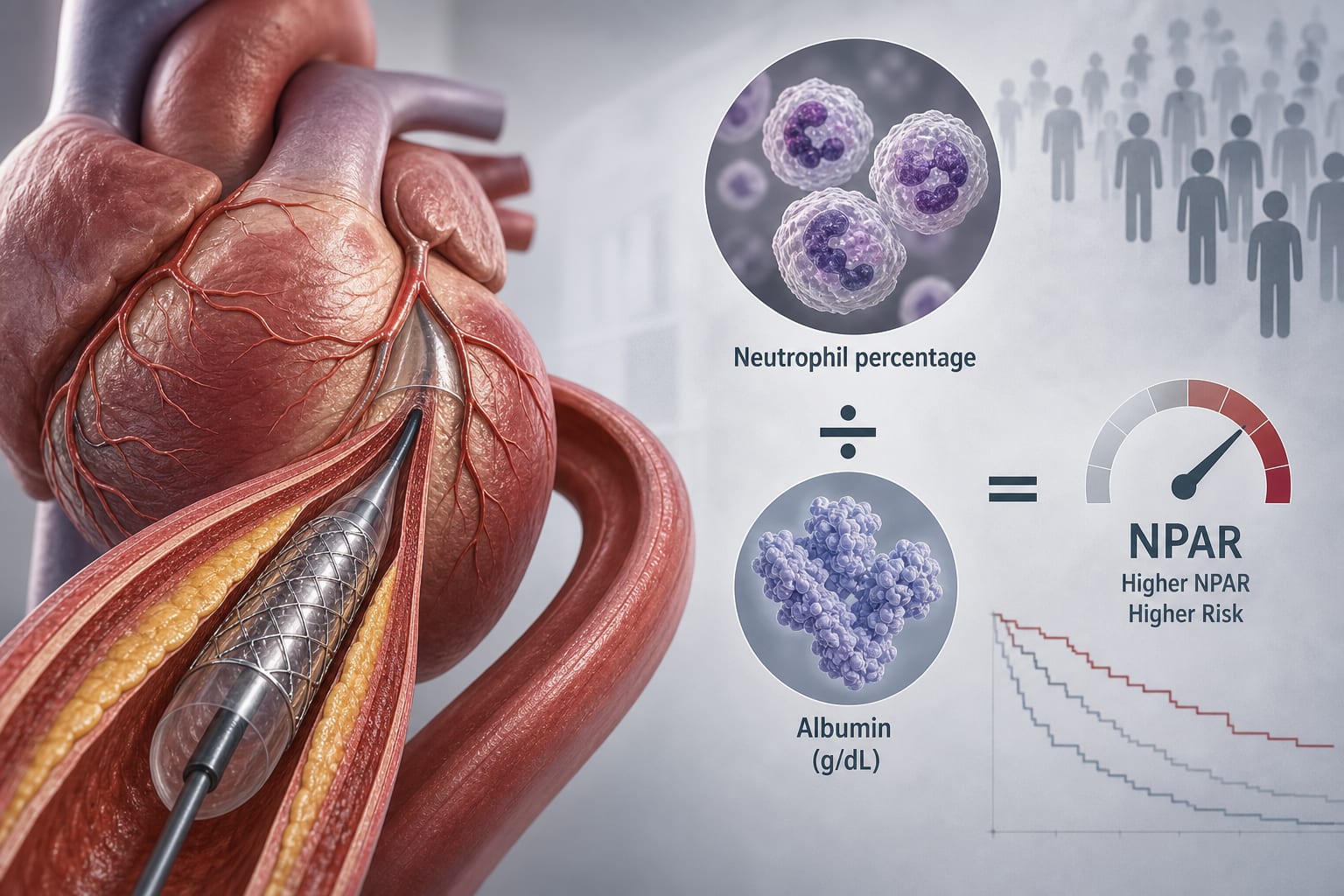
Key MechanismsNeutrophil percentage-to-albumin ratio (NPAR) as a marker of inflammation and nutritional status.
Target PopulationPatients undergoing successful CTO percutaneous coronary intervention (PCI).
Care SettingSingle-center retrospective cohort study.

Key Highlights

  • Elevated NPAR is associated with increased long-term all-cause mortality.
  • Each 1-standard deviation increase in NPAR correlates with a 50% higher risk of all-cause mortality.
  • NPAR improves risk stratification for cardiovascular events post-CTO PCI.

Guideline-Based Recommendations

Diagnosis

  • NPAR should be calculated from routine laboratory tests to assess risk.

Management

  • Consider elevated NPAR in post-intervention risk stratification.

Monitoring & Follow-up

  • Monitor NPAR levels in patients post-CTO PCI for long-term outcome prediction.

Risks

  • Higher NPAR indicates increased risk for cardiovascular mortality and events.

Patient & Prescribing Data

1513 patients who underwent successful CTO PCI.

NPAR serves as a simple, objective biomarker for risk assessment.

Clinical Best Practices

  • Integrate NPAR into routine assessments for patients post-CTO PCI.
  • Utilize NPAR in conjunction with other clinical parameters for comprehensive risk evaluation.

Related Resources & Content

Original Source(s)

Related Content