Advances in the prevention and treatment of radiation-induced brain necrosis: a narrative review
-
By
-
Zhihong Zhao
-
Wan He
-
Jinquan Xia
-
Xiangcheng Wang
-
Guixiang Liao
-
June 29, 2026
-
Clinical Scorecard: Progress in Strategies for Preventing and Managing Radiation-Induced Brain Necrosis: A Comprehensive Review
At a Glance
| Category | Detail |
|---|
| Condition | Radiation-Induced Brain Necrosis |
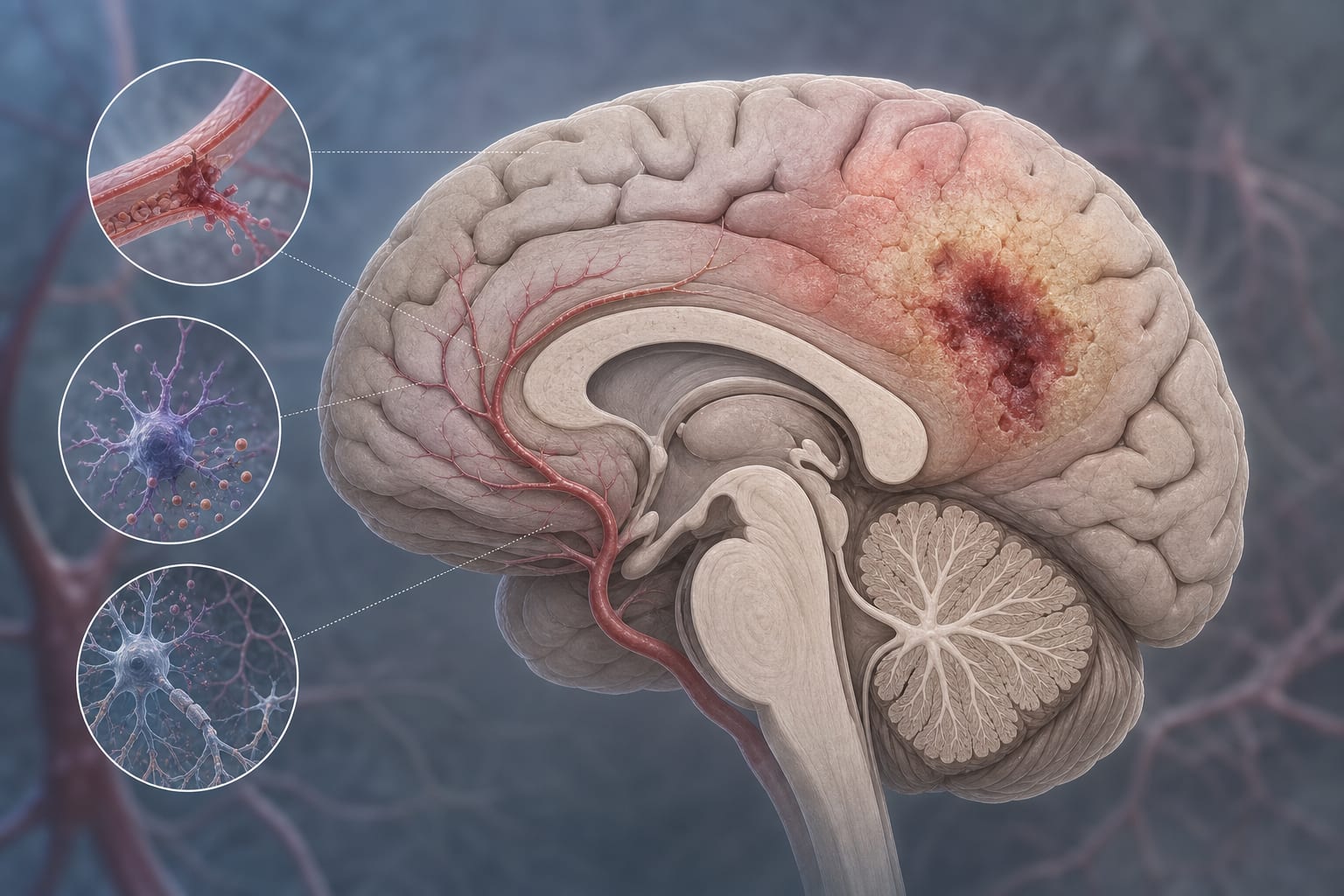
| Key Mechanisms | Vascular injury and neuroinflammation |
| Target Population | Patients treated for intracranial and head and neck malignancies |
| Care Setting | Neuro-oncology and radiation oncology |
Key Highlights
- Incidence of RBN ranges from 5–25% in patients receiving radiotherapy.
- Key pathophysiological mechanisms include endothelial damage and cytokine release.
- Emerging treatment options include CSF1R inhibitors and laser interstitial thermal therapy.
- Imaging innovations such as MRS and PET/CT enhance early detection of RBN.
- 2022 DEGRO guidelines provide updates on management strategies for RBN.
Guideline-Based Recommendations
Diagnosis
- Use MRI for initial assessment; consider advanced imaging for differential diagnosis.
Management
- First-line treatment includes corticosteroids and bevacizumab; consider HBOT and LITT for refractory cases.
Monitoring & Follow-up
- Asymptomatic RBN should be monitored with serial imaging.
Risks
- Potential for treatment resistance and recurrence after initial response.
Patient & Prescribing Data
Patients with symptomatic and asymptomatic RBN post-radiotherapy.
Management varies from observation to aggressive interventions based on symptom severity.
Clinical Best Practices
- Implement a stepwise approach for symptomatic RBN management.
- Consider individualized treatment plans due to variability in response.
Related Resources & Content