Using AI to Identify Gender-Based Violence in Brazilian Health Records and Enable Earlier Intervention
-
By
-
Luke Taylor
-
October 19, 2026
Clinical Scorecard: Using AI to Identify Gender-Based Violence in Brazilian Health Records
At a Glance
| Category | Detail |
|---|---|
| Condition | Gender-based violence (GBV) and femicide in Brazil |
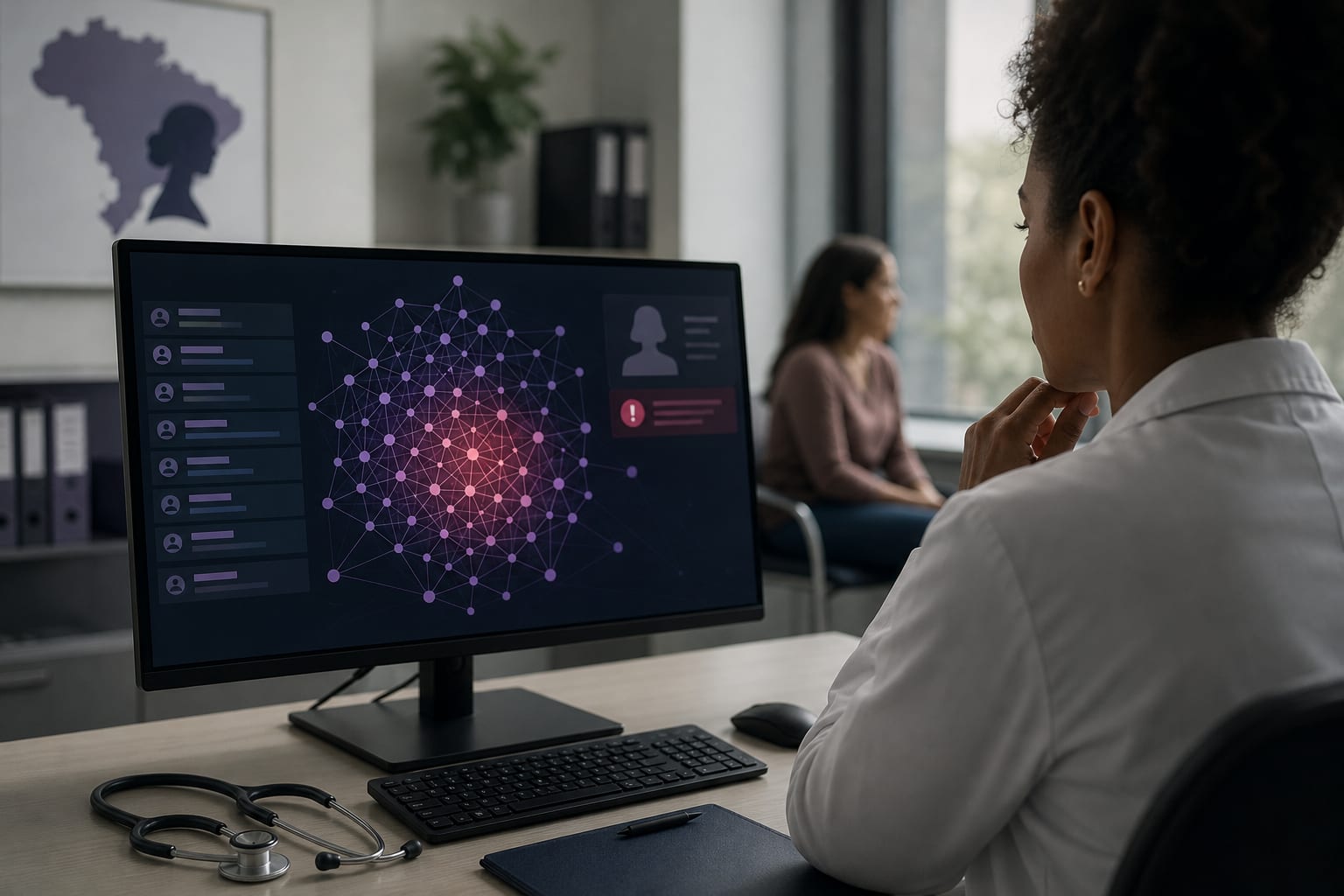
| Key Mechanisms | ClarIA analyzes clinical notes and medical histories for semantic patterns resembling records of confirmed GBV, rather than searching for isolated keywords. It issues amber or red alerts for clinical review. |
| Target Population | Women receiving care at participating clinics and hospitals in Recife, Brazil |
| Care Setting | Health care clinics and hospitals using ClarIA to flag possible unreported GBV |
Key Highlights
- A pilot investigation examined 13,000 formally documented GBV cases in Recife.
- Women’s health care visits occurred an average of 92 days before GBV was recorded in their cases.
- ClarIA uses amber alerts for patterns resembling those in confirmed GBV records and red alerts for prior disclosure or identification by a health professional.
- After deployment began in Recife, 39 clinics and hospitals were using ClarIA, and health professionals submitted eight GBV notifications after receiving alerts.
Guideline-Based Recommendations
Diagnosis
- The article describes ClarIA alerts as prompts for closer review, not as diagnoses.
- The article says the tool identifies patterns across clinical narratives rather than isolated terms.
Management
- Clinicians receiving alerts undergo training in ethical, sensitive care that safeguards patients’ rights and privacy.
- The article describes workflows for subsequent actions, including referral to specialists or contacting protective services when circumstances warrant.
Monitoring & Follow-up
- The article reports limited available data because ClarIA is new.
- Following rollout, health professionals formally submitted eight GBV notifications after receiving alerts.
Risks
Patient & Prescribing Data
The Recife pilot examined 13,000 formally documented GBV cases. ClarIA is being deployed in clinics and hospitals in Recife.
ClarIA is an alerting tool, not a treatment or diagnostic system. Alerts prompt clinical review and may be followed by specialist referral or contact with protective services when circumstances warrant.
Clinical Best Practices
- The article describes alerts as prompts for closer review, not confirmation of GBV.
- The article reports that clinicians receiving alerts are trained in ethical, sensitive care that safeguards patients’ rights and privacy.
- The article describes workflows for appropriate next steps, including referral or protective-service contact when circumstances warrant.
Related Resources & Content
Based on findings from:
From Reactive to Proactive Care: Using AI to Detect Gender-Based Violence in Brazil
Luke Taylor. Journal Of Medical Internet Research, 2026.
https://www.jmir.org/2026/1/e112991
This content is an AI-generated, fully rewritten summary based on a published scholarly article. It does not reproduce the original text and is not a substitute for the original publication. Readers are encouraged to consult the source for full context, data, and methodology.