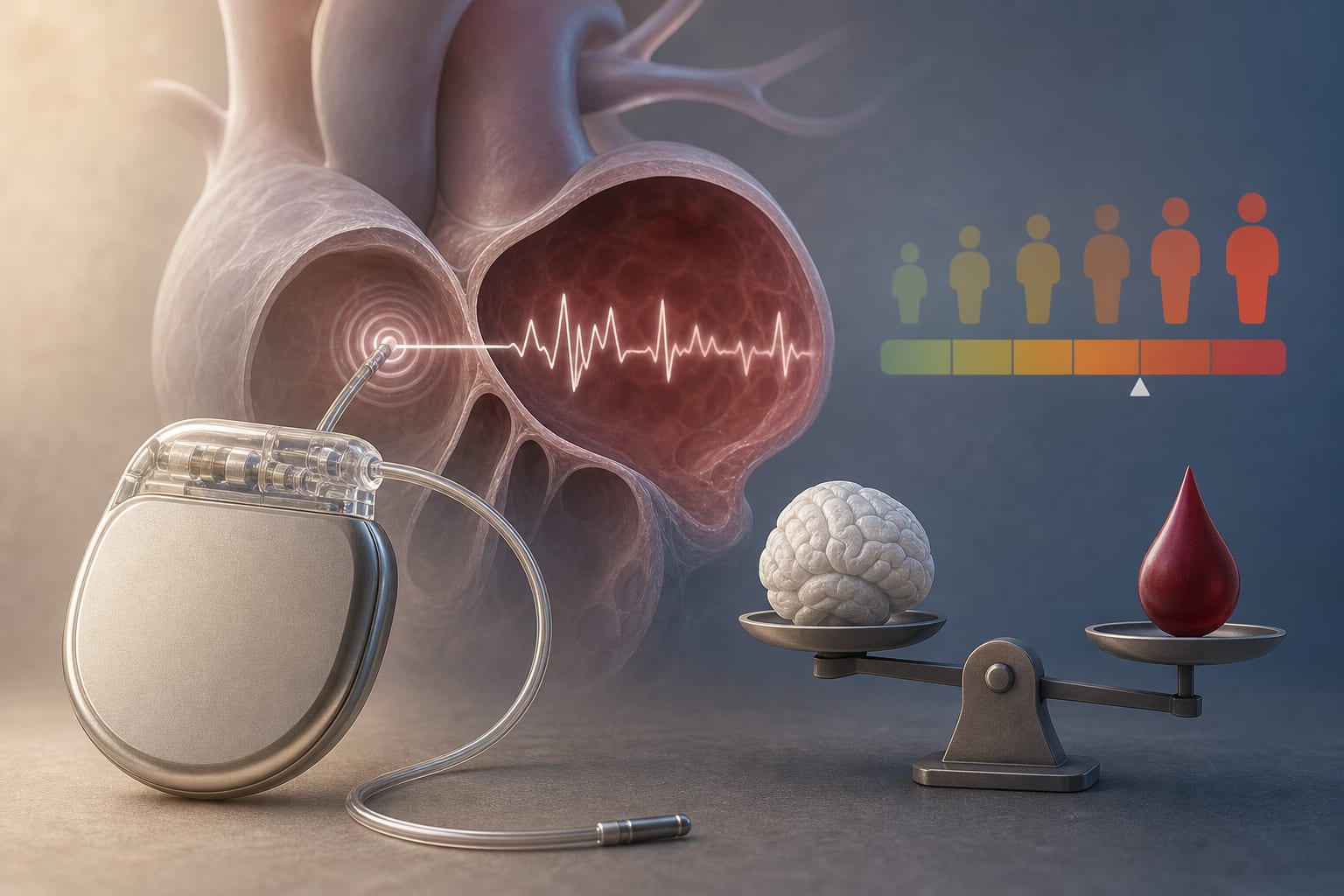
Clinical Scorecard: Anticoagulation Strategies for Device-Identified Atrial Fibrillation: Navigating Uncertainty and Variability in Clinical Value
At a Glance
Category
Detail
Condition
Key Mechanisms
Anticoagulation with direct oral anticoagulants (DOACs) for stroke prevention in device-detected AF.
Target Population
Patients with device-detected AF, particularly those with high CHA2DS2-VASc scores.
Care Setting
Key Highlights
DOACs may reduce ischemic stroke risk by 32% but increase major bleeding risk (risk ratio 1.62).
Patients with CHA2DS2-VASc scores >4 may derive greater benefit from DOAC therapy.
Guideline-Based Recommendations
Diagnosis
Management
DOACs may be considered in selected patients with high estimated stroke risk and no major bleeding risk factors, according to the 2024 European Society of Cardiology guidelines.
Monitoring & Follow-up
Risks
Patient & Prescribing Data
Patients with device-detected AF, particularly those with varying CHA2DS2-VASc scores.
Higher CHA2DS2-VASc scores correlate with greater potential benefits from DOAC therapy.
Federal prosecutors allege that a Florida physician and research staff fabricated clinical trial records that were submitted into database systems used to evaluate investigational drugs.