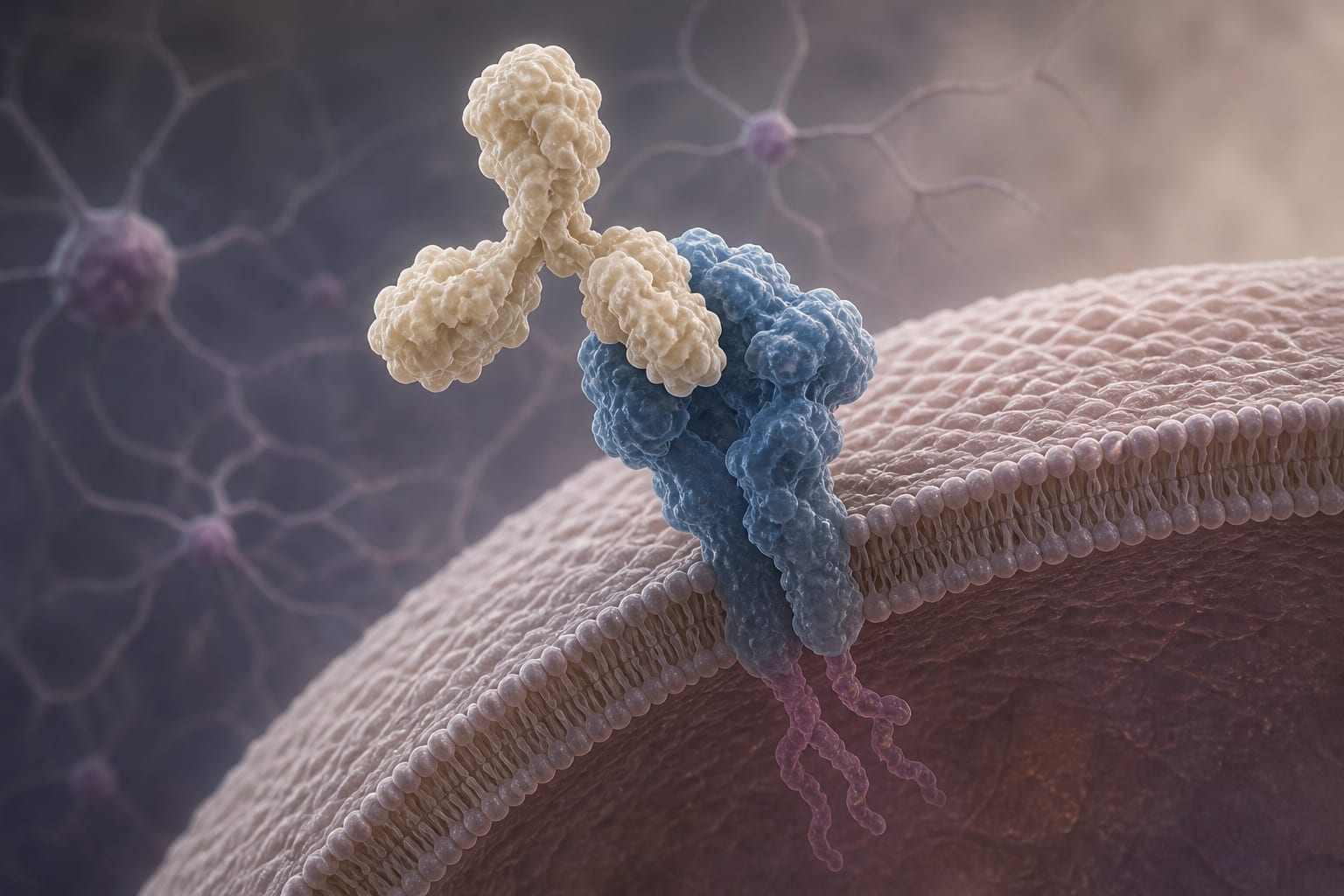
Nemolizumab, an IL-31 Receptor-α Antagonist, for Refractory Brachioradial Pruritus: A Case Report
-
By
-
Manuel P. Pereira
-
Eva M. Grekowitz
-
Martin Metz
-
November 20, 2026
Clinical Scorecard: Nemolizumab for Refractory Brachioradial Pruritus: A Case Report
At a Glance
| Category | Detail |
|---|---|
| Condition | Clinical topic addressed by the source article: Nemolizumab, an IL-31 Receptor-α Antagonist, for Refractory Brachioradial Pruritus |
| Key Mechanisms | BRP pathogenesis is thought to involve UV-related cutaneous nerve-fiber injury and cervical spine degeneration. The article describes IL-31 as a cytokine linking immune-cell activity and sensory-nerve stimulation, and as a potential therapeutic target. |
| Target Population | Patients or participants described in the source article. |
| Care Setting | Case-report clinical context: BRP was diagnosed from the characteristic presentation without cervical spine imaging; symptoms and quality-of-life measures were reported during 3 months of treatment follow-up. |
Key Highlights
- The patient had bilateral arm pruritus, burning, and pain for more than 4 years, with temporary relief from cold exposure.
- Symptoms persisted despite topical treatments, gabapentin, pregabalin, and naltrexone.
- After nemolizumab initiation, WI-NRS decreased from 7–9/10 to 3/10 within 10 days and was most often 0–1/10 thereafter.
- DLQI and ItchyQoL scores declined markedly after the first dose and subsequently stabilized.
- The report is limited to one case, concomitant antipruritic treatment, and a 3-month observation period.
Guideline-Based Recommendations
Diagnosis
- The case diagnosis was based on the characteristic clinical presentation; cervical spine imaging was not performed.
- The patient reported temporary symptom relief from cold exposure, consistent with a positive ice-pack sign.
Management
- The article describes suggested management as avoiding triggers such as heat and using topical treatments, anticonvulsants, antidepressants, or opioid receptor modulators.
- Nemolizumab was given as a 60 mg loading dose followed by 30 mg every 4 weeks, while pregabalin and naltrexone were continued.
- The authors state that further studies are required before nemolizumab can be considered for selected individuals with severe, refractory BRP.
Monitoring & Follow-up
Risks
Patient & Prescribing Data
One 65-year-old woman with more than 4 years of bilateral arm symptoms and inadequate sustained response to prior topical agents, gabapentin, pregabalin, and naltrexone.
Nemolizumab was initiated at 60 mg, then continued at 30 mg every 4 weeks alongside established pregabalin and naltrexone. Itch improved within 10 days and remained low during the reported 3-month follow-up.
Clinical Best Practices
- The case involved characteristic BRP symptoms and distribution, with temporary relief from cold exposure.
- Examination showed lichenification and excoriations; biopsy findings were compatible with chronic scratch lesions.
- The case tracked itch severity using WI-NRS and quality of life using DLQI and ItchyQoL.
- The authors note that the response cannot be attributed to nemolizumab independently of concomitant treatment and that follow-up was brief.
Related Resources & Content
Based on findings from:
IL-31-Receptor‑α Antagonist Nemolizumab in Treatment‑Refractory Brachioradial Pruritus: A Case Report
Manuel P. Pereira, Eva M. Grekowitz, Martin Metz. Dermatology And Therapy, 2026.
https://link.springer.com/article/10.1007/s13555-026-01970-0
This content is an AI-generated, fully rewritten summary based on a published scholarly article. It does not reproduce the original text and is not a substitute for the original publication. Readers are encouraged to consult the source for full context, data, and methodology.