Model-guided medicine for early diagnosis of transthyretin-associated cardiac amyloidosis using multimodal data integration and standardized interoperable models (the CRONOS-ATTR study) - Scorecard - MDSpire
Advertisement
Model-guided medicine for early diagnosis of transthyretin-associated cardiac amyloidosis using multimodal data integration and standardized interoperable models (the CRONOS-ATTR study)
Clinical Scorecard: Utilizing Integrated Multimodal Data and Standardized Models for Early Detection of Transthyretin-Associated Cardiac Amyloidosis: Insights from the CRONOS-ATTR Study
At a Glance
Category
Detail
Condition
Transthyretin cardiac amyloidosis (ATTR-CM)
Key Mechanisms
Deposition of misfolded transthyretin protein fibrils in the myocardium leading to diastolic dysfunction and heart failure.
Target Population
Older adults, particularly males with heart failure with preserved ejection fraction (HFpEF).
Care Setting
Clinical settings utilizing advanced diagnostic tools and AI algorithms.
Key Highlights
ATTR-CM is underdiagnosed due to nonspecific clinical manifestations.
Early diagnosis is critical for effective disease-modifying therapies.
AI-enhanced approaches may facilitate early detection of ATTR-CM.
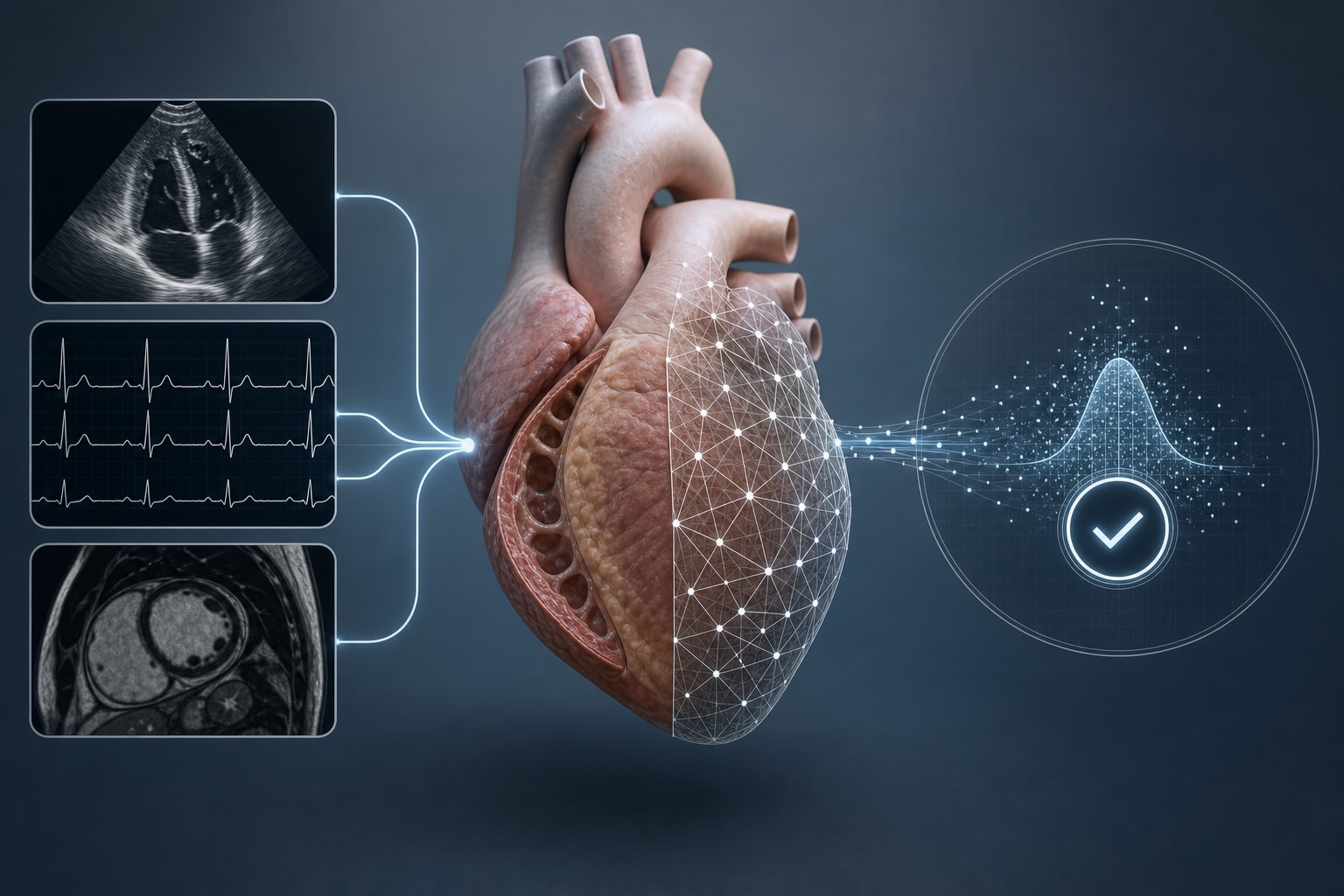
The CRONOS-ATTR study integrates multimodal data for improved diagnostic accuracy.
A systematic screening strategy is needed for early identification of asymptomatic patients.
Guideline-Based Recommendations
Diagnosis
Diagnosis confirmed by cardiac uptake on 99mTc-DPD scintigraphy with a Perugini score of 2 or 3.
Management
Genetic testing for TTR mutations to classify into hereditary (ATTRv) or wild-type (ATTRwt) forms.
Monitoring & Follow-up
Regular follow-up and assessment of cardiac function and symptoms.
Risks
Delayed detection can lead to less effective treatment options.
Patient & Prescribing Data
124 heart failure patients suspected of having cardiac amyloidosis.
Disease-modifying therapies are most effective when introduced early.
Clinical Best Practices
Utilize AI algorithms to enhance diagnostic workflows.
Incorporate multimodal data for comprehensive patient assessment.
Ensure transparency and interpretability of AI outputs for clinician trust.
by Raúl Ramos-Polo, Sergi Yun, Lorena Herrador, Fernando de Frutos, Sílvia Jovells-Vaqué, Andreea Eunice Cosa, Alejandro Espinosa, Adrian Ricarte Marin, Hugo Herrero Antón de Vez, Oriol Guardia, Carlos Casasnovas, Cristina Enjuanes, Jaime Reventós Puigjaner, Jose González-Costello, Josep Comín-Colet