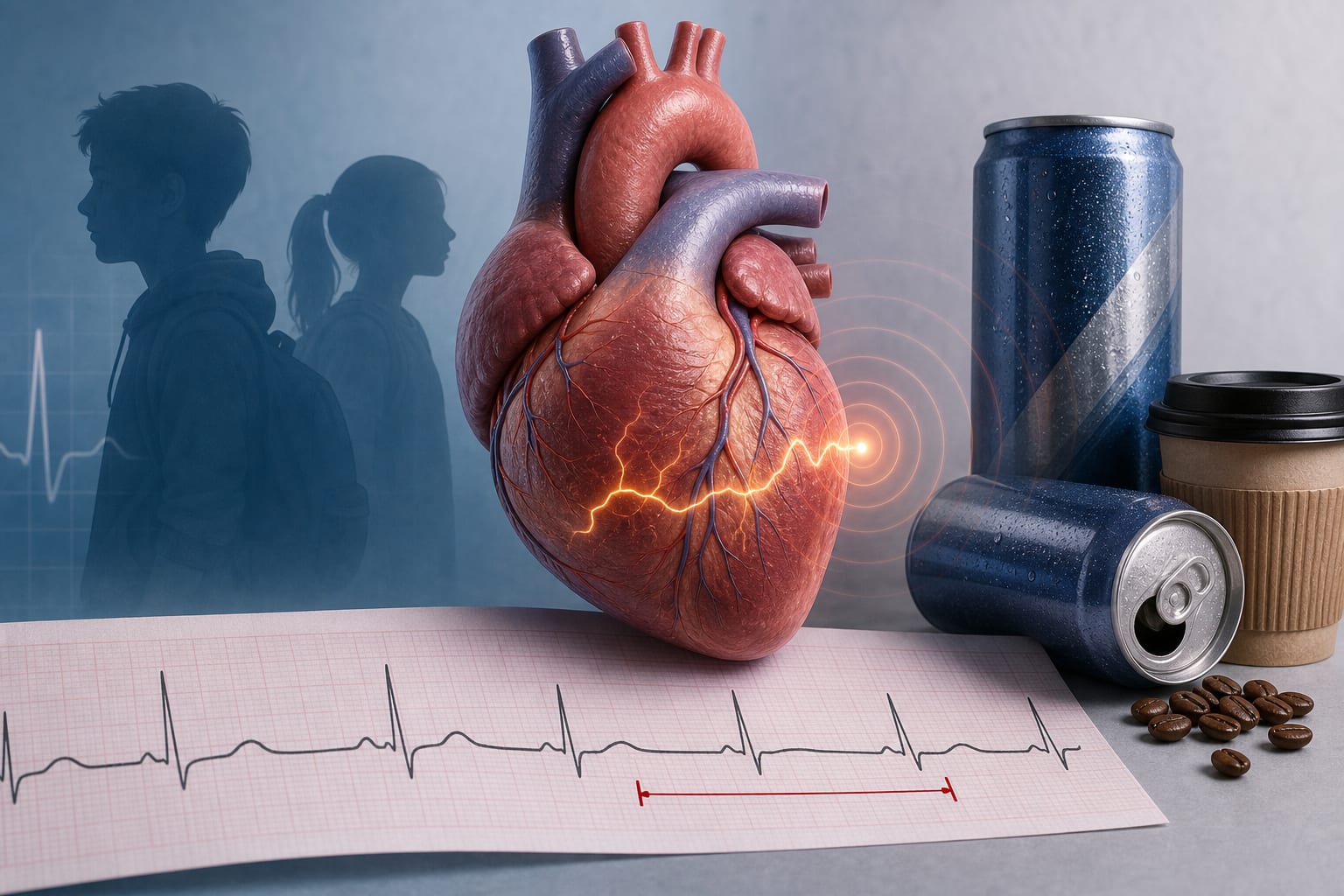
Caffeine Consumption and Cardiac Arrhythmia Risks in Pediatric and Adolescent Populations: A Comprehensive Review
By
N. Oeffl
M. Koestenberger
H. Sallmon
S. Kurath-Koller
June 26, 2026
Clinical Scorecard: Caffeine Consumption and Cardiac Arrhythmia Risks in Pediatric and Adolescent Populations: A Comprehensive Review
At a Glance
Category Detail
Condition Cardiac Arrhythmias Key Mechanisms Caffeine consumption can lead to cardiovascular complications, including arrhythmias, particularly in adolescents with limited prior exposure. Target Population Children and adolescents under 19 years of age Care Setting Pediatric cardiology and general medical practice
Key Highlights
Caffeine is widely consumed by adolescents, often through energy drinks. High doses of caffeine are associated with increased risk of arrhythmias. Limited evidence exists on caffeine's arrhythmogenic effects in children and adolescents. Caffeine consumption may be compounded by other substances like alcohol. Severe arrhythmias can lead to hemodynamic instability or sudden cardiac death. Guideline-Based Recommendations
Diagnosis
Monitor for arrhythmias in patients consuming high doses of caffeine. Management
Assess caffeine intake and consider reducing consumption in symptomatic patients. Monitoring & Follow-up
Electrocardiographic monitoring for patients with reported arrhythmias. Risks
Increased risk of arrhythmias and potential for severe cardiovascular events. Patient & Prescribing Data
Adolescents aged 13 to 18 years
Caffeine consumption should be carefully monitored due to potential cardiac effects.
Clinical Best Practices
Educate patients and families about the risks of high caffeine consumption. Encourage moderation in caffeine intake, especially in adolescents. Consider alternative beverages with lower caffeine content. Related Resources & Content