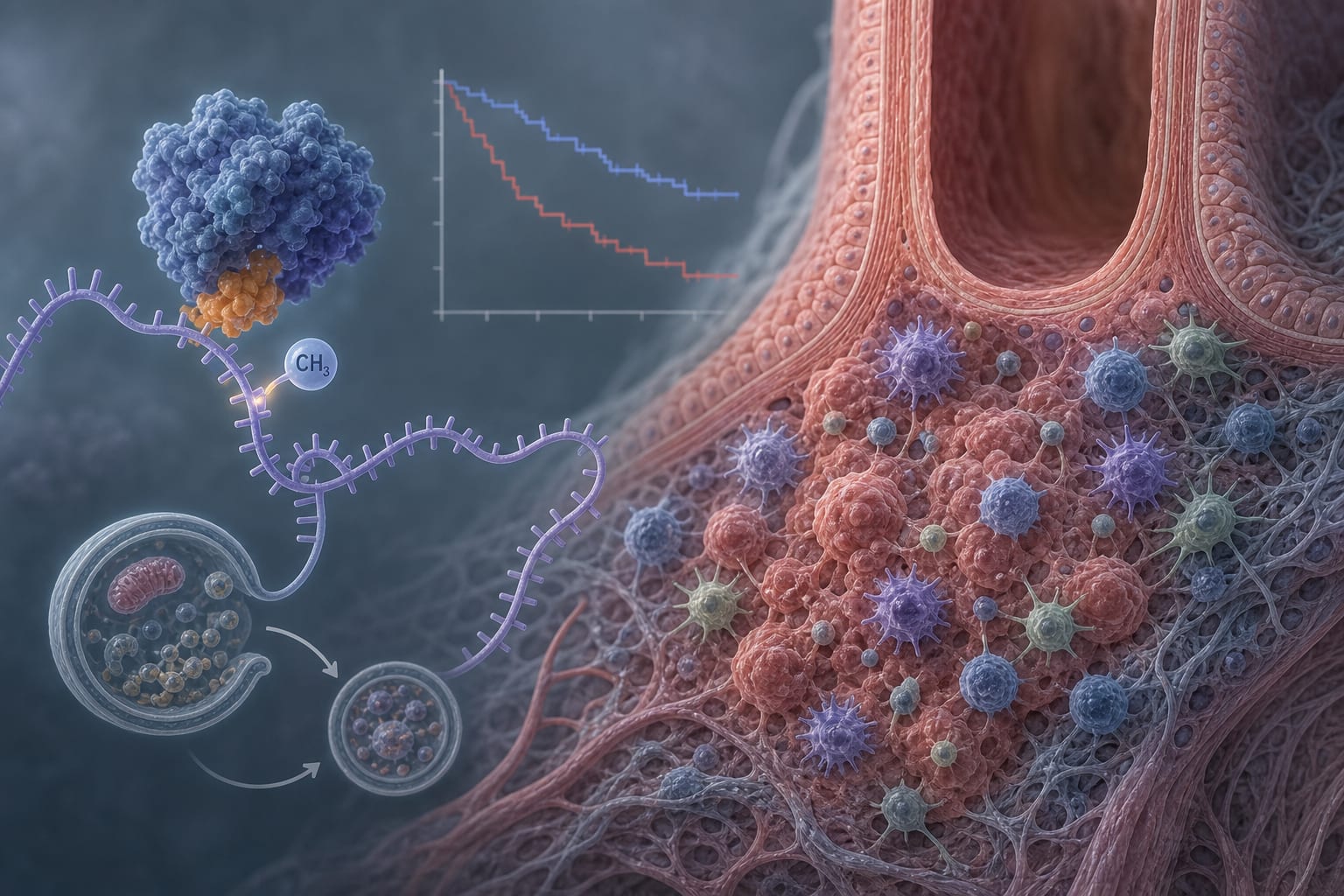
Development and validation of an m6A and autophagy related lncRNAs signature for predicting survival and modulating the immune microenvironment in esophageal squamous cell carcinoma - Scorecard - MDSpire
Advertisement
Development and validation of an m6A and autophagy related lncRNAs signature for predicting survival and modulating the immune microenvironment in esophageal squamous cell carcinoma
Clinical Scorecard: Creation and assessment of a signature based on m6A and autophagy-associated lncRNAs for predicting survival outcomes and influencing the immune landscape in esophageal squamous cell carcinoma
At a Glance
Category
Detail
Condition
Esophageal Squamous Cell Carcinoma (ESCC)
Key Mechanisms
m6A modification and autophagy-related lncRNAs
Target Population
Patients with esophageal squamous cell carcinoma
Care Setting
Oncology
Key Highlights
Established a prognostic model based on five m6aARLncs for predicting overall survival in ESCC patients.
Identified unique immune phenotypes associated with the prognostic model.
Correlated expression of immune checkpoint molecules with risk stratification.
Pharmacogenomic analysis revealed nine compounds with differential sensitivity across risk strata.
Validated mRNA expression levels of key lncRNAs using RT-qPCR.
Guideline-Based Recommendations
Diagnosis
Utilize transcriptomic data for risk stratification in ESCC.
Management
Consider targeted therapeutic interventions based on m6A-autophagy-lncRNA regulatory axis.
Monitoring & Follow-up
Assess immune microenvironment changes in relation to risk scores.
Risks
Late-stage diagnosis contributes to poor prognosis in ESCC.
Patient & Prescribing Data
Patients diagnosed with esophageal squamous cell carcinoma.
Potential therapeutic agents identified through pharmacogenomic profiling.
Clinical Best Practices
Incorporate m6A and autophagy-related biomarkers in prognostic assessments.
Utilize immune profiling to inform treatment strategies.