Prevalence and determinants of fever, diarrhea, and acute respiratory infection among children aged 5–59 months in Somaliland, 2020: insights from a nationwide survey - Scorecard - MDSpire

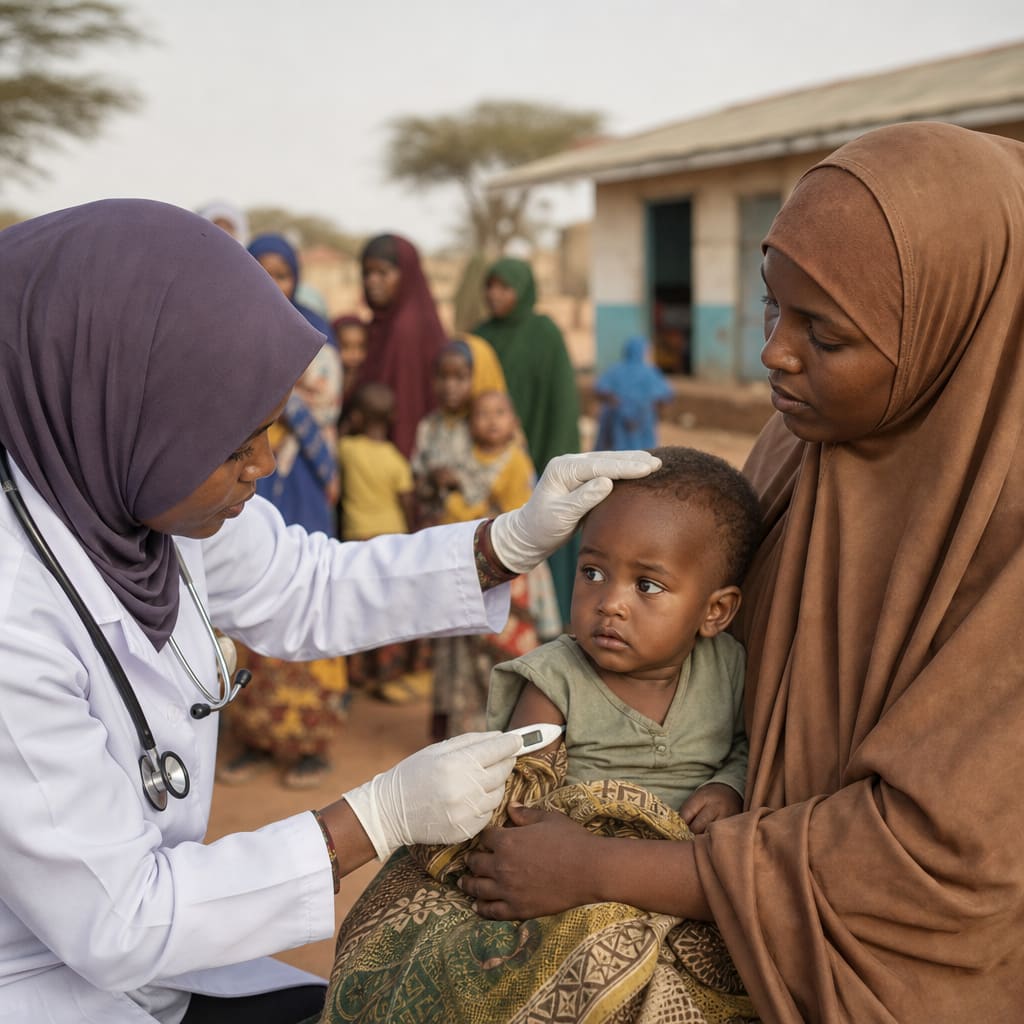
Prevalence and determinants of fever, diarrhea, and acute respiratory infection among children aged 5–59 months in Somaliland, 2020: insights from a nationwide survey

  • By

  • Abdilaahi Yusuf Nuh

  • May 4, 2026

  • 0 min

Share

Clinical Scorecard: Assessment of the Frequency and Influencing Factors of Fever, Diarrhea, and Acute Respiratory Infections in Children Aged 5 to 59 Months in Somaliland, 2020: Findings from a National Survey
At a Glance

CategoryDetail
ConditionFever, Diarrhea, Acute Respiratory Infections (ARIs)
Key MechanismsInfluenced by socioeconomic, environmental, and maternal factors.
Target PopulationChildren aged 5–59 months in Somaliland.
Care SettingCommunity and healthcare facilities in Somaliland.

Key Highlights

  • Prevalence of fever, diarrhea, and ARI was 6.07%, 4.75%, and 3.66%, respectively.
  • Children aged ≥25 months had significantly lower odds of these illnesses.
  • Regional variations noted, with Togdheer showing lower odds compared to Maroodi-Jeeh.
  • Access to healthcare significantly reduced odds of diarrhea and fever.
  • Nomadic lifestyle associated with decreased odds of diarrhea, fever, and ARI.

Guideline-Based Recommendations

Diagnosis

  • Assess prevalence of fever, diarrhea, and ARIs in children aged 5–59 months.

Management

  • Implement targeted interventions focusing on early childhood healthcare access.

Monitoring & Follow-up

  • Monitor regional disparities in childhood illness prevalence.

Risks

  • Consider socioeconomic and environmental factors impacting health outcomes.

Patient & Prescribing Data

Children aged 5–59 months in Somaliland.

Healthcare access is crucial for reducing morbidity from these illnesses.

Clinical Best Practices

  • Enhance healthcare access for children in rural and nomadic populations.
  • Focus on improving sanitation and hygiene practices.
  • Promote maternal education to reduce childhood illness risks.

References

Original Source(s)

Related Content