Identification of frailty heterogeneity and its transition trajectories in patients with chronic heart failure: a latent transition analysis - Scorecard - MDSpire

Identification of frailty heterogeneity and its transition trajectories in patients with chronic heart failure: a latent transition analysis

  • By

  • Shun Zhang

  • Yuqin Huang

  • Xiaohan Zhai

  • Hongrong Huang

  • Ming Hou

  • Yan Wang

  • July 2, 2026

  • 0 min

Share

Clinical Scorecard: Characterization of Frailty Variability and Transition Patterns in Chronic Heart Failure Patients: A Latent Transition Analysis

At a Glance

CategoryDetail
ConditionChronic Heart Failure (CHF)
Key MechanismsFrailty subtypes and their transitions influenced by factors such as age, insurance status, and psychological burden.
Target PopulationHospitalized CHF patients
Care SettingCardiovascular departments of general hospitals

Key Highlights

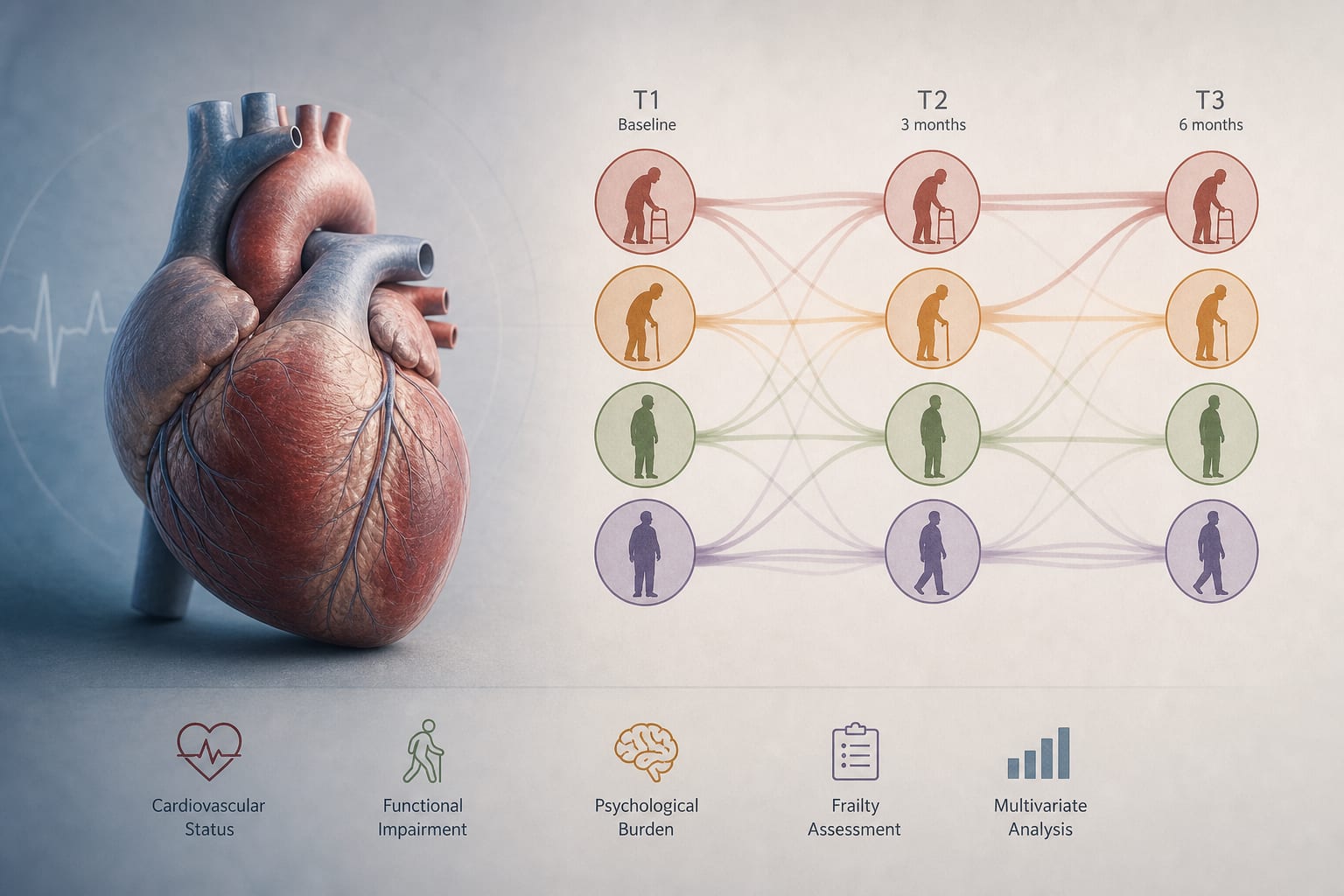
  • Three frailty subtypes identified: healthy type, social-dominant type, and psychological-dominant type.
  • Moderate frailty subtype showed the highest transition rate to high frailty.
  • Significant factors influencing frailty transitions include age, NYHA classification, and psychological factors.

Guideline-Based Recommendations

Diagnosis

  • Utilize Latent Profile Analysis (LPA) to identify frailty subtypes.

Management

  • Implement stratified management targeting different frailty subtypes.

Monitoring & Follow-up

  • Monitor transitions between frailty subtypes over time.

Risks

  • Patients with social-dominant moderate frailty are at high risk for deterioration.

Patient & Prescribing Data

324 hospitalized CHF patients from two general hospitals in Xinjiang, China.

Target interventions based on frailty subtype to improve long-term health outcomes.

Clinical Best Practices

  • Focus on elderly patients and those with poor cardiac function.
  • Address psychological burdens and social support deficits.

Related Resources & Content

    Original Source(s)

    Related Content