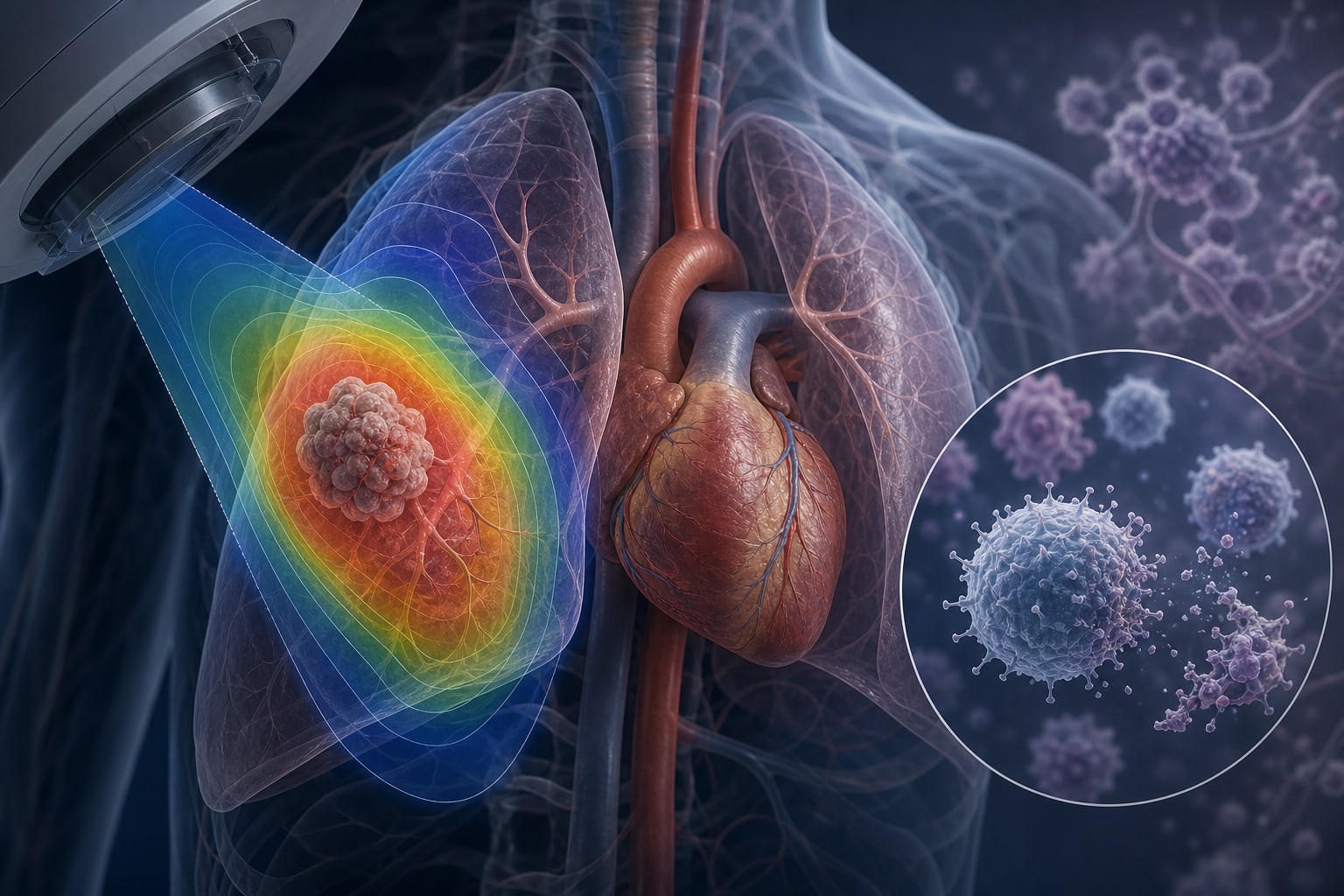
Navigating to the Periphery of the Lung: A Robotic Bronchoscopy Demonstration
As the first to bring this technology to patients in New York State in July 2020, Dr. Ivanick has now performed more than 100 bronchoscopies using the platform, more than any other provider in New York State.
Clinical Scorecard: Navigating to the Periphery of the Lung: A Robotic Bronchoscopy Demonstration
At a Glance
Category Detail
Condition Peripheral lung nodules Key Mechanisms Robotic navigational bronchoscopy using the Monarch platform Target Population Patients with peripheral lung nodules, particularly those at high risk for surgical complications Care Setting Interventional pulmonology
Key Highlights
Robotic bronchoscopy allows for accurate access to remote lung nodules. Utilizes high-resolution CT scans for precise navigation. Minimizes risks of delayed treatment and surgical complications. Dr. Nathaniel Ivanick has performed over 100 procedures using this technology. Combines electromagnetic navigation for enhanced procedural accuracy. Guideline-Based Recommendations
Diagnosis
Use high-resolution CT imaging to identify nodules. Management
Employ robotic bronchoscopy for biopsy of peripheral lung nodules. Monitoring & Follow-up
Conduct inspection bronchoscopy to check for visible tumors in the airway. Risks
Consider patient-specific risks, especially in those with compromised lung function. Patient & Prescribing Data
Patients with suspected malignancies in peripheral lung nodules.
Robotic bronchoscopy is preferred for patients at high risk for complications from traditional surgical approaches.
Clinical Best Practices
Thoroughly plan the procedure using CT imaging to map airways. Ensure proper setup of robotic equipment to compensate for lack of haptic feedback. Utilize electromagnetic navigation for accurate positioning during the procedure. References