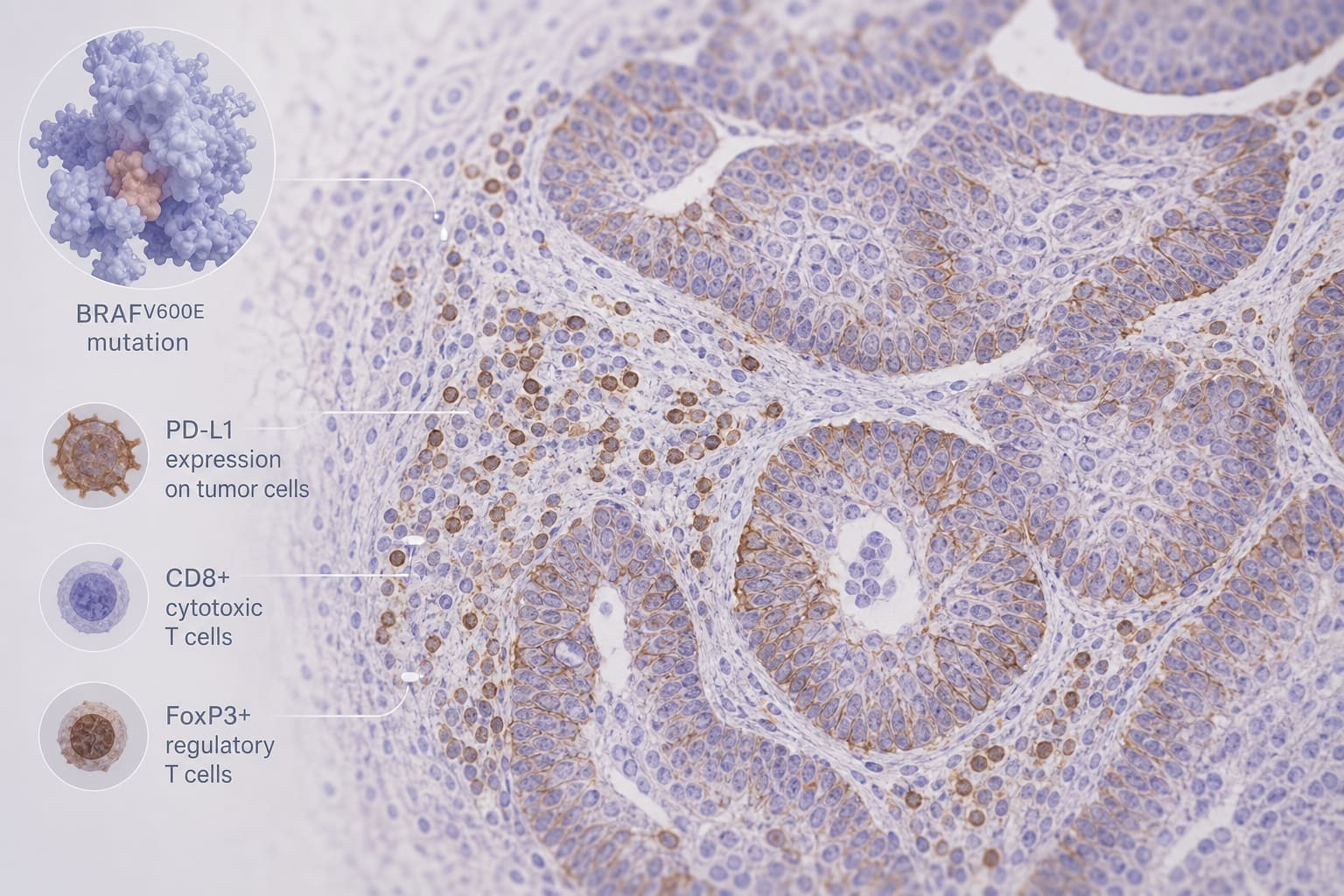
Programmed cell death ligand 1 in correlation with BRAFV600E mutation, molecular characteristics and biological behavior in ameloblastoma - Scorecard - MDSpire
Advertisement
Programmed cell death ligand 1 in correlation with BRAFV600E mutation, molecular characteristics and biological behavior in ameloblastoma
Clinical Scorecard: Association of Programmed Cell Death Ligand 1 with BRAFV600E Mutation, Molecular Features, and Biological Behavior in Ameloblastoma
At a Glance
Category
Detail
Condition
Ameloblastoma (AM)
Key Mechanisms
Programmed cell death ligand 1 (PD-L1) expression and BRAFV600E mutation
Target Population
Patients with Ameloblastoma
Care Setting
Oncology and Pathology
Key Highlights
84% of AM patients were PD-L1 positive.
Significant association between PD-L1 positivity and BRAFV600E mutation (p = 0.003).
High CD8+ T cell infiltration correlated with favorable disease-free survival (DFS) (HR = 0.112, p = 0.041).
No significant correlation found between PD-L1 and CD8+ T cells or FoxP3+ cells.
Guideline-Based Recommendations
Diagnosis
Immunohistochemistry (IHC) for PD-L1 and BRAFV600E mutation testing.
Management
Consider targeted therapy for BRAFV600E mutation-positive AM.
Monitoring & Follow-up
Survival analysis using Kaplan-Meier method and Cox proportional hazards regression.
Risks
Potential for drug resistance and adverse events with single-agent BRAF-targeted therapy.
Patient & Prescribing Data
50 patients with pathological diagnosis of AM.
High prevalence of BRAFV600E mutation suggests potential for targeted therapy.
Clinical Best Practices
Evaluate PD-L1 expression and immune cell infiltration in AM for therapeutic decision-making.
Utilize comprehensive histological classification for accurate diagnosis.