Red Blood Cell Transfusion Characteristics and Morbidity or Mortality in Very-Low-Birth-Weight Infants - Scorecard - MDSpire

Red Blood Cell Transfusion Characteristics and Morbidity or Mortality in Very-Low-Birth-Weight Infants

  • By

  • Jeanne E. Hendrickson

  • Rebecca J. Birch

  • Elizabeth A. K. Rowley

  • Martha Sola-Visner

  • Brian R. Branchford

  • Xuxin Chen

  • Brian Custer

  • Robert A. DeSimone

  • Daniel W. Bougie

  • Erika M. Edwards

  • Ruchika Goel

  • Jerome Gottschall

  • Eldad A. Hod

  • Morvarid Moayeri

  • Nareg H. Roubinian

  • Oliver Karam

  • Jeffrey J. VanWormer

  • Elizabeth F. Stone

  • Naomi L. C. Luban

  • Cassandra D. Josephson

  • Ravi M. Patel

  • NHLBI Recipient Epidemiology Donor Evaluation Study–IV–Pediatric (REDS-IV-P)

  • Alan E. Mast

  • Lisa Baumann Kreuziger

  • Elliott P. Vichinsky

  • Bryan R. Spencer

  • Bruce S. Sachais

  • Kathy Chapman

  • Philip J. Norris

  • Mars Stone

  • Paul M. Ness

  • Steve H. Kleinman

  • June 24, 2026

  • 0 min

Share

Clinical Scorecard: Characteristics of Red Blood Cell Transfusions and Associated Morbidity or Mortality in Infants with Very Low Birth Weight

At a Glance

CategoryDetail
ConditionVery Low Birth Weight (VLBW) Infants
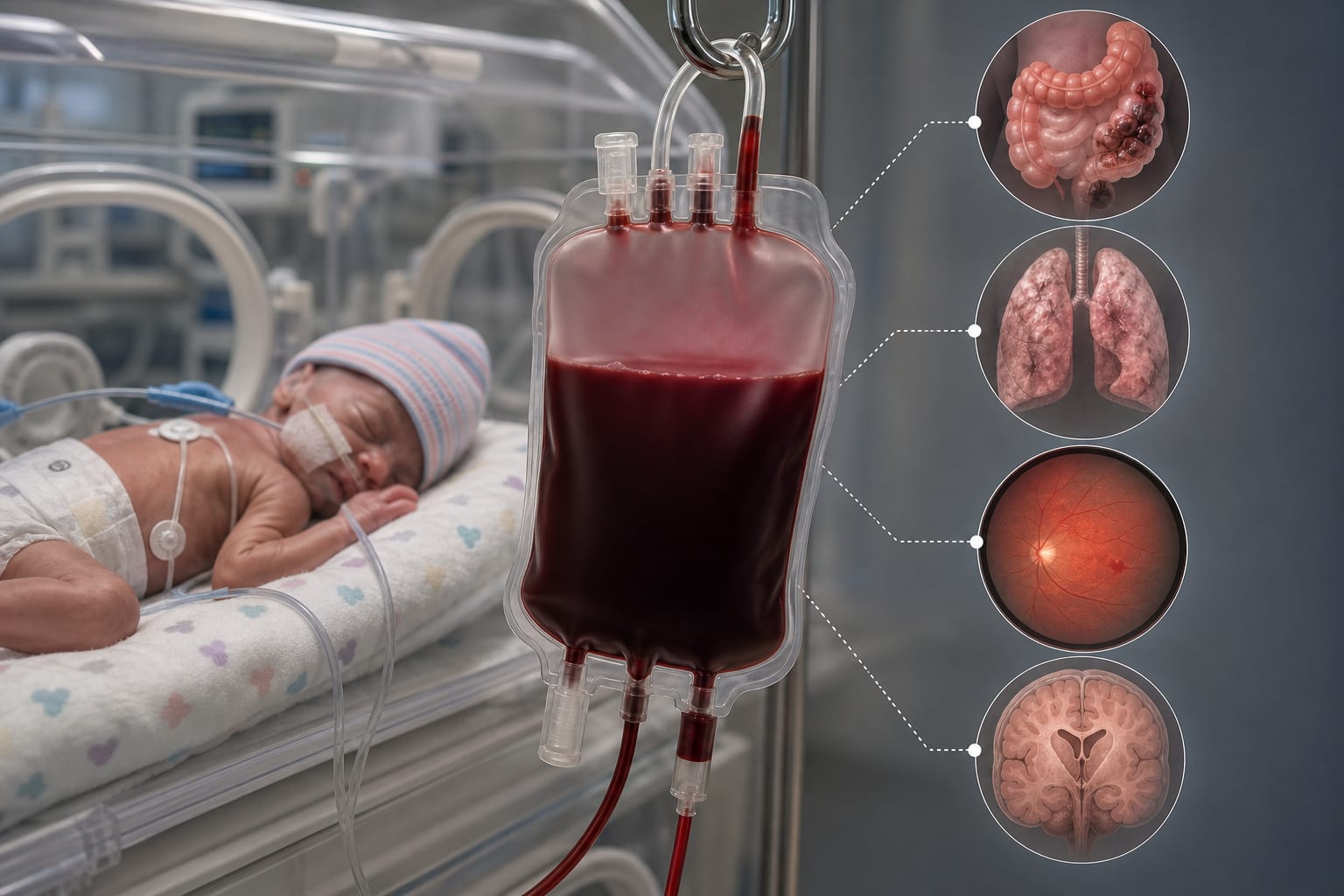
Key MechanismsIncreased risk of complications from allogeneic blood exposure, including NEC, BPD, ROP, and death.
Target PopulationInfants with very low birth weight admitted to participating hospitals.
Care SettingNeonatal intensive care units (NICUs) in US hospitals.

Key Highlights

  • Over half of VLBW infants receive RBC transfusions.
  • Transfusion thresholds show little to no difference in outcomes at discharge or neurodevelopmental follow-up.
  • Study evaluates transfusion characteristics linked to morbidity and mortality.
  • Primary outcome includes serious adverse events like IVH, NEC, BPD, ROP, or death.
  • Data linked from donors to recipients to assess transfusion impacts.

Guideline-Based Recommendations

Diagnosis

  • Monitor for complications such as IVH, NEC, BPD, ROP, and sepsis.

Management

  • Evaluate transfusion characteristics and donor attributes to minimize risks.

Monitoring & Follow-up

  • Follow infants until death, discharge, or 90 days of life.

Risks

  • Allogeneic blood exposure associated with increased morbidity and mortality.

Patient & Prescribing Data

VLBW infants born between April 1, 2019, to December 31, 2023.

Transfusion characteristics may influence outcomes; careful monitoring is essential.

Clinical Best Practices

  • Utilize linked databases for comprehensive transfusion data analysis.
  • Adhere to standardized case definitions for outcome measurement.
  • Implement risk assessment tools to evaluate illness severity at birth.

Related Resources & Content

Original Source(s)

Related Content