MEK inhibition achieves robust and durable responses in Erdheim–Chester disease - Scorecard - MDSpire
Coming Soon: Introducing MDSpire News. Learn more
Conexiant’s news site is now MDSpire News. Learn more

MEK Inhibitors Produce Strong, Sustained Responses in Erdheim–Chester Disease

  • By

  • Francesco Pegoraro

  • Félicien Triboulet

  • Matthias Papo

  • Francesco Peyronel

  • Anita Argentieri

  • Jerome Razanamahery

  • Ahmed Idbaih

  • Polyzois Makras

  • Ofer Shpilberg

  • Oshrat Hershkovitz-Rokah

  • Michael Girschikofsky

  • Matthew Collin

  • Kristian Bowles

  • Satyen H. Gohil

  • Rodothea Amerikanou

  • Emmanuel Ledoult

  • Tanguy Le Scornet

  • Mathilde de Menthon

  • Etienne Riviere

  • Xavier Boulu

  • Henry Dupuy

  • Achille Aouba

  • Stanislas Faguer

  • Xavier Solanich

  • Elena Sieni

  • Stéphane Barete

  • Chiara Bellino

  • Alessandro Tomelleri

  • Corrado Campochiaro

  • Lorenzo Dagna

  • Zahir Amoura

  • Jean-François Emile

  • Fleur Cohen-Aubart

  • Augusto Vaglio

  • Julien Haroche

  • October 6, 2026

Share

Clinical Scorecard: MEK Inhibitors Produce Strong, Sustained Responses in Erdheim–Chester Disease

At a Glance

CategoryDetail
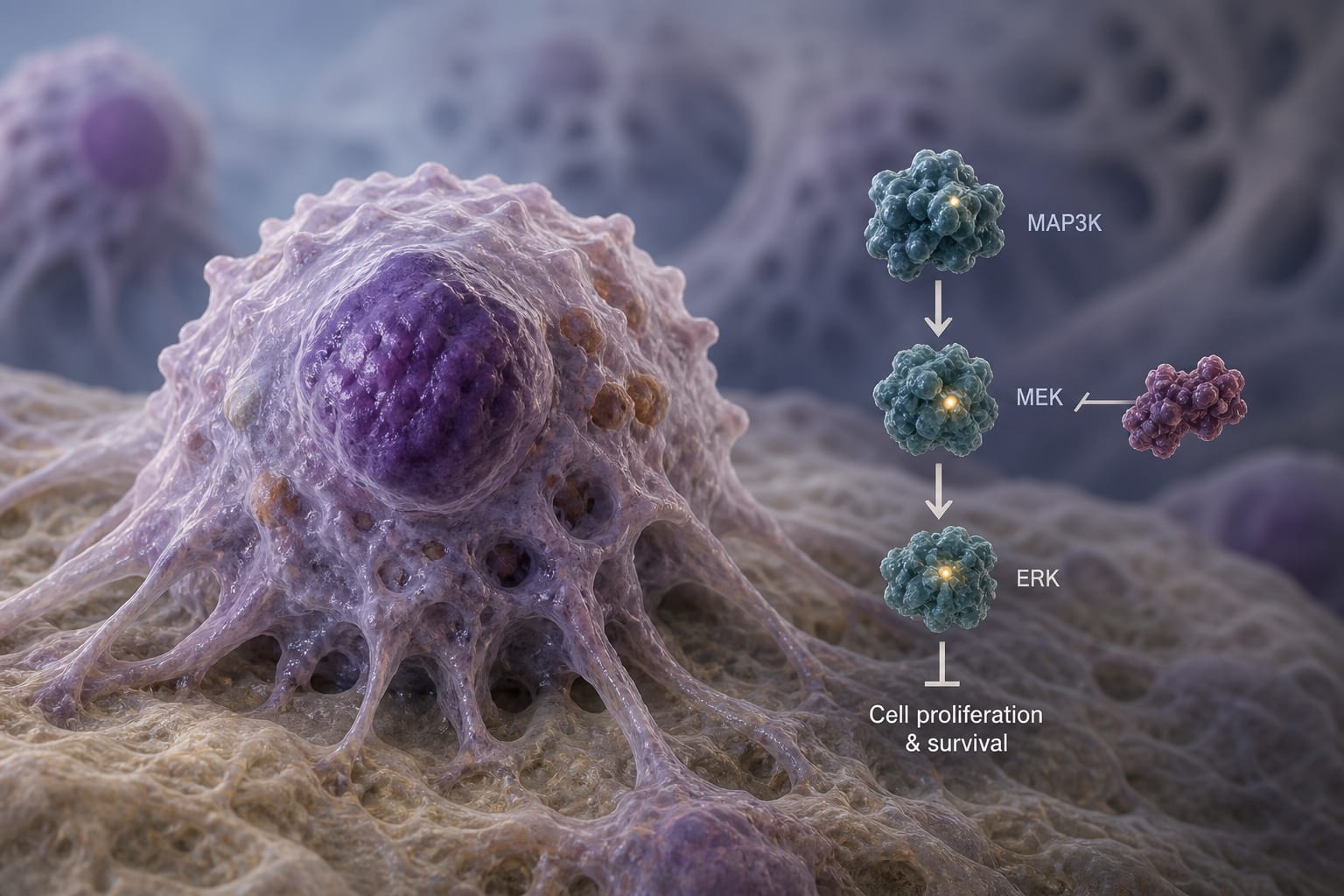
ConditionErdheim–Chester disease (ECD), a rare histiocytic cell neoplasm associated with activating somatic mutations in the MAPK pathway.
Key MechanismsMAPK-pathway mutations; MEK inhibitors (MEKi) target this pathway.
Target PopulationPatients with biopsy-proven ECD or mixed histiocytosis involving ECD who received MEKi monotherapy and had at least 6 months of follow-up.
Care SettingInternational, multicenter ECD care centers in eight European countries and Israel; treatment and outcomes were assessed through medical chart review.

Key Highlights

  • The study screened 206 patients and included 170 patients with ECD treated with MEKi monotherapy.
  • The cohort was predominantly male (71%); median age at diagnosis was 63 years.
  • Multisystem disease was reported in 69% of patients, with a median of four involved sites.
  • Response assessment combined clinical findings with radiologic and metabolic data.
  • The supplied article excerpt does not include the study's response, toxicity, or survival results.

Guideline-Based Recommendations

Diagnosis

  • ECD diagnosis followed international consensus guidelines; study eligibility required biopsy-proven ECD or mixed histiocytosis involving ECD.

Management

  • The study evaluated MEKi monotherapy at any treatment line; it does not provide a treatment recommendation in the supplied excerpt.

Monitoring & Follow-up

  • Response assessment incorporated clinical findings, MRI or CT, and PET metabolic data.
  • Adverse events during MEKi monotherapy were evaluated using CTCAE criteria.

Risks

  • The introduction describes ECD manifestations as heterogeneous and sometimes life-threatening.
  • Long-term efficacy and tolerability of MAPK inhibitors were identified by the authors as less well established.

Patient & Prescribing Data

170 patients with ECD treated with MEKi monotherapy across eight countries; median age at diagnosis was 63 years, and 71% were male.

Patients received MEKi monotherapy at any treatment line. The supplied excerpt does not report specific regimens, doses, response rates, or adverse-event frequencies.

Clinical Best Practices

  • Use the international consensus guidelines cited by the study for ECD diagnosis and organ-involvement classification.
  • Assess response using clinical, radiologic, and metabolic criteria together.
  • The study defined complete response as complete regression across clinical, radiologic, and metabolic assessments.
  • Evaluate adverse events during MEKi monotherapy according to CTCAE criteria.

Related Resources & Content

    Original Source(s)

    Related Content