Sugar-Sweetened and Artificially Sweetened Beverages and Liver Cancer—A Hard Look at Soft Drinks - Scorecard - MDSpire

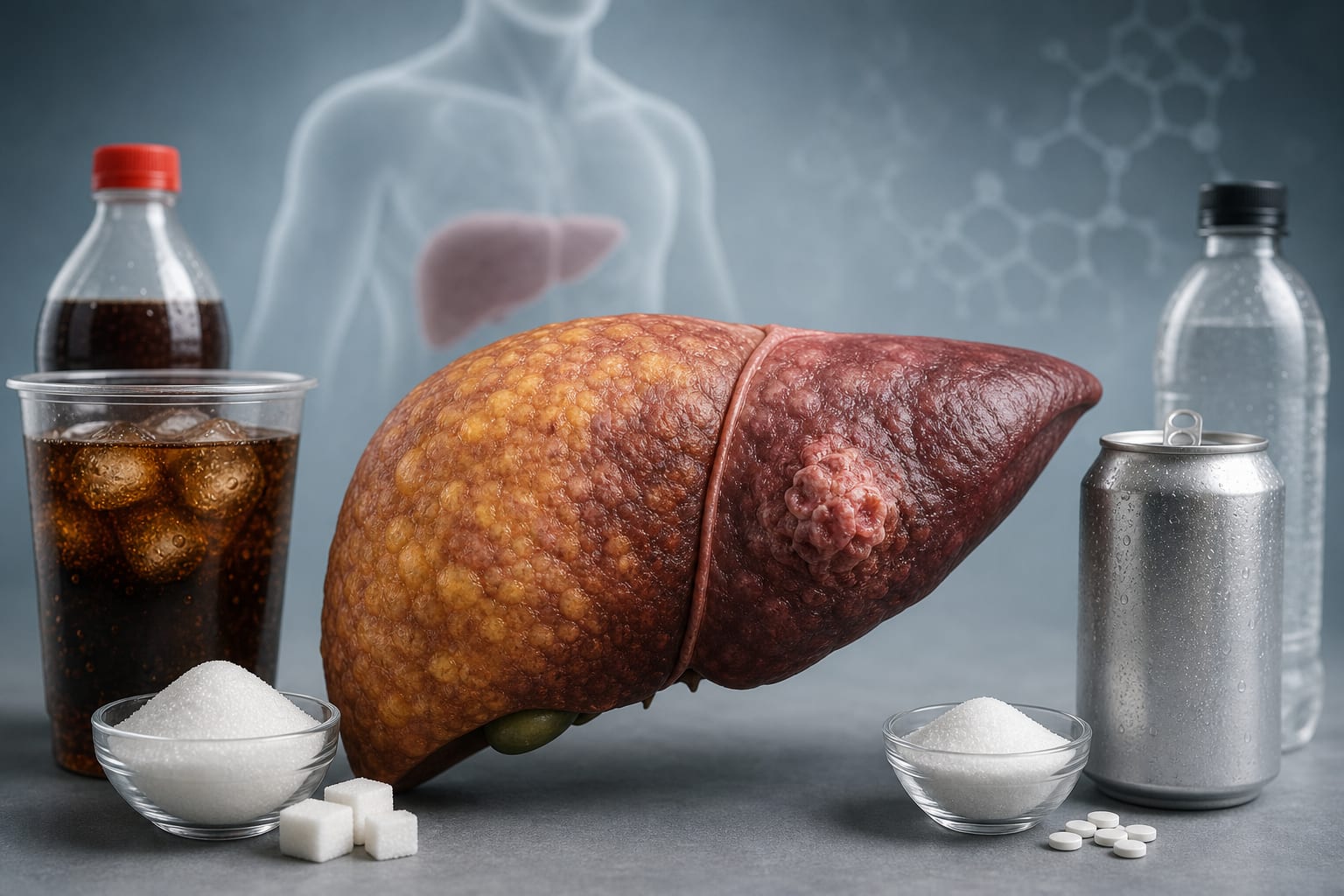
Sugar-Sweetened and Artificially Sweetened Beverages and Liver Cancer—A Hard Look at Soft Drinks

  • By

  • Daniel Clayton-Chubb

  • Andrew T. Chan

  • June 10, 2026

  • 0 min

Share

Clinical Scorecard: Examining the Relationship Between Sugar-Sweetened and Artificially Sweetened Drinks and Liver Cancer Risk

At a Glance

CategoryDetail
Condition
Key MechanismsIncreased consumption of sugar-sweetened beverages (SSB) linked to metabolic dysregulation, increased insulin resistance, and hepatic steatosis.
Target Population
Care Setting

Key Highlights

  • SSB consumption associated with increased risk of hepatocellular carcinoma (HCC) and intrahepatic cholangiocarcinoma (ICC).
  • 1-beverage/day increase in SSB linked to hazard ratios of 1.10 for HCC and 1.15 for ICC.
  • No association found between artificially sweetened beverages (ASB) and liver cancer.
  • Study utilized data from 11 prospective cohort studies.
  • Observational nature of study limits causality conclusions.

Guideline-Based Recommendations

Diagnosis

  • Monitor liver cancer incidence in populations with high SSB consumption.

Management

  • Encourage reduction of SSB intake.

Monitoring & Follow-up

  • Assess dietary patterns and metabolic health in patients at risk for liver cancer.

Risks

  • Consider potential residual confounding from metabolic disorders.

Patient & Prescribing Data

Individuals with high SSB intake or metabolic disorders.

Clinical Best Practices

  • Advise patients on the risks associated with high SSB consumption.
  • Promote healthy dietary alternatives to SSB.

Related Resources & Content

Original Source(s)

Related Content