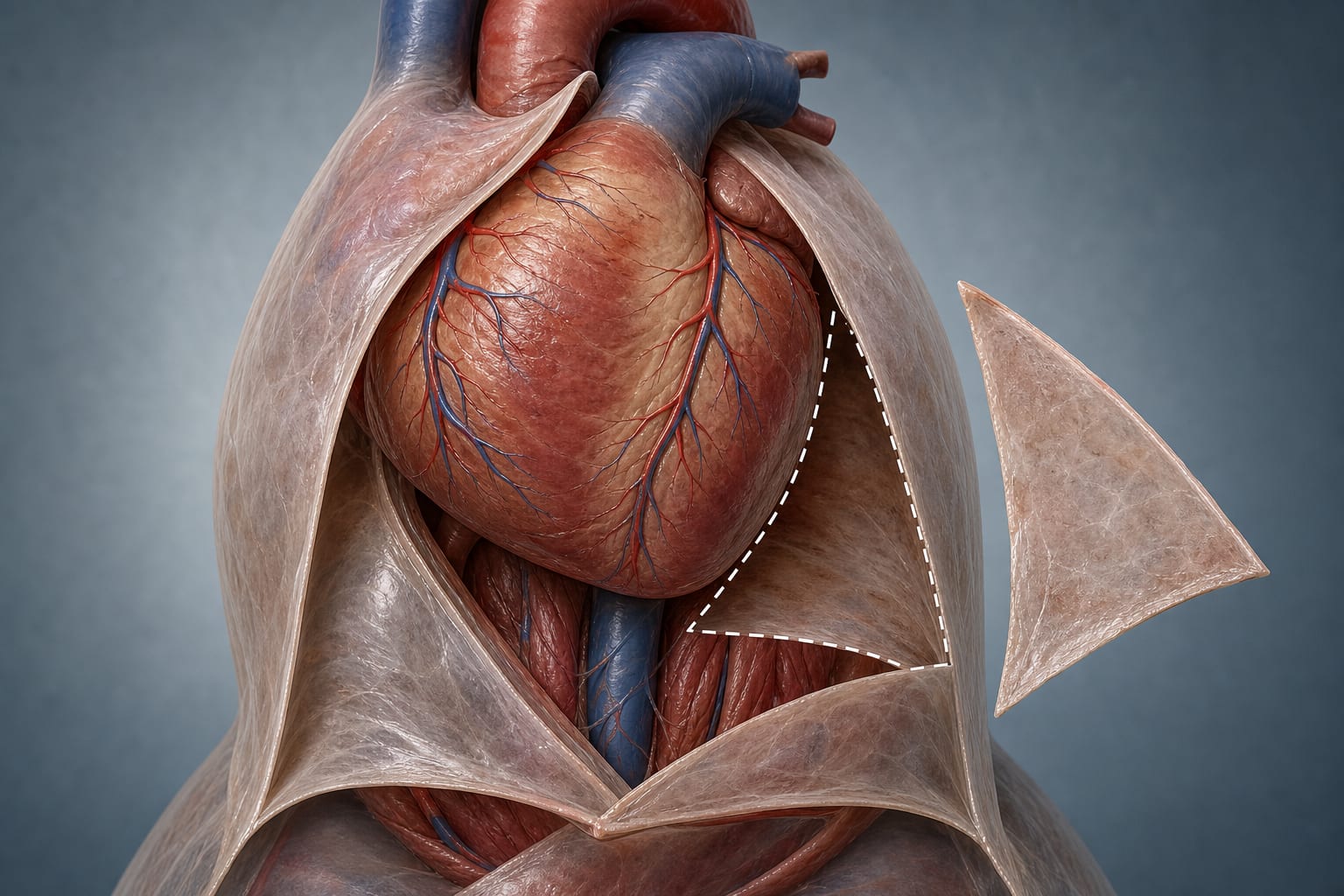
Triangular posterior pericardiectomy and postoperative outcomes after coronary artery bypass grafting
-
By
-
Dawid Imiełowski
-
Piotr Feusette
-
Andrzej Tukiendorf
-
Marek Cisowski
-
June 25, 2026
-
Clinical Scorecard: Impact of Triangular Posterior Pericardiectomy on Early and One-Year Outcomes Following Coronary Artery Bypass Grafting
At a Glance
| Category | Detail |
|---|
| Condition | Coronary Artery Bypass Grafting (CABG) |
| Key Mechanisms | Postoperative atrial fibrillation (POAF) and pericardial effusion as common complications. |
| Target Population | Patients undergoing CABG with cardiopulmonary bypass. |
| Care Setting | Department of Cardiac Surgery, University Clinical Hospital |
Key Highlights
- Triangular posterior pericardiectomy (TPP) associated with lower inflammatory response.
- Phenotype 4 showed no POAF or atrial fibrillation during 12-month follow-up.
- TPP resulted in lower drainage volumes and absence of pericardial effusion.
Guideline-Based Recommendations
Diagnosis
- Evaluate postoperative complications including POAF and pericardial effusion.
Management
- Consider triangular posterior pericardiectomy to reduce complications after CABG.
Monitoring & Follow-up
- Monitor CRP levels and drainage volume postoperatively.
Risks
- Increased risk of complications in elderly patients and those with comorbidities.
Patient & Prescribing Data
489 patients undergoing CABG with cardiopulmonary bypass.
TPP may improve postoperative outcomes by reducing inflammation and effusion.
Clinical Best Practices
- Implement TPP in CABG to minimize POAF and pericardial effusion.
- Conduct unsupervised phenotypic analysis for postoperative response assessment.
Related Resources & Content