The Function of CD8+ T Cells in Osteoporosis Immunoregulation
By
ZiChao Chen
Hao Hu
Die Hu
QinChuan Du
HuanZhi Yang
RongHua Xu
Peng Yu
XingBo Hu
Jun Hu
June 12, 2026
Clinical Scorecard: The Function of CD8+ T Cells in Osteoporosis Immunoregulation
At a Glance
Category Detail
Condition Osteoporosis Key Mechanisms CD8+ T cells exhibit dual roles in bone regulation, influenced by hormonal and inflammatory signals. Target Population Middle-aged and older adults, particularly postmenopausal women. Care Setting Clinical and research settings focused on osteoporosis and immunology.
Key Highlights
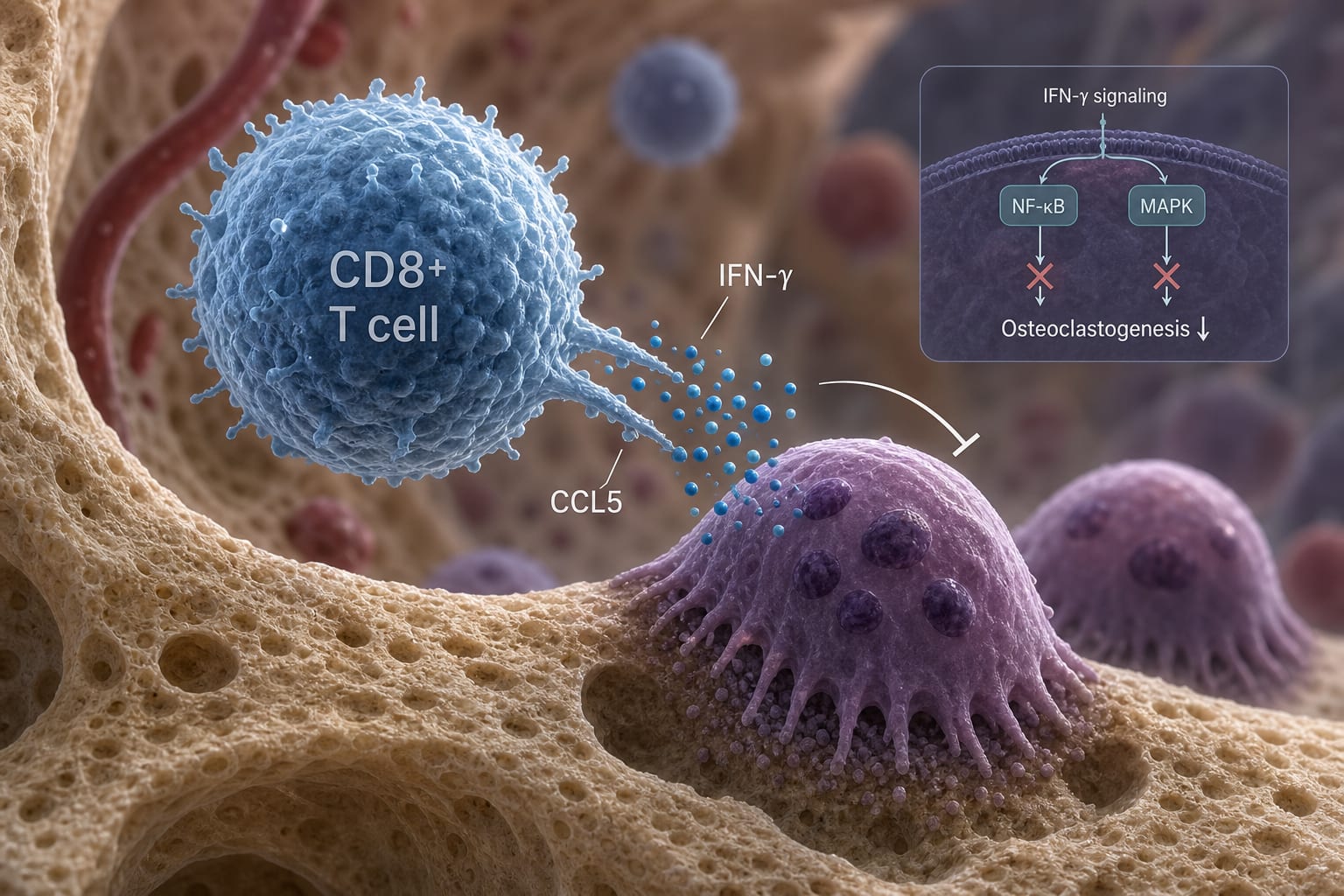
Activated CD8+ T cells secrete IFN-γ, inhibiting osteoclast formation. Estrogen deficiency shifts CD8+ T cells to a bone-resorbing phenotype via CCL5. Aging leads to accumulation of senescent CD28- CD8+ T cells, worsening bone loss. CD8+ T cells can promote apoptosis of osteoblasts and osteocytes. Granzyme K protects against bone loss, while CCL5 promotes it. Guideline-Based Recommendations
Diagnosis
Assess bone density and consider immunological factors in osteoporosis. Management
Target specific pathways like IL-33/CCL5 to restore osteoimmune balance. Monitoring & Follow-up
Evaluate CD8+ T cell populations and their cytokine profiles in patients. Risks
Consider the impact of chronic inflammation and aging on bone health. Patient & Prescribing Data
Patients with osteoporosis, particularly those experiencing hormonal changes.
Focus on therapies that modulate CD8+ T cell activity and their secretory profiles.
Clinical Best Practices
Monitor hormonal levels and immune status in osteoporosis patients. Consider the role of immune senescence in treatment planning. Investigate the potential of targeting CD8+ T cell-derived molecules for therapy. Related Resources & Content