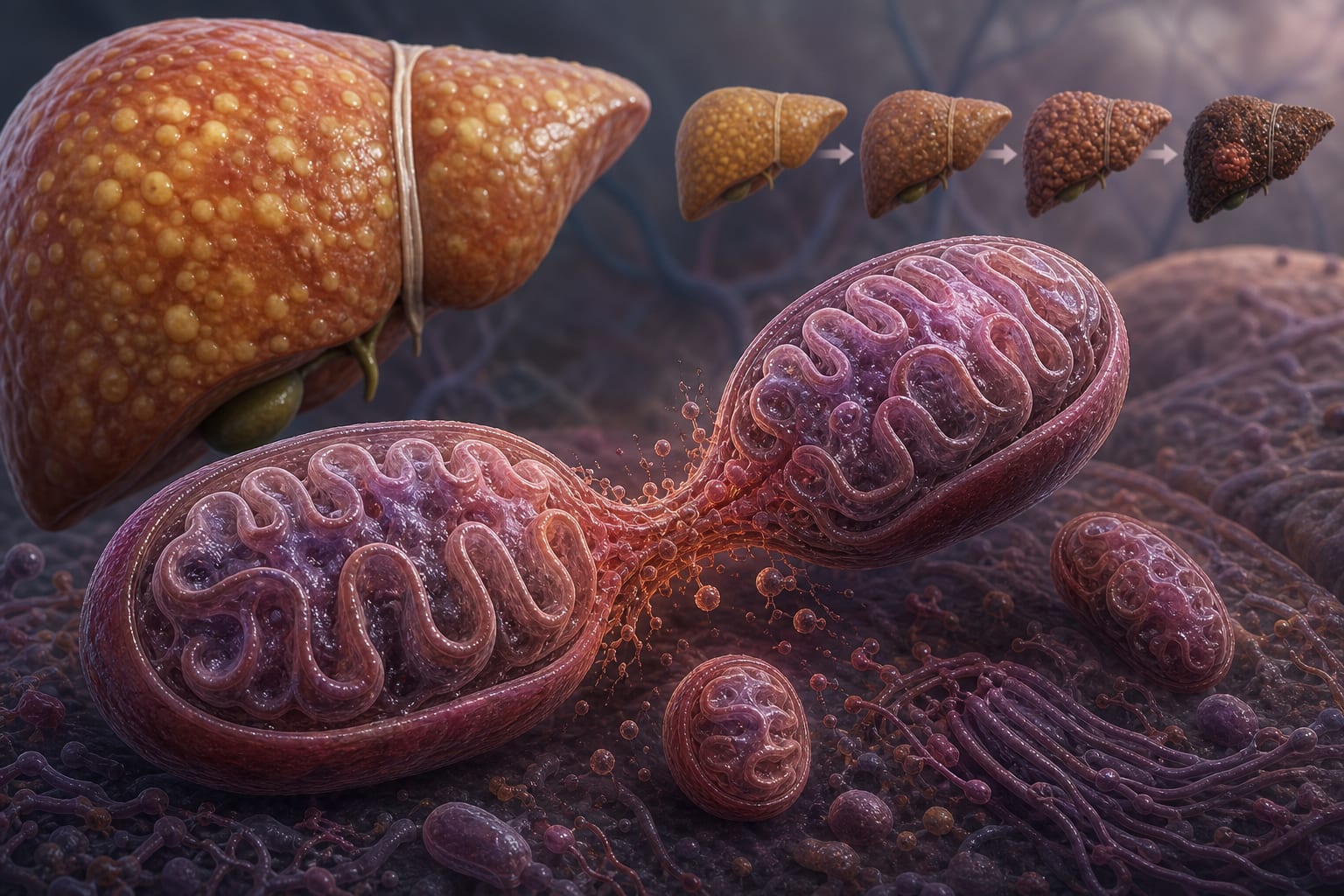
Comprehensive Transcriptomic and Single-Cell Analyses Enhanced by Artificial Neural Networks Reveal a Distinct Gene Signature for Early Differentiation of MASL and MASH
By
Guo Wu Lin
Zhi Yuan Lin
Qi Yuan Su
Li Ye
Wei Ning Xu
Shun Qiang Nong
Ru Kai Wu
Wei Jie Zhou
Qian Fang Huang
April 20, 2026
Clinical Scorecard: Comprehensive Transcriptomic and Single-Cell Analyses Enhanced by Artificial Neural Networks Reveal a Distinct Gene Signature for Early Differentiation of MASL and MASH
At a Glance
Category Detail
Condition Metabolic dysfunction-associated steatotic liver disease (MASLD), including simple steatosis (MASL) and metabolic dysfunction-associated steatohepatitis (MASH) Key Mechanisms Metabolic dysfunction, inflammation, hepatocellular injury, immune cell infiltration, and fibrosis progression Target Population Adults with MASLD, including those with obesity and type 2 diabetes Care Setting Clinical hepatology and liver disease diagnostic settings, including research and specialized liver clinics
Key Highlights
Identification of six key genes (MMP9, FABP5, TREM2, CTSD, UBD, MAP2K1) differentiating MASL from MASH with high diagnostic accuracy Artificial neural network model achieved an AUC of 0.893 in validation cohort for early discrimination between MASL and MASH Immune infiltration analysis revealed increased monocytes, M0/M1 macrophages, and activated dendritic cells in MASH, with key genes localized to myeloid populations Guideline-Based Recommendations
Diagnosis
Use molecular gene signatures derived from transcriptomic and single-cell analyses to improve early differentiation of MASL and MASH Consider artificial neural network-based classifiers incorporating key gene expression for noninvasive diagnostic support Recognize limitations of liver biopsy and imaging modalities in early-stage discrimination Management
Lifestyle modification remains cornerstone of MASLD management Monitor patients with MASL for progression to MASH using emerging molecular diagnostic tools Address metabolic risk factors such as obesity and type 2 diabetes to reduce disease progression Monitoring & Follow-up
Employ gene signature-based assays to monitor disease progression and subtype differentiation Assess immune cell infiltration patterns as potential markers of disease activity Use quantitative PCR validation in clinical samples to confirm molecular findings Risks
Invasive liver biopsy carries risks including bleeding and infection Current serum biomarkers and imaging techniques have limited specificity and accessibility Delayed diagnosis of MASH can lead to fibrosis, cirrhosis, and hepatocellular carcinoma Patient & Prescribing Data
Patients with metabolic dysfunction-associated steatotic liver disease, including those with obesity and type 2 diabetes
No effective pharmacological therapies currently established; emphasis on early detection to guide lifestyle interventions and prevent progression
Clinical Best Practices
Integrate multi-cohort transcriptomic data and machine learning algorithms for robust diagnostic gene signature development Utilize artificial neural networks to enhance diagnostic accuracy for MASL versus MASH differentiation Incorporate immune cell composition analysis to understand disease mechanisms and guide personalized care Validate molecular findings with quantitative PCR in clinical liver tissue samples Prioritize noninvasive diagnostic approaches to improve patient acceptance and reduce procedural risks References