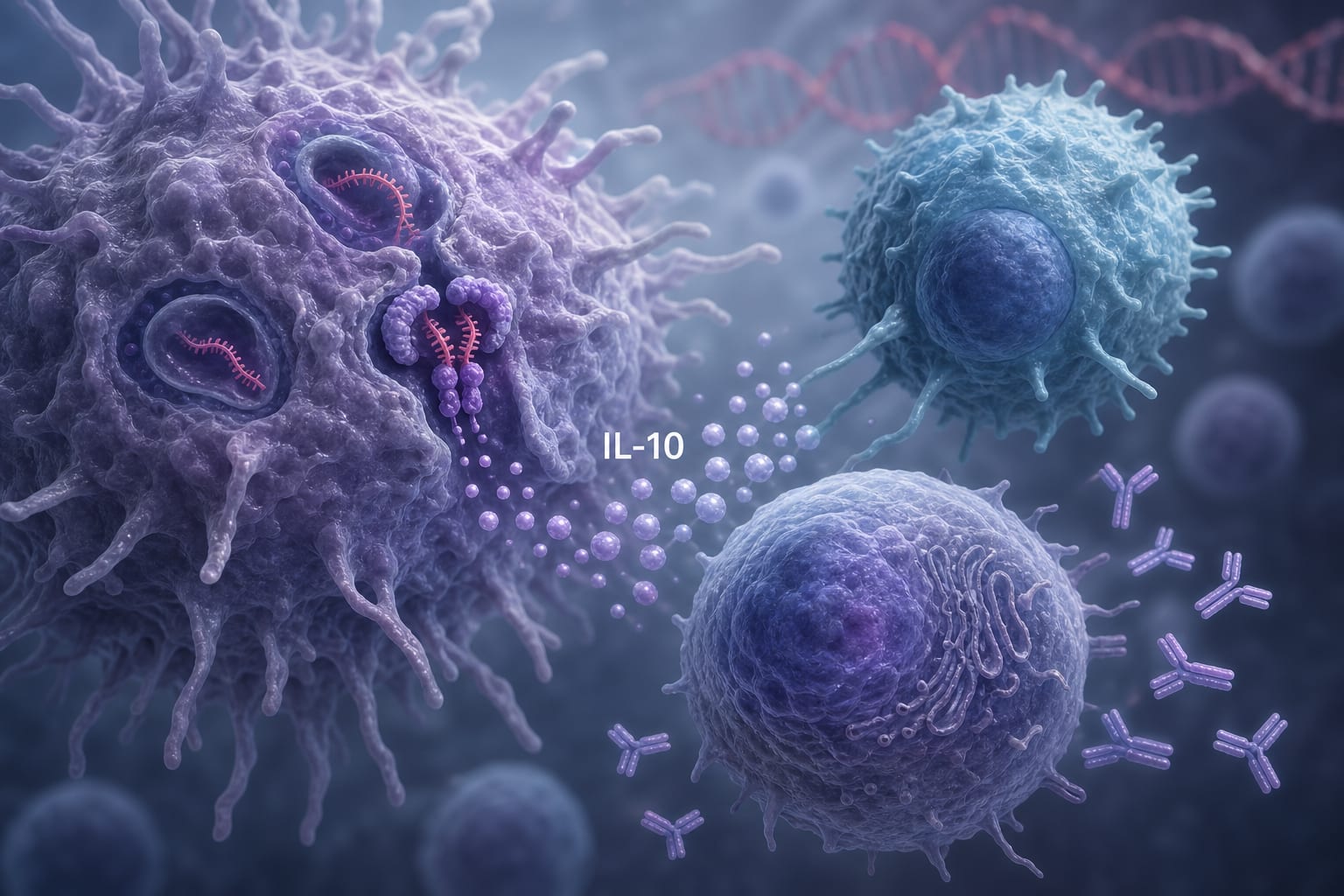
Interleukin-10 at the crossroads of immunity in TLR7-induced lupus
Clinical Scorecard: Interleukin-10: A Key Player in Immune Regulation in TLR7-Mediated Lupus
At a Glance
Category Detail
Condition Systemic lupus erythematosus (SLE)
Key Mechanisms IL-10 exhibits both pro-inflammatory and anti-inflammatory effects, influencing immune cell behavior and disease progression.
Target Population Patients with systemic lupus erythematosus (SLE)
Care Setting Clinical research and therapeutic exploration
Key Highlights
IL-10 plays a dual role in SLE, promoting both inflammation and regulation. Blockade of IL-10R increases IL-17 and reduces regulatory T cell frequencies. IL-10 signaling primarily activates STAT3 pathways in immune cells. Dysregulation of IL-10 is implicated in various autoimmune and inflammatory diseases. Further research is needed to clarify IL-10's role in different disease contexts.
Guideline-Based Recommendations
Diagnosis
Consider IL-10 levels as potential biomarkers in SLE.
Management
Explore IL-10 modulation as a therapeutic target in SLE.
Monitoring & Follow-up
Monitor immune cell profiles and cytokine levels in SLE patients.
Risks
Be aware of the dual role of IL-10 which may complicate treatment strategies.
Patient & Prescribing Data
Individuals diagnosed with systemic lupus erythematosus (SLE)
IL-10's complex role necessitates careful consideration in therapeutic approaches.
Clinical Best Practices
Assess IL-10 signaling pathways when evaluating immune responses in SLE. Tailor treatment strategies based on the inflammatory context of IL-10.
Related Resources & Content