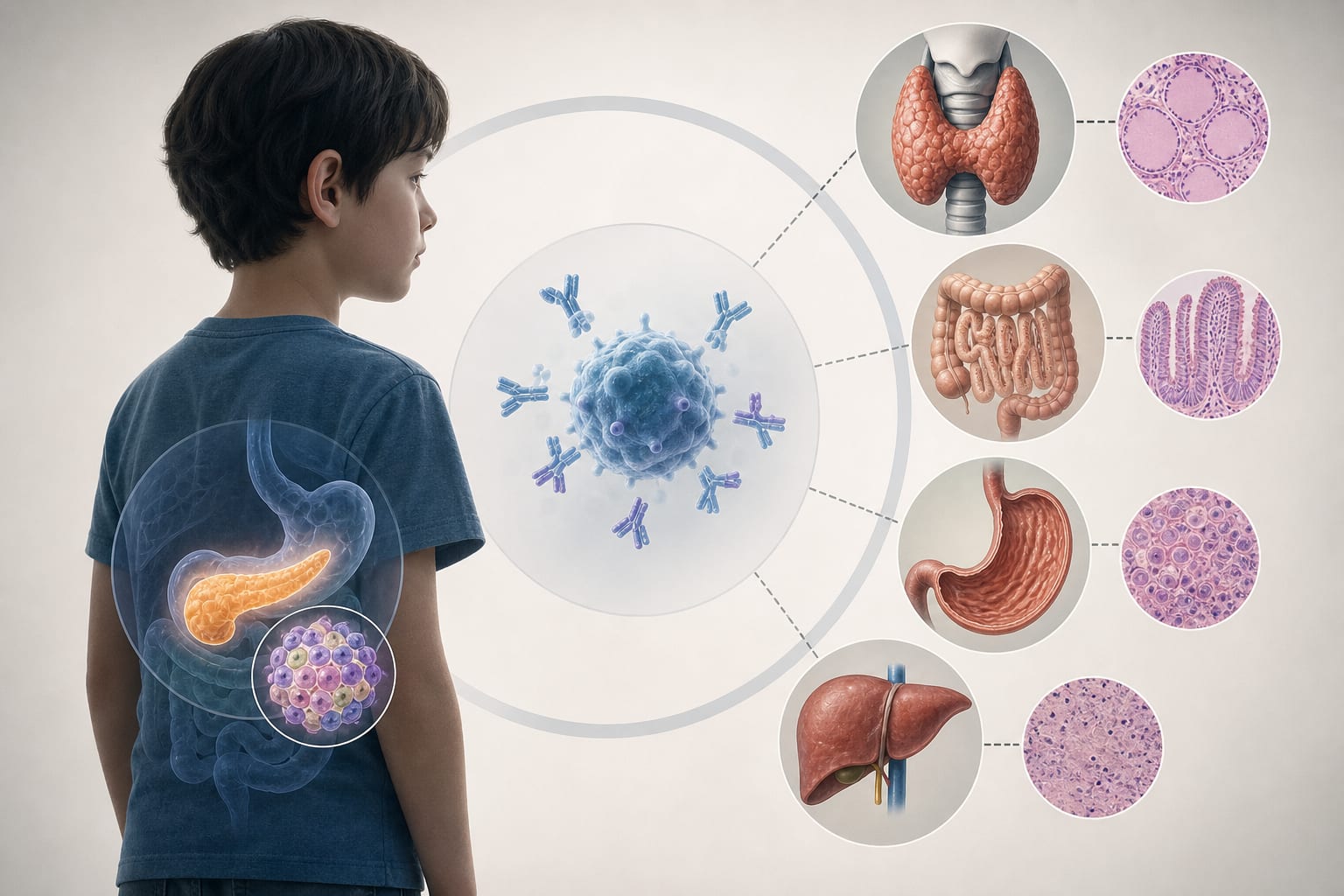
Frequency of autoimmune diseases in children and adolescents with type 1 diabetes mellitus
By
Melek Yaman Ortakoylu
Elmas Nazli Gonc
Alev Ozon
Nurgun Kandemir
Ayfer Alikasifoglu
June 29, 2026
Clinical Scorecard: Prevalence of Autoimmune Disorders in Pediatric and Adolescent Patients with Type 1 Diabetes Mellitus
At a Glance
Category Detail
Condition Type 1 Diabetes Mellitus (T1D) Key Mechanisms Autoimmune destruction of pancreatic beta cells leading to insulin deficiency. Target Population Children and adolescents with T1D. Care Setting Tertiary pediatric endocrinology center.
Key Highlights
18.8% of pediatric T1D patients had at least one additional autoimmune disease. Most common comorbidities were autoimmune thyroiditis (12.7%) and celiac disease (5.9%). Female sex was associated with a higher prevalence of additional autoimmune diseases. Autoimmune diseases were often diagnosed within the first two years of T1D onset. Age at T1D diagnosis correlated with the timing of autoimmune disease diagnoses. Guideline-Based Recommendations
Diagnosis
Routine annual screening for autoimmune thyroiditis and celiac disease in T1D patients. Management
Close monitoring of thyroid function and gastrointestinal symptoms in T1D patients with comorbid autoimmune diseases. Monitoring & Follow-up
Intensified screening during the early disease course, especially in female patients. Risks
Unrecognized autoimmune conditions can complicate clinical management of T1D. Patient & Prescribing Data
639 children and adolescents with confirmed T1D.
Management of T1D may require adjustments based on the presence of additional autoimmune diseases.
Clinical Best Practices
Implement systematic screening for autoimmune diseases in pediatric T1D patients. Educate families about the risk of comorbid autoimmune conditions. Related Resources & Content