Recurrent pleuropulmonary blastoma type III initially misclassified as embryonal rhabdomyosarcoma on limited biopsy: a case report with pathogenic DICER1 variant - Scorecard - MDSpire

Recurrent pleuropulmonary blastoma type III initially misclassified as embryonal rhabdomyosarcoma on limited biopsy: a case report with pathogenic DICER1 variant

  • By

  • Suhaib Tawil

  • Nouraldeen Deeb

  • Wedad Alashwas

  • Hani Saleh

  • Khadra Salami

  • Alaa Jafar

  • May 29, 2026

  • 0 min

Share

Clinical Scorecard: Recurrent Type III Pleuropulmonary Blastoma Initially Diagnosed as Embryonal Rhabdomyosarcoma: A Case Study Featuring a Pathogenic DICER1 Mutation

At a Glance

CategoryDetail
ConditionPleuropulmonary Blastoma (PPB)
Key MechanismsAssociated with DICER1 syndrome, an autosomal dominant condition with variable penetrance.
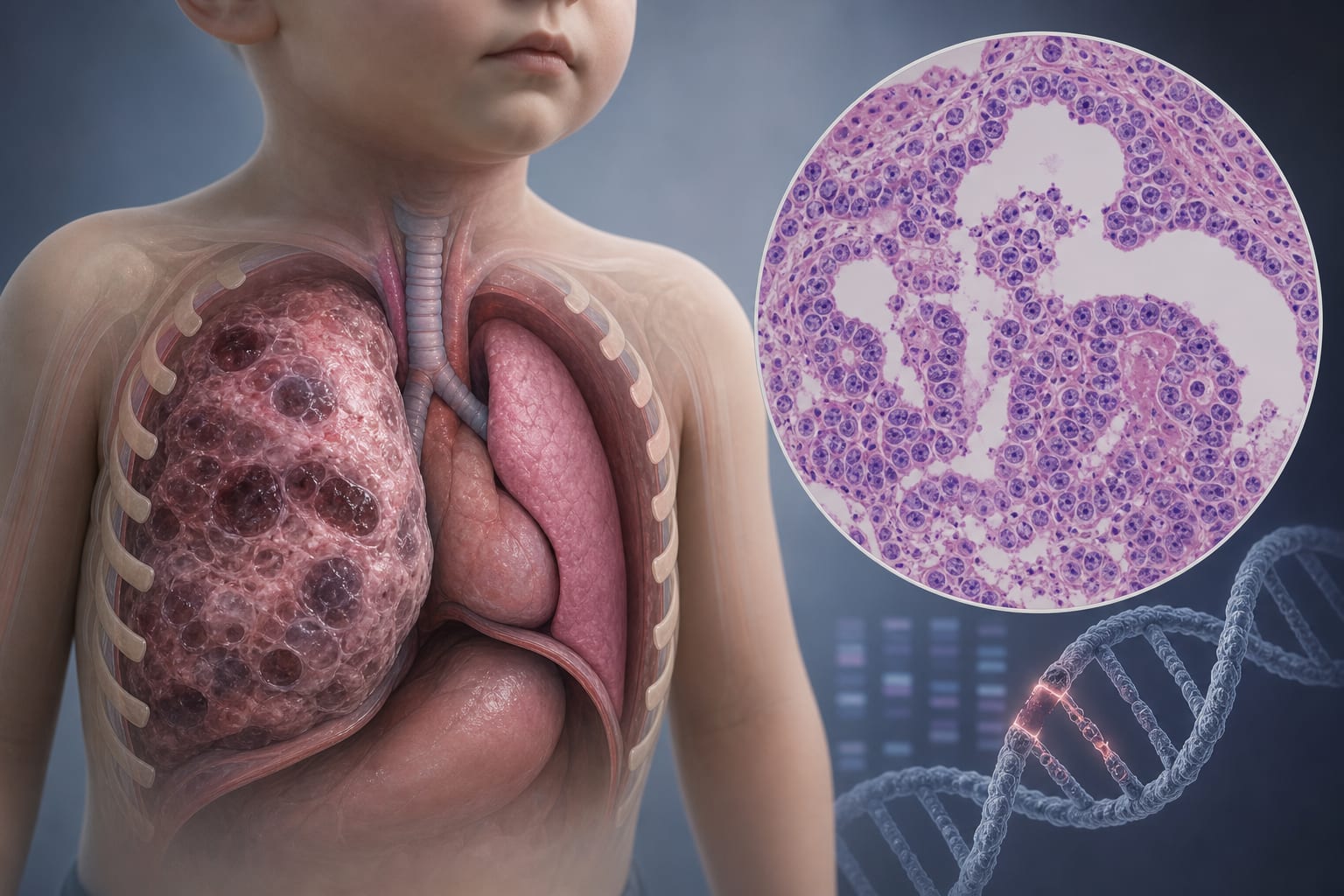
Target PopulationPediatric patients, particularly preschool-aged children.
Care SettingMultidisciplinary pediatric oncology and surgical care.

Key Highlights

  • PPB can mimic other pediatric thoracic malignancies and cystic lung lesions.
  • Initial biopsy misdiagnosed PPB as embryonal rhabdomyosarcoma.
  • Pathogenic DICER1 variant detected post-resection.
  • Management includes surgical resection and multiagent chemotherapy.
  • Importance of expert pathology review and adequate tissue sampling.

Guideline-Based Recommendations

Diagnosis

  • Prioritize PPB in differential diagnosis for aggressive pediatric intrathoracic masses.
  • Utilize adequate tissue sampling and expert pathology review.

Management

  • Multimodal approach combining surgical resection with chemotherapy.
  • Consider doxorubicin-containing regimens, including IVADo protocol.

Monitoring & Follow-up

  • Close follow-up for cytopenias and other treatment-related complications.

Risks

  • Higher risks of recurrence and metastasis associated with type III PPB.

Patient & Prescribing Data

Pediatric patients diagnosed with PPB.

Initial treatment included VAC chemotherapy, escalated to VDC due to poor response.

Clinical Best Practices

  • Integrate molecular testing early in the diagnostic process.
  • Implement genetic counseling and surveillance for DICER1 syndrome.

Related Resources & Content

Original Source(s)

Related Content