Clinical Scorecard: Microbial Biomarkers in Tongue Cancer: Analyzing Saliva, Tumor Tissue, and Surrounding Non-Cancerous Tissue
At a Glance
Category
Detail
Condition
Key Mechanisms
Tumor-associated bacteria such as Acinetobacter calcoaceticus and Burkholderia cepacia implicated in tissue carcinogenesis.
Target Population
Care Setting
Key Highlights
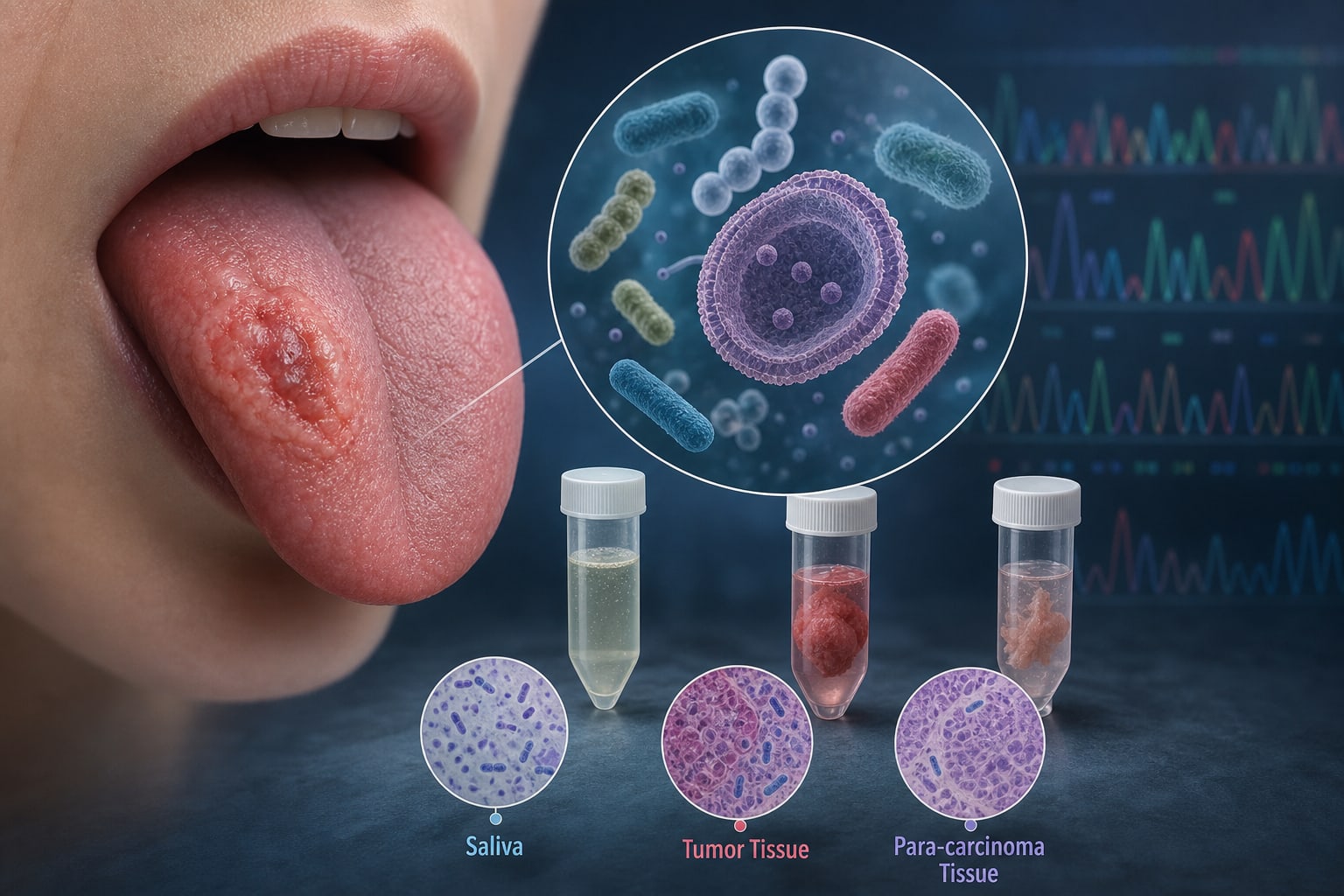
Significant differences in microbial composition between cancer tissues, para-carcinoma tissues, and saliva from cancer patients compared to healthy individuals.
Specific bacteria such as Acinetobacter calcoaceticus, Burkholderia cepacia, Dietzia natronolimnaea, and Acinetobacter baumannii prevalent in cancer tissues.
Weissella cibaria and Aeromonas sobria more abundant in saliva of TSCC patients, suggesting non-invasive screening potential.
Study highlights the need for non-invasive early screening methods for oral cancer.
Findings are preliminary and require validation in future studies.
Guideline-Based Recommendations
Diagnosis
Microbial profiling of saliva and tissue samples may aid in distinguishing cancerous from healthy tissues.
Further validation of microbial biomarkers in larger cohorts is recommended.
Management
Consider the role of tumor-associated microbiota in cancer progression and treatment responses.
Monitoring & Follow-up
Monitoring bacterial exosomes in saliva and tissues may assist in tracking tumor progression.
Risks
Delayed diagnosis due to reliance on current screening methods.
Patient & Prescribing Data
Patients underwent surgery for tumor resection; saliva samples were collected using standardized protocols.
Clinical Best Practices
Utilize microbiota profiling as a potential tool for early detection of oral cancer.
Implement non-invasive methods for screening high-risk groups.
Integrate microbiota profiling into routine clinical assessments.