Durability of Cardiometabolic Outcomes Among Adolescents After Sleeve Gastrectomy: First Study with 9-Year Follow-up - Scorecard - MDSpire

Durability of Cardiometabolic Outcomes Among Adolescents After Sleeve Gastrectomy: First Study with 9-Year Follow-up

  • By

  • Wahiba Elhag

  • Walid El Ansari

  • April 10, 2021

  • 0 min

Share

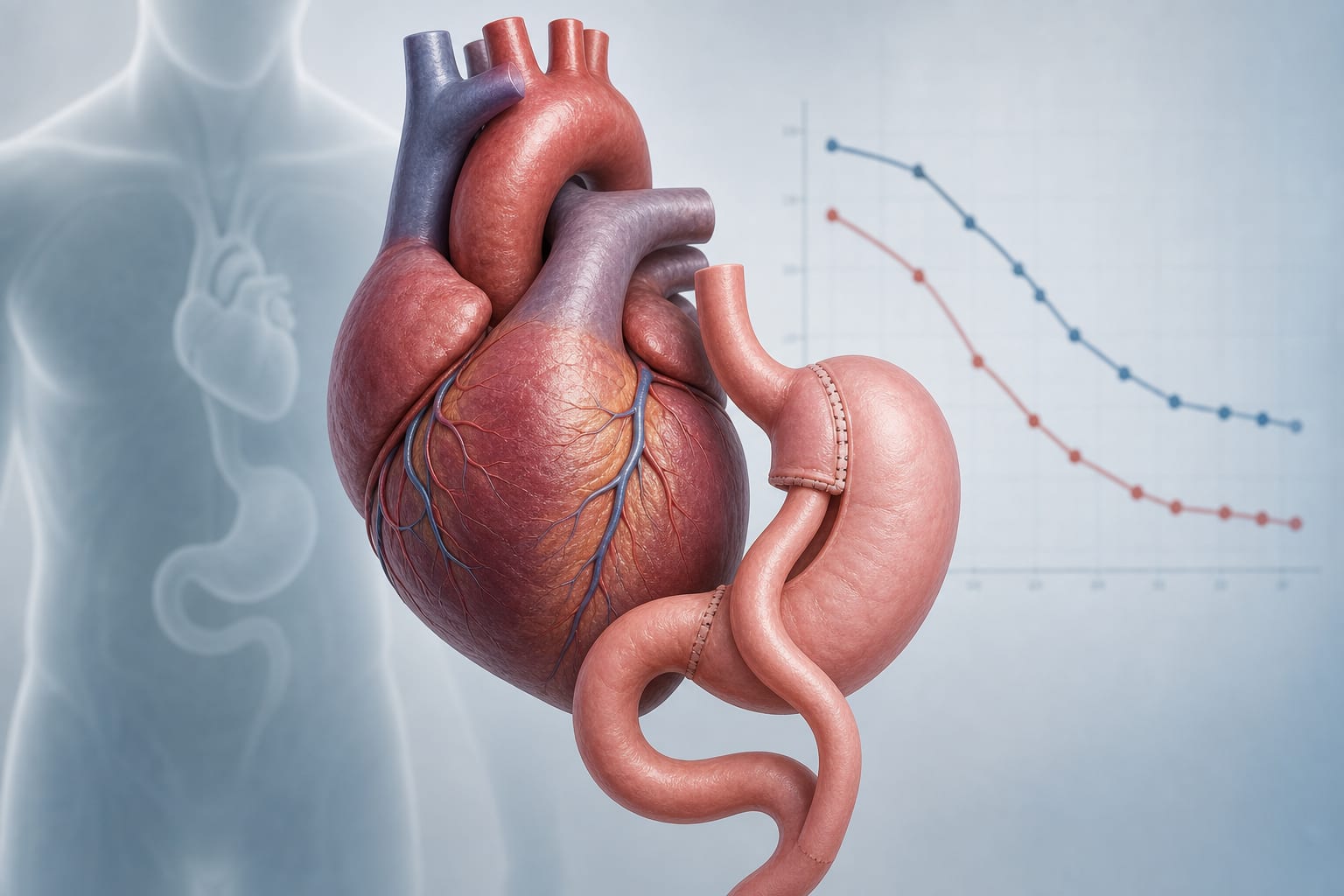
Clinical Scorecard: Long-Term Cardiometabolic Effects in Adolescents Following Sleeve Gastrectomy: A 9-Year Follow-Up Study

At a Glance

CategoryDetail
ConditionSevere obesity in adolescence with associated cardiometabolic comorbidities
Key MechanismsLaparoscopic sleeve gastrectomy (LSG) induces sustained weight loss and remission of obesity-related comorbidities
Target PopulationAdolescents aged ≤ 18 years with BMI ≥ 40 or BMI ≥ 35 kg/m2 with comorbidities
Care SettingTertiary academic bariatric and metabolic surgery center with multidisciplinary team

Key Highlights

  • LSG shows favorable long-term (≥ 5 years) outcomes on weight loss and cardiometabolic comorbidity remission in adolescents.
  • Comprehensive follow-up at 1, 3, 5, 7, and 9 years post-surgery includes anthropometric and cardiometabolic assessments.
  • Multidisciplinary care approach with individualized patient selection and monitoring optimizes safety and efficacy.

Guideline-Based Recommendations

Diagnosis

  • Define severe obesity as BMI ≥ 40 or BMI ≥ 35 with obesity-related comorbidities.
  • Diagnose T2DM by FBG ≥ 7 mmol/L or HbA1c ≥ 6.5%; prediabetes by HbA1c 5.7–6.4% or FBG 5.6–6.9 mmol/L.
  • Define dyslipidemia as TC ≥ 5.17 mmol/L, LDL ≥ 3.36 mmol/L, HDL ≤ 1 mmol/L, or TG ≥ 1.4 mmol/L.
  • Diagnose hypertension per international guidelines.

Management

  • Consider primary laparoscopic sleeve gastrectomy for adolescents meeting BMI and comorbidity criteria.
  • Perform surgery by experienced bariatric surgeons using standardized laparoscopic technique with leak test.
  • Select bariatric procedure based on individualized goals, patient/family preferences, and risk stratification.
  • Provide multidisciplinary preoperative assessment including endocrinology, nutrition, cardiology, psychiatry as indicated.

Monitoring & Follow-up

  • Schedule postoperative follow-up at 2 weeks, 1, 3, 6, 12 months, then annually.
  • Monitor anthropometric measures (weight, BMI, excess weight loss) and cardiometabolic parameters (BP, lipids, glucose, liver enzymes, uric acid).
  • Assess remission of comorbidities according to ASMBS guidelines.
  • Identify weight regain as BMI > 35 after initial successful weight loss.

Risks

  • Recognize potential for insufficient weight loss defined as EWL < 50% at 18 months.
  • Monitor for need of revisional surgery in a minority of patients.
  • Address possible complications such as hiatal hernia requiring concomitant repair.

Patient & Prescribing Data

Adolescents with severe obesity undergoing primary LSG

LSG provides durable weight loss and significant long-term remission of cardiometabolic comorbidities with multidisciplinary support and structured follow-up.

Clinical Best Practices

  • Implement multidisciplinary team approach including surgeons, physicians, dietitians, physiotherapists, and mental health professionals.
  • Ensure individualized patient selection based on BMI, comorbidities, and patient/family preferences.
  • Use standardized surgical technique with intraoperative leak testing to enhance safety.
  • Provide structured long-term follow-up with comprehensive cardiometabolic monitoring.
  • Educate patients and families on lifestyle modifications post-surgery to maintain benefits.

References

Original Source(s)

Related Content