Neurodevelopmental trajectories from birth to childhood and their impairments: insights from passive, spontaneous, and locomotor-like movements - Scorecard - MDSpire
Advertisement
Neurodevelopmental trajectories from birth to childhood and their impairments: insights from passive, spontaneous, and locomotor-like movements
Clinical Scorecard: Developmental Pathways of Motor Skills from Infancy to Early Childhood and Associated Challenges: Perspectives from Involuntary, Natural, and Locomotive Movements
At a Glance
Category
Detail
Condition
Key Mechanisms
Target Population
Infants and young children, particularly high-risk populations such as preterm infants, emphasizing the need for careful monitoring.
Care Setting
Key Highlights
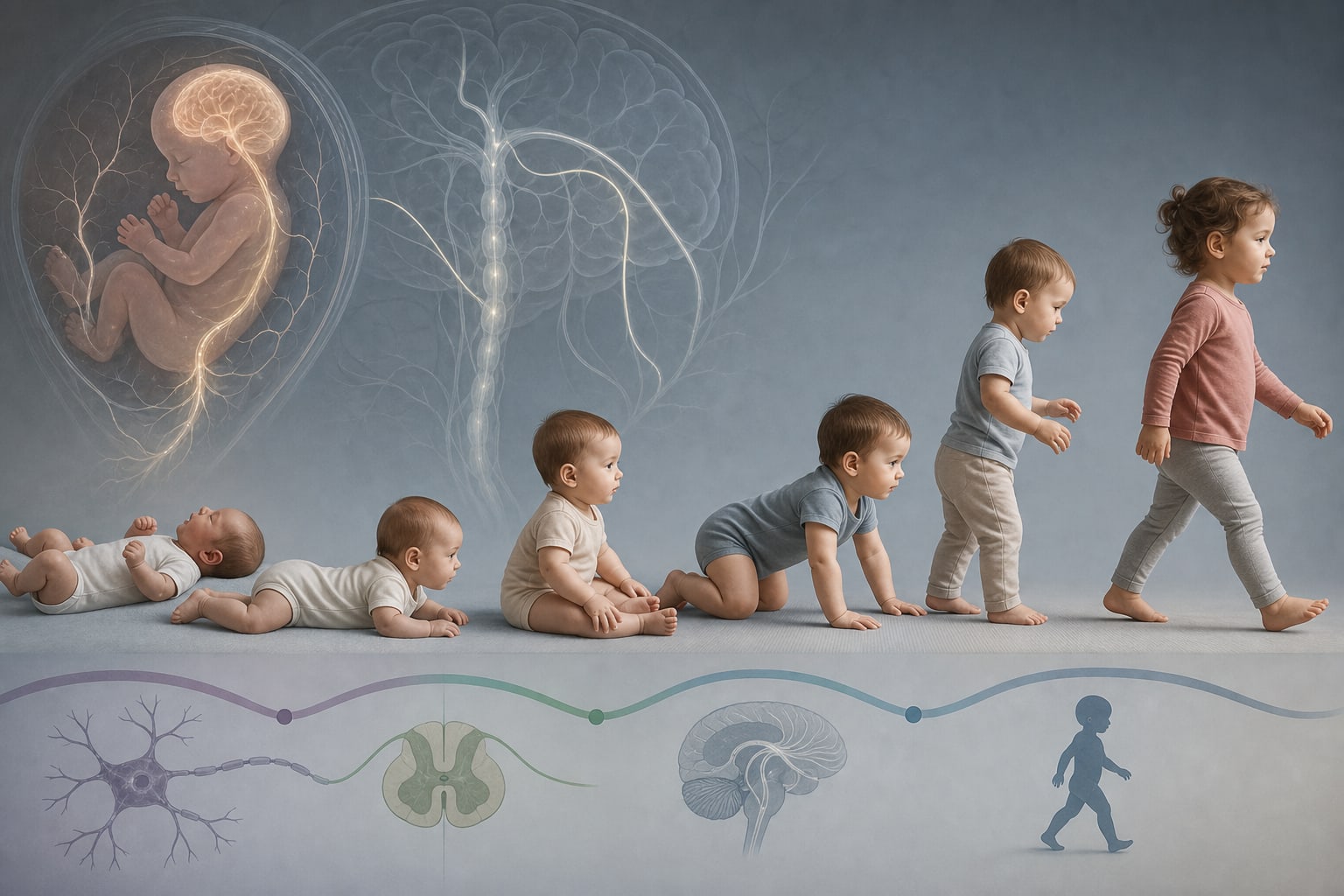
Human motor behaviour evolves from prenatal to postnatal stages, reflecting CNS maturation.
General Movements (GMs) serve as sensitive markers of neural integrity in infants.
The stepping reflex is an early indicator of subcortical locomotor circuitry.
Independent locomotion typically emerges between 10 and 15 months.
Quantitative assessment tools enhance the detection of motor impairments.
Sensory feedback plays a crucial role in refining motor skills.
Guideline-Based Recommendations
Diagnosis
Management
Support early, individualized intervention strategies for at-risk infants, such as tailored physical therapy and family education.
Monitoring & Follow-up
Risks
Patient & Prescribing Data
Infants and young children, particularly those with risk factors for neuromotor disorders.
Early detection of deviations in motor behaviour can predict later impairments.
Clinical Best Practices
Integrate findings from motor assessments with neurophysiological data.
Monitor developmental milestones closely in high-risk populations.
Utilize a combination of observational and quantitative assessment methods, ensuring integration with neurophysiological data.