A scoping review of AI in the classification of oral cancer and oral potentially malignant disorders from visible-light photography - Scorecard - MDSpire
Coming Soon: Introducing MDSpire News. Learn more
Conexiant’s news site is now MDSpire News. Learn more

A Comprehensive Review of Artificial Intelligence Applications in Classifying Oral Cancer and Potentially Malignant Oral Disorders Using Visible-Light Imaging

  • By

  • Charles Goodmaker

  • Rishi Bhandari

  • Anwar Tappuni

  • Tuan D. Pham

  • August 22, 2026

Share

Clinical Scorecard: A Comprehensive Review of Artificial Intelligence Applications in Classifying Oral Cancer and Potentially Malignant Oral Disorders Using Visible-Light Imaging

At a Glance

CategoryDetail
ConditionOral Cancer and Potentially Malignant Oral Disorders
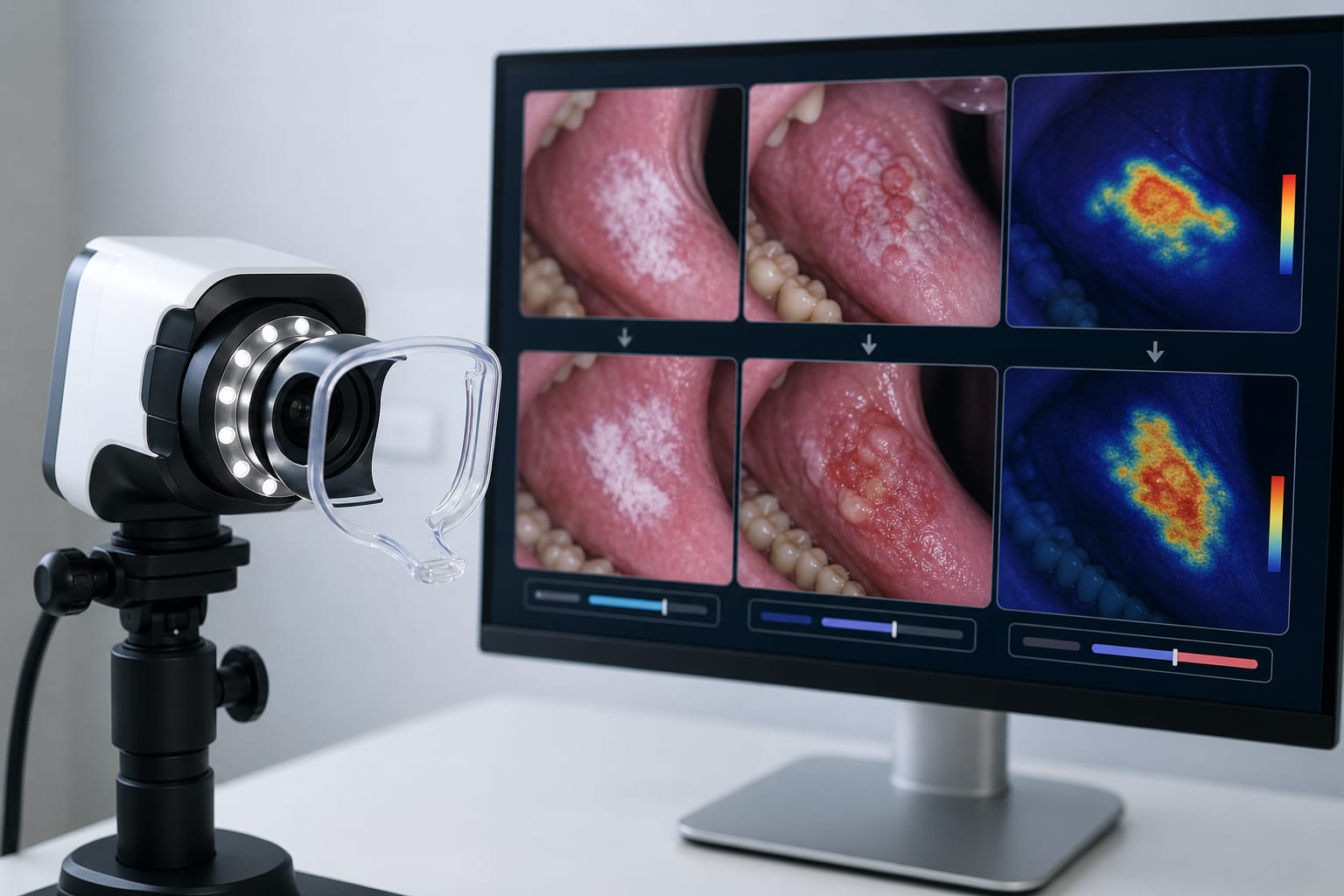
Key MechanismsArtificial Intelligence and Machine Learning for lesion detection and classification
Target PopulationPatients with oral lesions and cancers
Care SettingHealthcare settings utilizing visible-light intraoral clinical photography

Key Highlights

  • Oral cancer is the 16th most prevalent cancer globally, with significant morbidity and mortality.
  • Oral potentially malignant disorders (OPMDs) have a higher rate of malignant transformation to oral squamous cell carcinoma (OSCC).
  • Histopathological biopsy is the gold standard for diagnosing oral lesions, but AI can enhance detection and risk stratification.
  • AI techniques, particularly deep learning, are emerging as tools for automated classification of oral lesions.
  • There is a need for accessible diagnostic tools to support earlier detection of oral cancer across diverse healthcare settings.

Guideline-Based Recommendations

Diagnosis

  • Histopathological biopsy remains the gold standard for identifying lesion types.

Management

  • Incorporate AI into established workflows for oral lesion classification.

Monitoring & Follow-up

  • Utilize AI for improved surveillance of oral lesions and risk assessment.

Risks

  • Social deprivation and lifestyle factors such as tobacco use and alcohol consumption are linked to increased oral cancer rates.

Patient & Prescribing Data

Individuals with oral lesions or at risk of oral cancer

AI applications can assist in early detection and classification, potentially improving patient outcomes.

Clinical Best Practices

  • Employ visible-light intraoral clinical photography for routine management of oral lesions.
  • Utilize AI and machine learning to enhance diagnostic accuracy and efficiency.

Related Resources & Content

Original Source(s)

Related Content