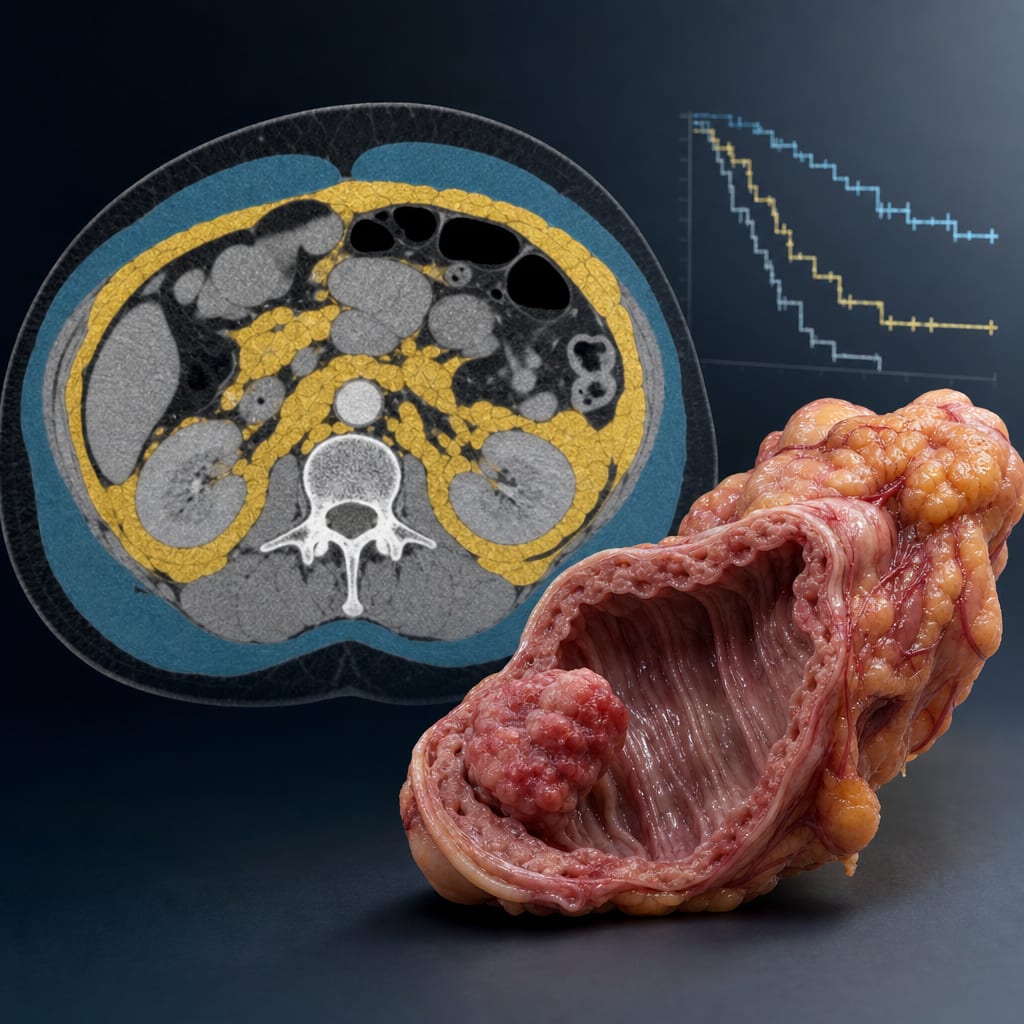
Visceral fat area and blood lipids in colorectal cancer: predictors of surgical risk and prognosis
-
By
-
Yun Wang
-
Jun Bu
-
Dalin Xu
-
Chenyang Zhan
-
Jiaqi Hu
-
Minghao Zhang
-
Kejin Zhu
-
Yang Qi
-
May 4, 2026
-
Clinical Scorecard: Visceral Fat Area and Lipid Profiles in Colorectal Cancer: Indicators of Surgical Risk and Prognostic Outcomes
At a Glance
| Category | Detail |
|---|
| Condition | Colorectal Cancer (CRC) |
| Key Mechanisms | Visceral fat area (VFA) and blood lipid levels as predictors of surgical risk and long-term prognosis. |
| Target Population | Patients undergoing radical resection for colorectal cancer. |
| Care Setting | General Surgery Department, Chengdu Second People’s Hospital. |
Key Highlights
- High VFA and high lipid levels associated with improved overall survival and recurrence-free survival.
- Study involved 482 CRC patients from December 2014 to December 2022.
- Age, TNM stage, and surgical approach identified as independent prognostic factors.
Guideline-Based Recommendations
Diagnosis
- Preoperative abdominal CT examination to assess visceral fat area.
Management
- Consider VFA and lipid levels for preoperative risk stratification.
Monitoring & Follow-up
- Long-term survival outcomes should be monitored in relation to VFA and lipid profiles.
Risks
- Patients with severe cardiovascular or pulmonary diseases should be excluded from the study.
Patient & Prescribing Data
Adults aged 18 years and older with colorectal adenocarcinoma undergoing R0 radical resection.
Avoid preoperative lipid-lowering medications to prevent altered lipid profiles.
Clinical Best Practices
- Utilize combined VFA and lipid profiles for comprehensive metabolic assessment.
- Implement standardized CT imaging protocols for accurate VFA measurement.
References