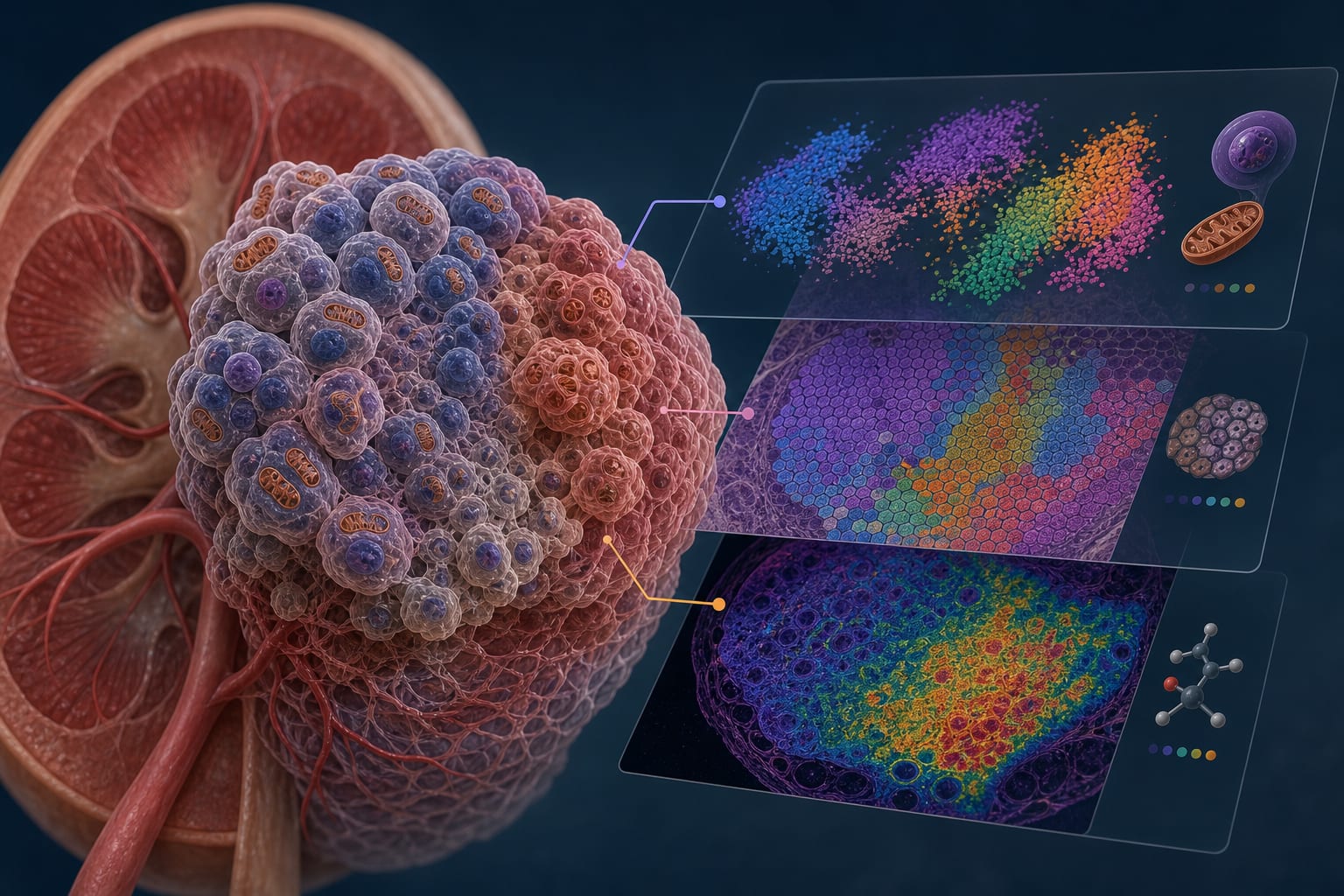
Nucleo-mitochondrial asymmetry profiles the proliferative engine and spatial niche reconstruction in clear cell renal cell carcinoma
-
By
-
Shansen Peng
-
Zhouzhou Xie
-
Ting Hu
-
Xia Li
-
Chunmei Yan
-
Chuyang Jiang
-
Huiming Jiang
-
Guihao Zhang
-
Nanhui Chen
-
June 12, 2026
-
Clinical Scorecard: Nucleo-Mitochondrial Expression Asymmetry Influences Proliferation and Spatial Niche Dynamics in Clear Cell Renal Cell Carcinoma
At a Glance
| Category | Detail |
|---|
| Condition | Clear Cell Renal Cell Carcinoma (ccRCC) |
| Key Mechanisms | Nucleo-mitochondrial expression asymmetry (NMA) characterized by dysregulated mitochondrial DNA expression relative to nuclear genome. |
| Target Population | Patients with clear cell renal cell carcinoma. |
| Care Setting | Clinical oncology and research settings. |
Key Highlights
- NMA identified as a hallmark of ccRCC progression and spatial niche reconstruction.
- Unique malignant subpopulation (C0) characterized by high ribosomal activity and metabolic hub function.
- MT-CO1 protein levels correlate with proliferation marker Ki67 and overall survival.
Guideline-Based Recommendations
Diagnosis
- Utilize multi-omics approaches including scRNA-seq and stRNA-seq for characterizing ccRCC.
Management
- Consider MT-CO1 as a histological proxy for assessing mitochondrial activity and prognosis.
Monitoring & Follow-up
- Monitor NMA-driven niches for changes in tumor dynamics and therapeutic resistance.
Risks
- Increased risk of therapeutic resistance and metastasis associated with NMA-driven subpopulations.
Patient & Prescribing Data
Patients diagnosed with clear cell renal cell carcinoma.
NMA may inform metabolic risk stratification and therapeutic targeting.
Clinical Best Practices
- Integrate multi-omics data for comprehensive tumor characterization.
- Validate findings with independent patient cohorts to ensure clinical relevance.
Related Resources & Content