Identifying clinical features associated with electroconvulsive therapy response in adolescents with major depressive disorder using machine learning - Scorecard - MDSpire
Advertisement
Identifying clinical features associated with electroconvulsive therapy response in adolescents with major depressive disorder using machine learning
Clinical Scorecard: Utilizing Machine Learning to Determine Clinical Characteristics Linked to Electroconvulsive Therapy Outcomes in Adolescents with Major Depressive Disorder
At a Glance
Category
Detail
Condition
Major Depressive Disorder (MDD) in adolescents
Key Mechanisms
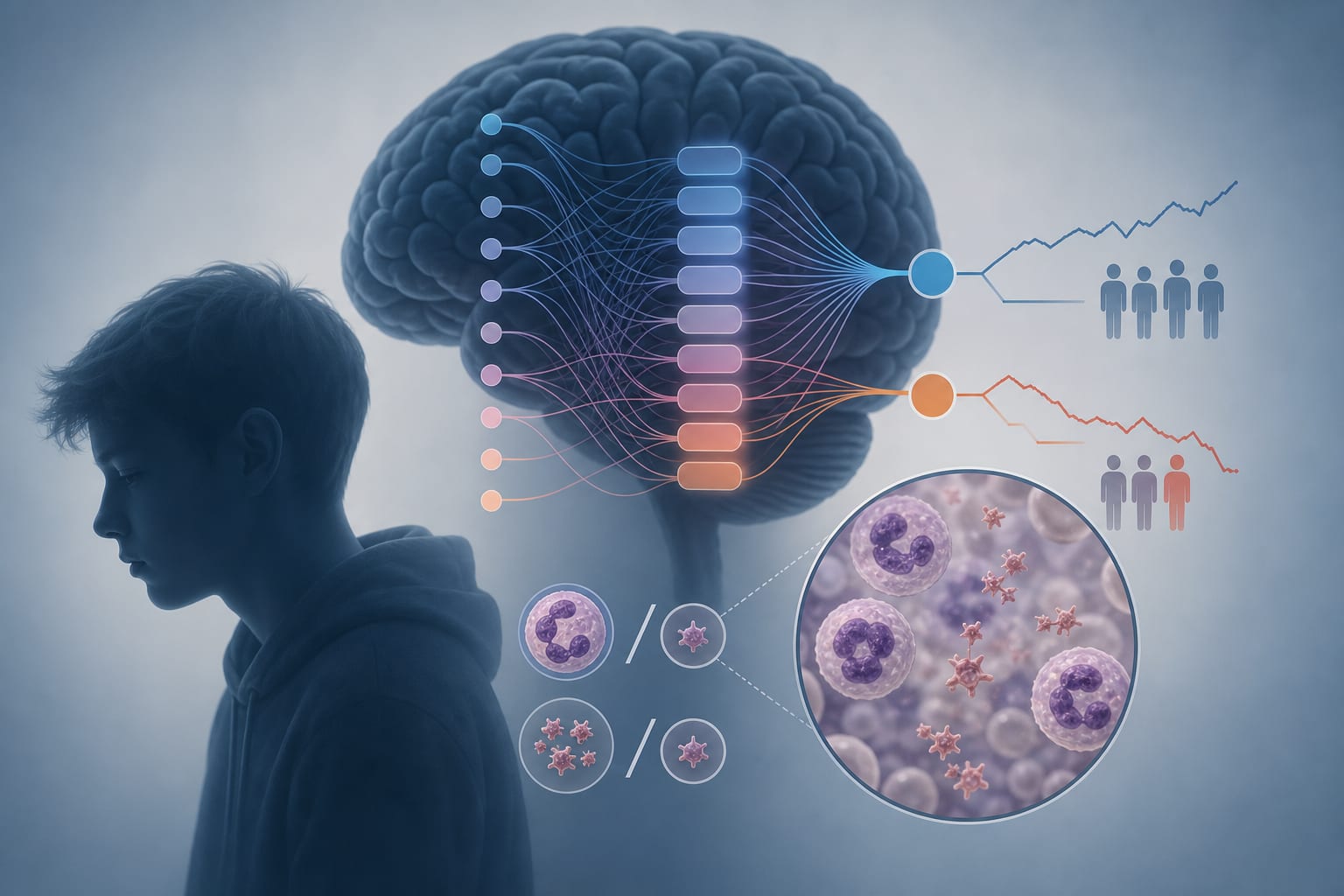
Machine learning analysis of baseline clinical factors, specifically neutrophil-to-platelet ratio and pre-treatment HAMD score
Target Population
Adolescents aged 13-18 with treatment-resistant MDD
Care Setting
Department of Psychiatry, The First Affiliated Hospital of Chongqing Medical University
Key Highlights
Machine learning model identifies poor ECT response using baseline NPR and HAMD score.
AUC of 0.731 achieved with simplified model for predicting ECT outcomes.
Lower baseline NPR and HAMD scores correlate with poor ECT response.
Patients with poor response completed fewer ECT sessions than those with good response.
Routine clinical data can stratify risk for poor ECT efficacy.
Guideline-Based Recommendations
Diagnosis
Diagnosis of MDD according to DSM-5 criteria.
Assessment of HAMD-24 score ≥ 35 for ECT eligibility.
Management
Consider ECT for adolescents with severe, treatment-resistant MDD.
Monitor baseline clinical factors to predict ECT response.
Monitoring & Follow-up
Track number of completed ECT sessions as an indicator of treatment efficacy.
Risks
Identify high-risk patients early to optimize treatment and reduce premature termination.
Patient & Prescribing Data
503 adolescent patients with MDD who received ECT.
Routine blood tests and clinical assessments can guide ECT treatment decisions.
Clinical Best Practices
Utilize machine learning to analyze baseline clinical data for predicting ECT outcomes.
Implement targeted management strategies for patients identified as high-risk.