Latent profile analysis of emergency department presentation characteristics in patients with acute ischemic stroke - Scorecard - MDSpire

Latent profile analysis of emergency department presentation characteristics in patients with acute ischemic stroke

  • By

  • Xiangguang Yin

  • Hua Xu

  • Jing Wei

  • Ying Li

  • Ying Chen

  • July 9, 2026

  • 0 min

Share

Clinical Scorecard: Profile Analysis of Emergency Department Presentation Traits in Acute Ischemic Stroke Patients

At a Glance

CategoryDetail
ConditionAcute Ischemic Stroke (AIS)
Key MechanismsEmergency department presentation characteristics, including symptom recognition and decision-making times.
Target PopulationPatients presenting with acute ischemic stroke.
Care SettingEmergency department

Key Highlights

  • Four latent profiles of emergency department presentation identified: rapid EMS-activated, delayed recognition-self-presentation, family involvement-cautious decision-making, and multiple barriers-delayed presentation.
  • Significant differences in age, education, residence, living alone status, comorbidities, and clinical outcomes among profiles.
  • Rapid decision-making-emergency transport group had the highest reperfusion therapy rate (63.77%) and favorable prognosis rate (72.46%).
  • Multiple barriers-delayed presentation group had the lowest reperfusion rate (7.55%) and highest poor prognosis rate (86.79%).
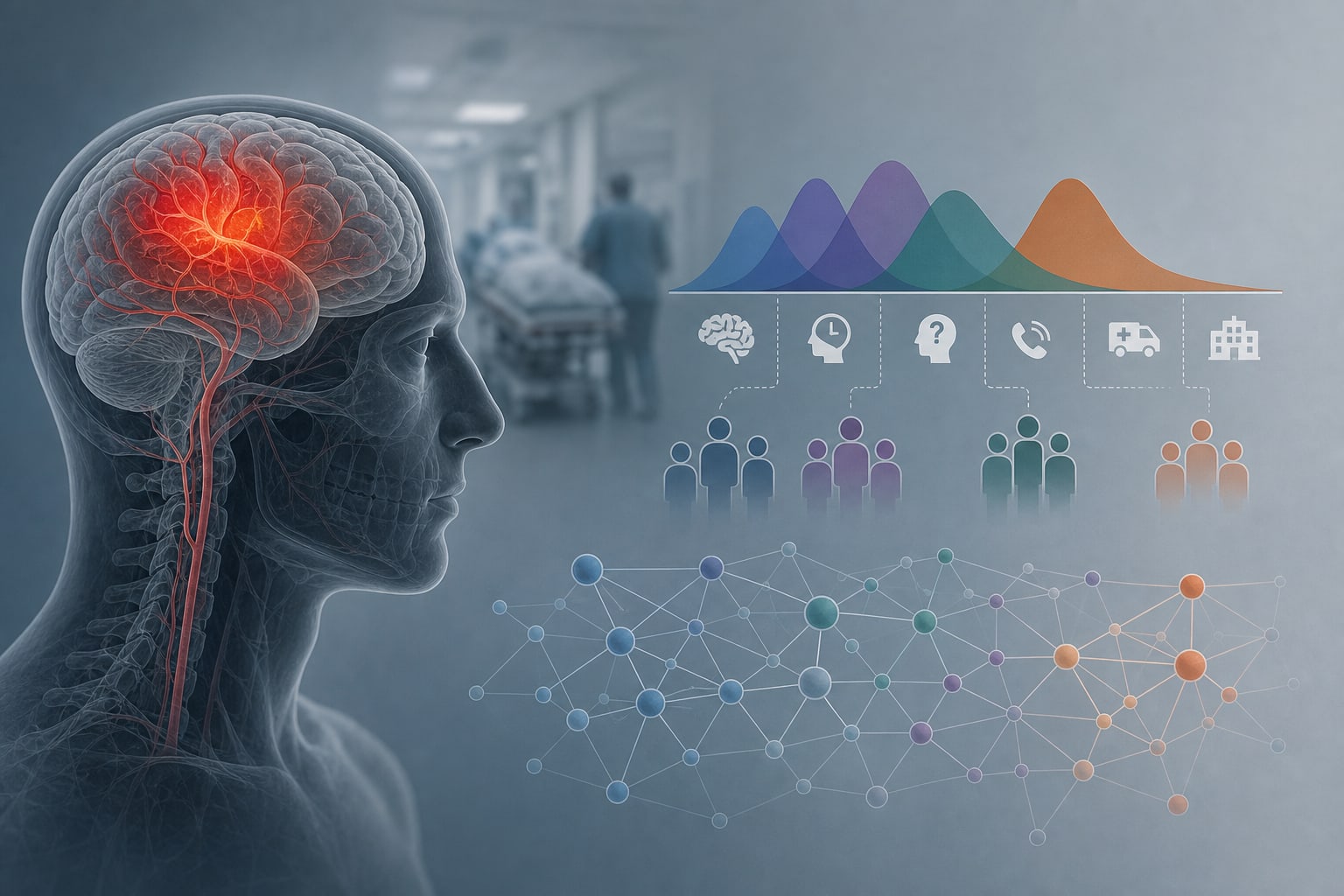
  • Latent profile membership independently predicts functional prognosis beyond traditional clinical confounders.

Guideline-Based Recommendations

Diagnosis

  • Utilize Latent Profile Analysis to identify patient presentation characteristics.

Management

  • Implement stratified intervention strategies based on profile characteristics to reduce presentation delays.

Monitoring & Follow-up

  • Assess time from onset to presentation and stroke knowledge levels as indicators of prognosis.

Risks

  • Higher odds of poor prognosis associated with multiple barriers-delayed presentation profile.

Patient & Prescribing Data

220 AIS patients admitted to the hospital.

Timely reperfusion therapy is crucial; fewer than 22% arrive within 3 hours of symptom onset.

Clinical Best Practices

  • Enhance stroke knowledge awareness to improve patient outcomes.
  • Encourage rapid EMS activation for timely transport to medical facilities.

Related Resources & Content

Original Source(s)

Related Content