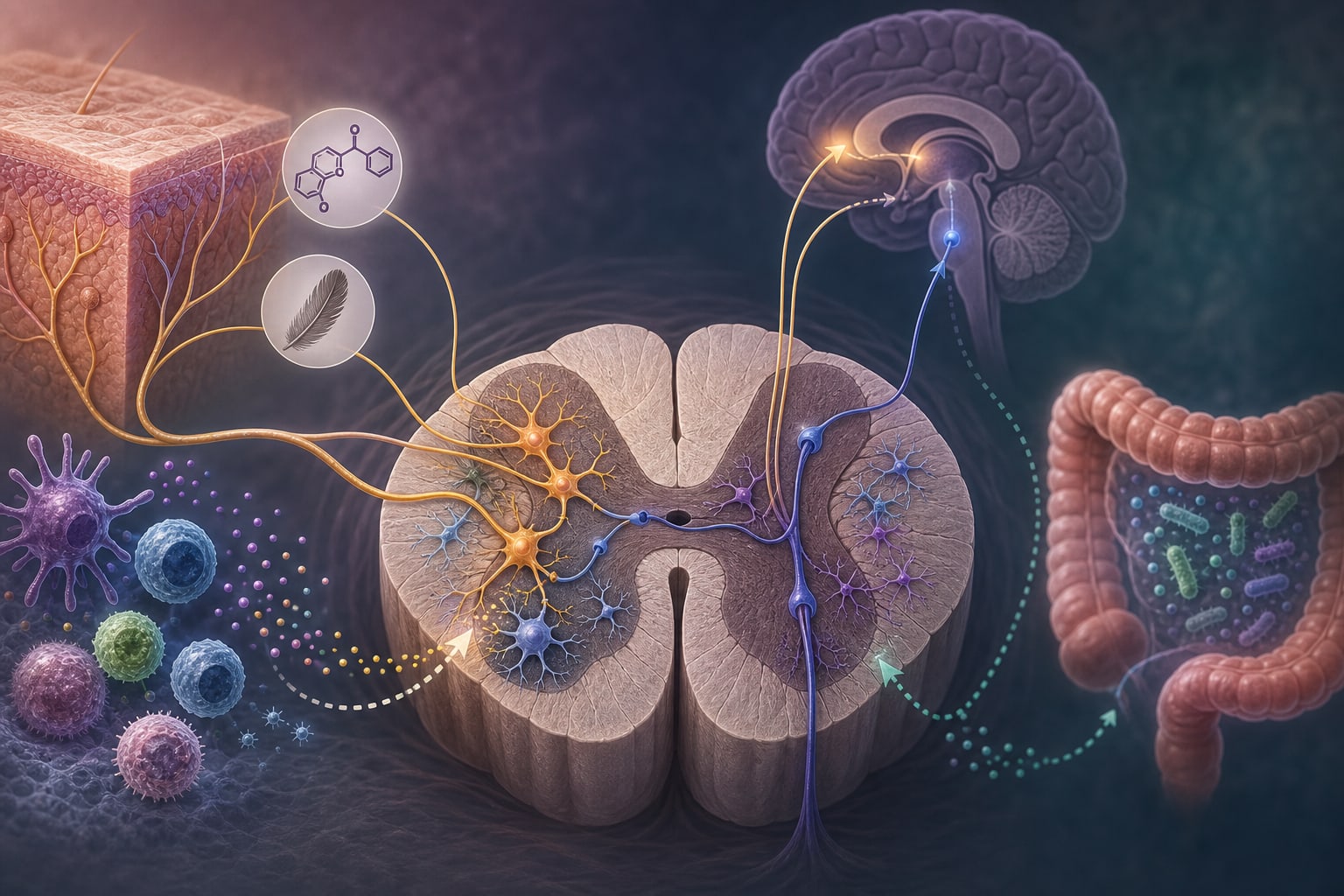
Spinal and supraspinal mechanisms of chronic itch: from neuronal circuits to the neuro-immune-microbial axis
-
By
-
Shengrun Gao
-
Mengyan Liu
-
Ziyue Qi
-
Yuheng Li
-
Yu Xue
-
Chengjie Gao
-
June 2, 2026
-
Clinical Scorecard: Mechanisms of Chronic Itch: Exploring Spinal and Supraspinal Pathways and the Neuro-Immune-Microbial Interaction
At a Glance
| Category | Detail |
|---|
| Condition | Chronic Itch |
| Key Mechanisms | Involves spinal cord integration, distinct neuronal subpopulations, and neuro-immune-microbial interactions. |
| Target Population | Individuals experiencing chronic itch due to various pathological conditions. |
| Care Setting | Clinical settings focusing on dermatology and pain management. |
Key Highlights
- Chronic itch is mediated by distinct neuronal subpopulations in the spinal cord.
- The gut-spinal cord axis plays a role in itch signal modulation.
- Chronic inflammation can amplify itch signals before they reach the spinal cord.
- Descending pathways from the brain regulate itch sensation.
- Multiple receptor types are involved in peripheral itch mechanisms.
Guideline-Based Recommendations
Diagnosis
- Identify underlying conditions associated with chronic itch.
Management
- Explore targeted therapies based on neurobiological mechanisms.
Monitoring & Follow-up
- Assess the impact of chronic itch on quality of life.
Risks
- Persistent scratching can lead to skin barrier disruption and secondary hyperalgesia.
Patient & Prescribing Data
Patients with chronic itch from various etiologies.
Current therapies are limited in efficacy, particularly for non-histaminergic itch.
Clinical Best Practices
- Utilize a multi-level approach considering peripheral and central mechanisms.
- Incorporate insights from recent research on neuro-immune interactions.
Related Resources & Content