Predicting response to immunochemotherapy in EGFR-mutant lung adenocarcinoma after third-generation TKI resistance using CT radiomics-based habitat imaging
By
Shuai Qie
Yasong Shi
Jingyun Li
Sicong Jia
Xiaoping Yin
June 2, 2026
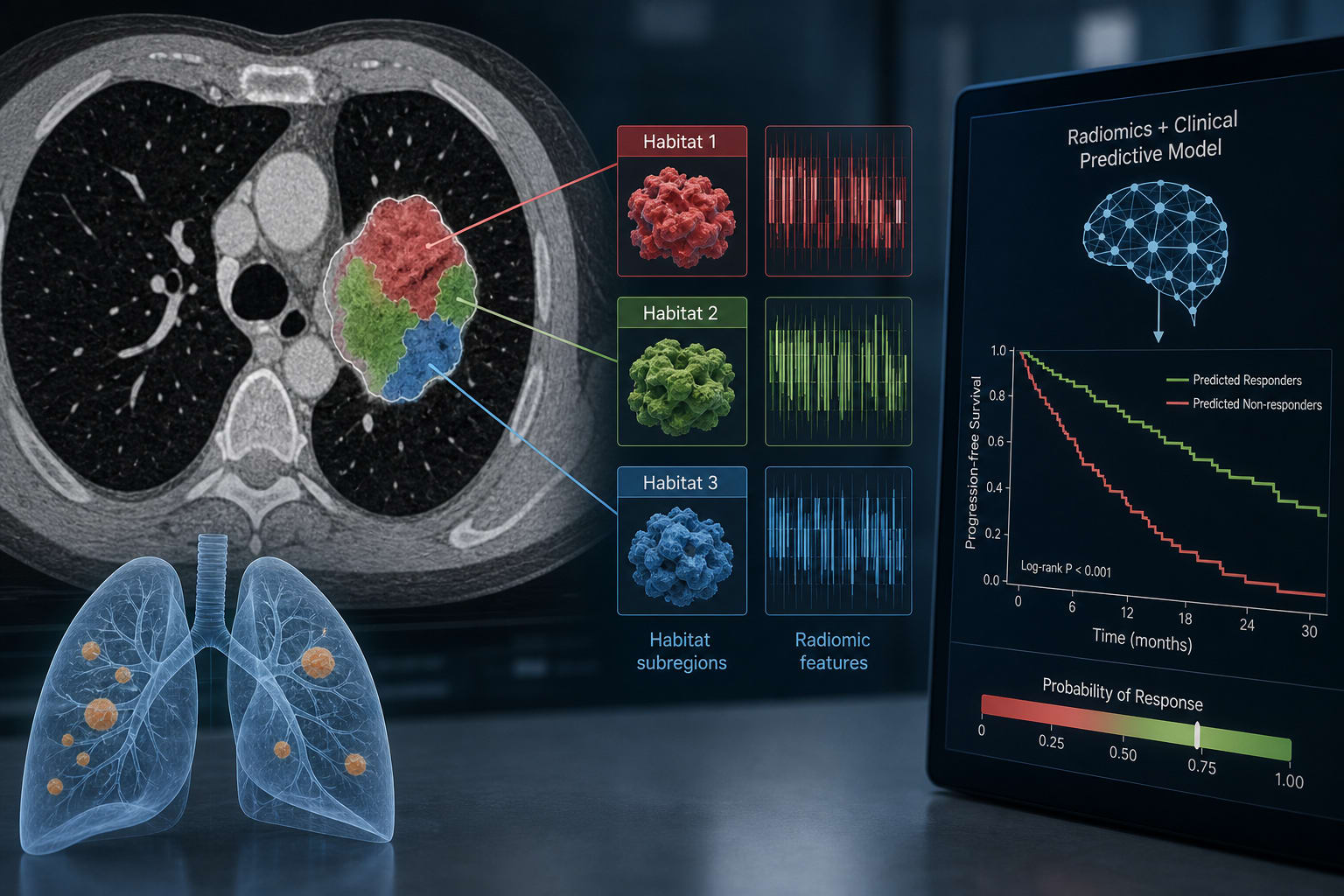
Clinical Scorecard: Forecasting Immunochemotherapy Outcomes in EGFR-Mutated Lung Adenocarcinoma Following Resistance to Third-Generation TKIs Utilizing CT Radiomics Habitat Imaging
At a Glance
Category Detail
Condition EGFR-mutant lung adenocarcinoma after TKI resistance Key Mechanisms CT-based habitat radiomics model predicting response to immunochemotherapy Target Population Patients with advanced lung adenocarcinoma and EGFR mutations Care Setting Multicenter clinical settings
Key Highlights
Developed a CT-based habitat radiomics model for predicting immunochemotherapy response Combined model showed AUC of 0.904 in training cohort and 0.890 in validation cohort High-risk groups identified with significantly shorter overall survival Model demonstrated high negative predictive value for non-responders Study emphasizes need for non-invasive biomarkers to assess tumor heterogeneity Guideline-Based Recommendations
Diagnosis
Utilize CT radiomics for assessing treatment response in EGFR-mutant lung adenocarcinoma Management
Consider immunochemotherapy for patients with TKI resistance based on predictive modeling Monitoring & Follow-up
Implement regular assessments of tumor response using RECIST criteria alongside radiomics Risks
Potential for sampling bias in traditional biomarker assessments Patient & Prescribing Data
475 patients with advanced lung adenocarcinoma from two medical centers
Immunochemotherapy efficacy varies; predictive modeling can enhance treatment stratification
Clinical Best Practices
Incorporate habitat imaging to evaluate intratumoral heterogeneity Use combined models for improved predictive performance in treatment response Related Resources & Content