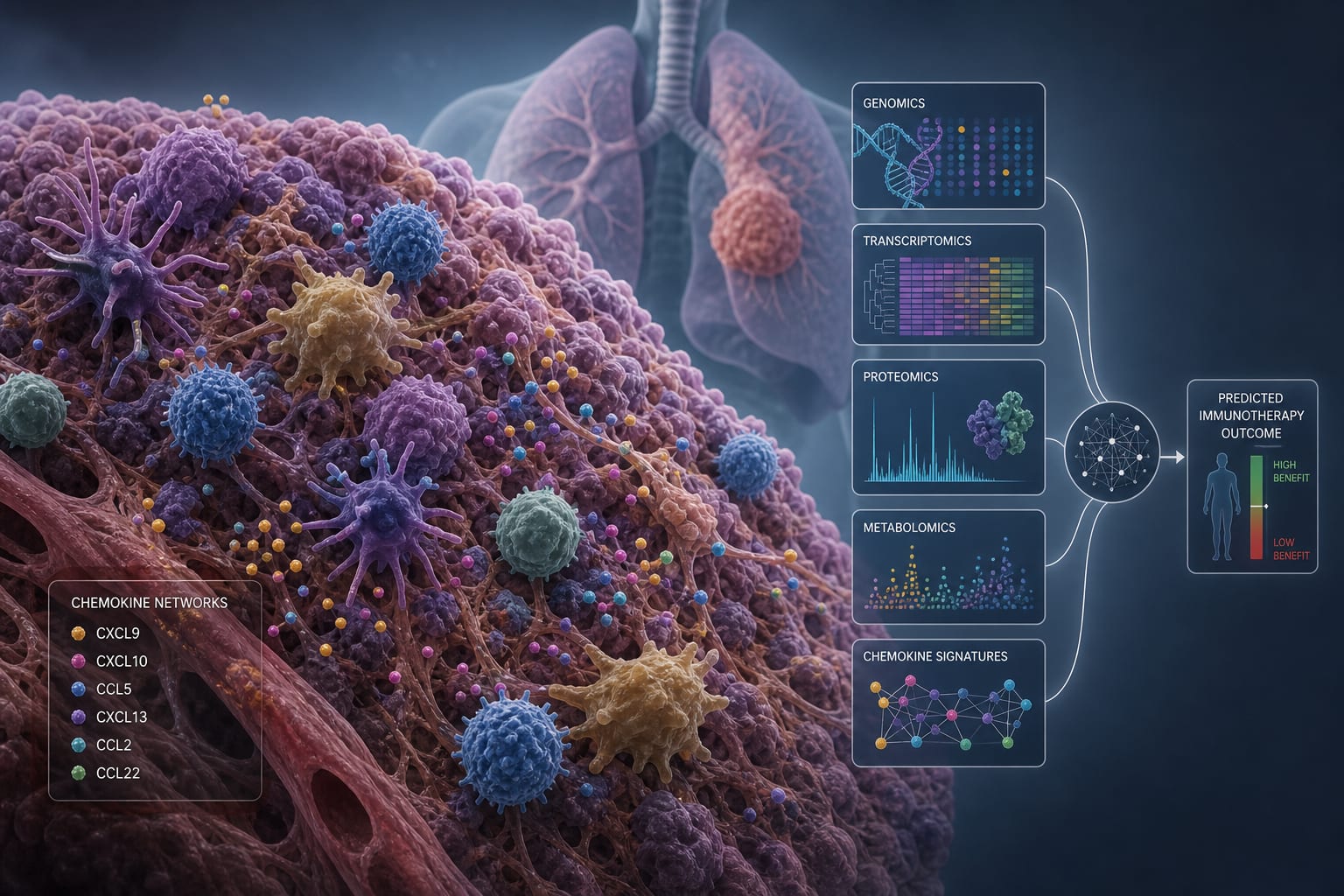
Integrating chemokine signatures and multi-omic biomarkers to predict immunotherapy response in non-small cell lung cancer: a comprehensive narrative review
Clinical Scorecard: Combining Chemokine Profiles and Multi-Omics Biomarkers for Predicting Immunotherapy Outcomes in Non-Small Cell Lung Cancer: An In-Depth Narrative Review
At a Glance
Category Detail
Condition Non-small cell lung cancer (NSCLC) Key Mechanisms Integration of chemokine profiles and multi-omic biomarkers to predict immunotherapy outcomes. Target Population Patients with advanced NSCLC undergoing immunotherapy. Care Setting Oncology clinics and research settings focusing on immunotherapy.
Key Highlights
Only 20–30% of NSCLC patients achieve durable responses to immune checkpoint inhibitors. Pro-inflammatory chemokines are associated with favorable responses, while immunosuppressive chemokines correlate with resistance. Multi-omic integration yields predictive models that outperform single biomarkers. Specific genetic alterations influence the efficacy of checkpoint inhibitors. Emerging composite biomarkers and machine learning models enhance prediction accuracy for immunotherapy benefits. Guideline-Based Recommendations
Diagnosis
Utilize PD-L1 expression and tumor mutational burden (TMB) as current biomarkers for NSCLC immunotherapy. Management
Consider multi-omic approaches to refine patient selection for immunotherapy. Monitoring & Follow-up
Implement real-time monitoring of tumor and immune dynamics through liquid biopsies. Risks
Acknowledge the limitations of PD-L1 and TMB as predictive markers due to intratumoral heterogeneity and analytical challenges. Patient & Prescribing Data
Patients with advanced NSCLC.
Integration of chemokine profiles with multi-omic data is promising for improving patient selection for immunotherapy.
Clinical Best Practices
Incorporate multidimensional biomarkers in clinical decision-making for NSCLC immunotherapy. Focus on the biological rationale linking tumor microenvironment chemokine networks to antitumor immunity. Related Resources & Content