Prime Editing Creates Drug-Controllable T Cell Therapies
-
October 28, 2026
-
3 min
Clinical Scorecard: Prime Editing Creates Drug-Controllable T Cell Therapies
At a Glance
| Category | Detail |
|---|---|
| Condition | Subcutaneous panniculitis-like T cell lymphoma with hemophagocytic lymphohistiocytosis, associated with HAVCR2 mutations; the platform is intended for therapeutic T cells used in settings requiring continued immunosuppression. |
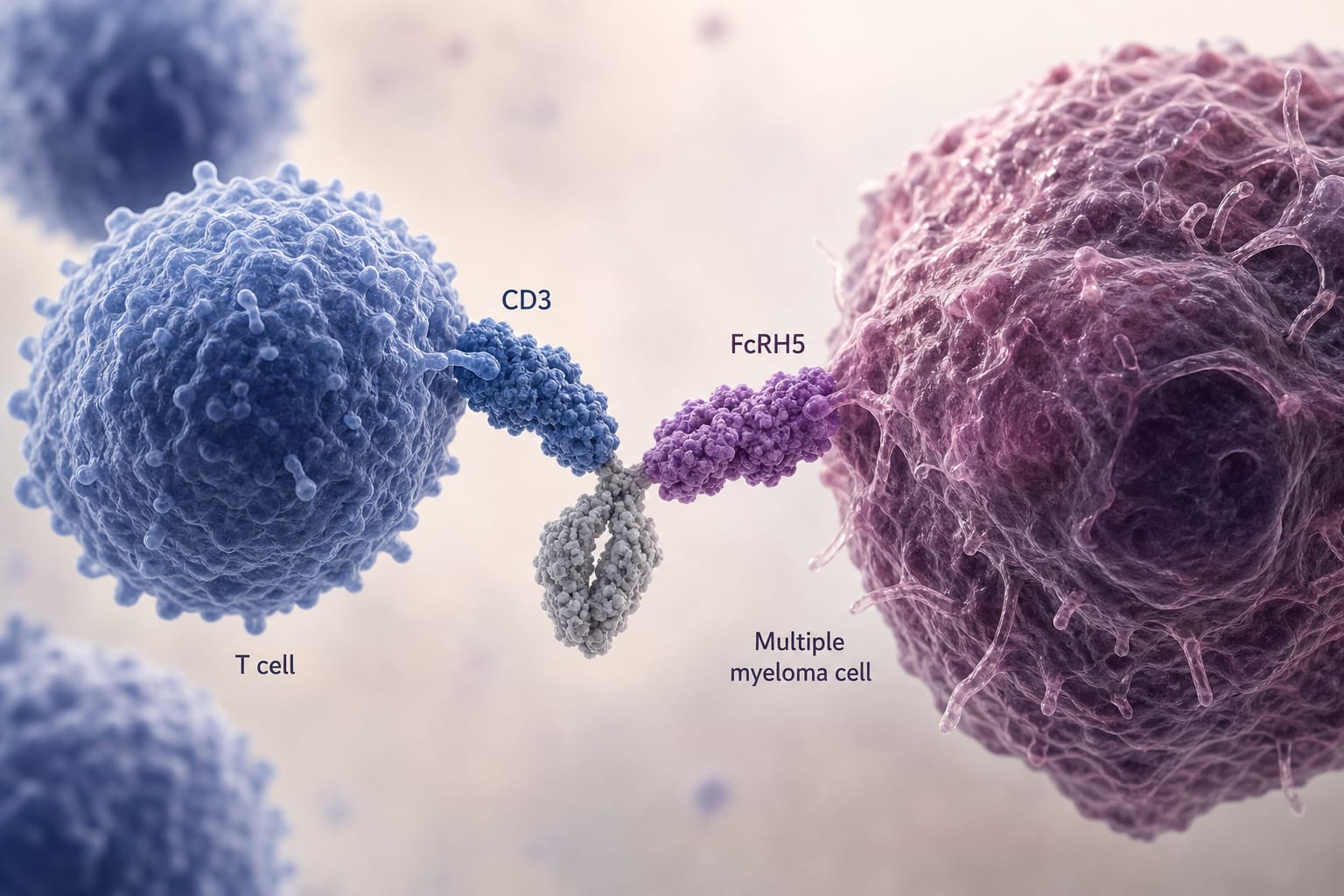
| Key Mechanisms | Prime editing corrected the pathogenic HAVCR2 variant and altered FKBP1A to confer tacrolimus resistance while retaining cyclosporin sensitivity. |
| Target Population | The proposed use is in patients requiring continued immunosuppression, including organ or stem cell transplant recipients and people with immune disorders. Initial patient-derived cell testing used T cells from three people with subcutaneous panniculitis-like T cell lymphoma with hemophagocytic lymphohistiocytosis. |
| Care Setting | Preclinical research using patient-derived T cells and humanized and tumor-bearing mouse models. |
Key Highlights
- Prime editing corrected the pathogenic HAVCR2 variant in 18.7% to 35.8% of patient-derived T cells; TIM-3 surface expression was restored in up to 44.4%.
- In a humanized mouse model, tacrolimus selection increased corrected HAVCR2 sequences to an average of 76.8% of spleen reads after eight weeks, compared with 9.3% without selection.
- Edited cells remained sensitive to cyclosporin, which acts through a different pathway.
- Tacrolimus-exposed edited CD19-directed CAR T cells retained viability, proliferation, and tumor-killing activity; edited cells maintained tumor control in mice bearing CD19-positive tumors.
- Additional edits targeting resistance to methotrexate and mycophenolate showed resistance that varied according to the specific edit.
Guideline-Based Recommendations
Diagnosis
- Study population: T cells from three patients with subcutaneous panniculitis-like T cell lymphoma with hemophagocytic lymphohistiocytosis, associated with HAVCR2 mutations.
Management
- In the preclinical study, tacrolimus was used to select for edited T cells, and cyclosporin was tested as an alternative means of suppressing them.
Monitoring & Follow-up
- The study assessed HAVCR2 correction, TIM-3 surface expression, edited-cell representation, cell viability, proliferation, and tumor-killing activity.
Risks
- The approach is preclinical and was evaluated in patient-derived cells and mouse models.
- Resistance to methotrexate and mycophenolate varied according to the specific edit.
Patient & Prescribing Data
The proposed use is for people who require continued immunosuppression, such as organ or stem cell transplant recipients and people with immune disorders. Initial patient-derived cell testing involved three people with subcutaneous panniculitis-like T cell lymphoma with hemophagocytic lymphohistiocytosis; the source does not report clinical use.
The engineered T cells were designed to resist tacrolimus while remaining sensitive to cyclosporin. The source reports preclinical findings and provides no clinical prescribing instructions.
Clinical Best Practices
- Distinguish the reported preclinical findings from established clinical treatment: the platform was evaluated in patient-derived cells and mouse models.
- The study tested tacrolimus as a selective pressure for edited cells and cyclosporin as a means of suppressing the edited population.
- The article reports that edited CAR T cells retained viability, proliferation, and tumor-killing activity during tacrolimus exposure.
Related Resources & Content
Based on findings from:
Prime Editing Creates Drug-Controllable T Cell Therapies
The Medicine Maker, 2026.
https://themedicinemaker.com/issues/2026/articles/october/prime-editing-creates-drug-controllable-t-cell-therapies/
This content is an AI-generated, fully rewritten summary based on a published scholarly article. It does not reproduce the original text and is not a substitute for the original publication. Readers are encouraged to consult the source for full context, data, and methodology.