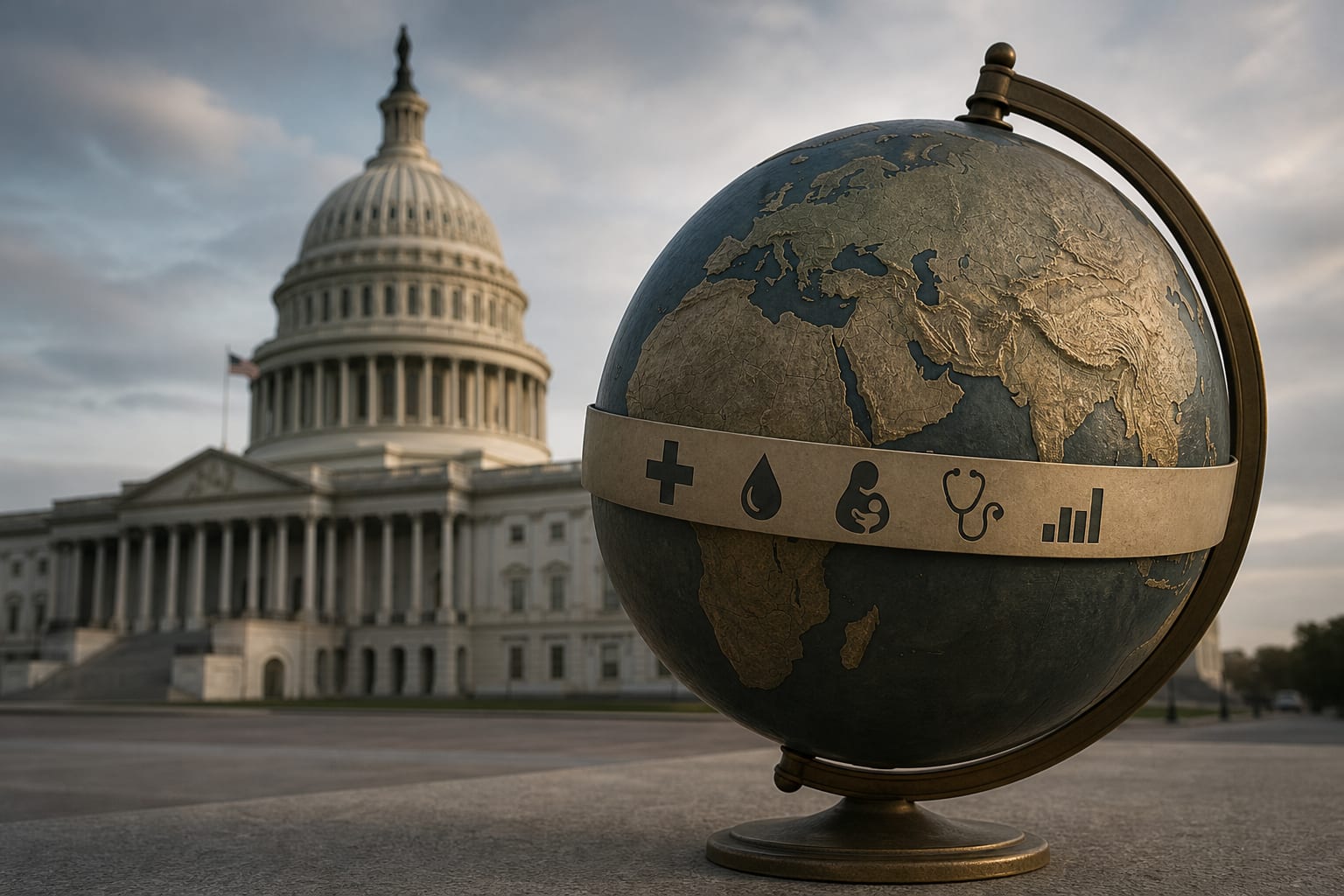
How Could Democratic Control of Congress Shape U.S. Global Health Policy?
-
By
-
Jennifer Kates
-
November 10, 2026
Clinical Scorecard: What Does Democratic Control of Congress Mean for Global Health?
At a Glance
| Category | Detail |
|---|---|
| Condition | U.S. global health policy and foreign assistance |
| Key Mechanisms | Congressional oversight, appropriations, and legislation may shape executive-branch global health programs, funding, and implementation. |
| Target Population | Populations worldwide reached by U.S.-supported global health programs, including those facing the greatest vulnerability and risk. |
| Care Setting | U.S. federal policymaking and oversight of global health assistance, including bilateral programs and multilateral engagement. |
Key Highlights
- Democratic congressional control may bring more pointed oversight of the America First Global Health Strategy, bilateral MOUs, and the consequences of USAID’s closure.
- Congress may use more forceful appropriations language to specify how global health funds must be used; the administration’s response remains uncertain.
- Policy questions include responsible program transitions, monitoring systems, PEPFAR’s future role, country financing, and support for vulnerable populations.
- Expanded pooled procurement and U.S. multilateral engagement are among the approaches raised for consideration.
- The future of bipartisan cooperation remains uncertain.
Guideline-Based Recommendations
Diagnosis
Management
- Congress may increase oversight through hearings, investigations, document requests, reporting requirements, and appropriations provisions.
- Congress may seek to specify how appropriated global health funds are used; whether it would pursue legal action if the administration rejects such efforts is uncertain.
- Questions raised for consideration include responsible transitions and sustainability, PEPFAR’s future role, support for vulnerable populations, bilateral assistance during financial vulnerability or crises, and pooled procurement.
Monitoring & Follow-up
- The article identifies a need for data, transparency, early-warning indicators, metrics, and monitoring systems to assess program transitions and progress.
- Information gaps concerning bilateral MOUs and implementation plans have constrained monitoring of services, programs, and health outcomes.
Risks
- The administration may disregard congressional demands, intensify its current course, or seek cooperation; its response is uncertain.
- Executive authority, agency leadership changes, and uncertainty about bipartisanship may affect global health programs and policy.
- The administration rescinded some appropriated funds and redirected others from their originally designated purposes.
Patient & Prescribing Data
Not applicable; the article concerns U.S. global health policy and populations reached by U.S.-supported programs.
No patient-level prescribing or treatment regimen is provided. The article discusses policy questions involving HIV programs, country health systems, and access to health products.
Clinical Best Practices
- The article identifies data and transparency as important for monitoring services, programs, and health outcomes.
- It raises responsible transition and sustainability planning, supported by appropriate early-warning indicators, metrics, and monitoring systems, as policy questions.
- It identifies reaching populations facing the greatest vulnerability and risk as a consideration when countries assume greater responsibility for financing and service delivery.
Related Resources & Content
Based on findings from:
What Does Democratic Control of Congress Mean for Global Health?
Jennifer Kates. Kaiser Family Foundation, 2026.
https://www.kff.org/global-health-policy/what-does-democratic-control-of-congress-mean-for-global-health/
This content is an AI-generated, fully rewritten summary based on a published scholarly article. It does not reproduce the original text and is not a substitute for the original publication. Readers are encouraged to consult the source for full context, data, and methodology.