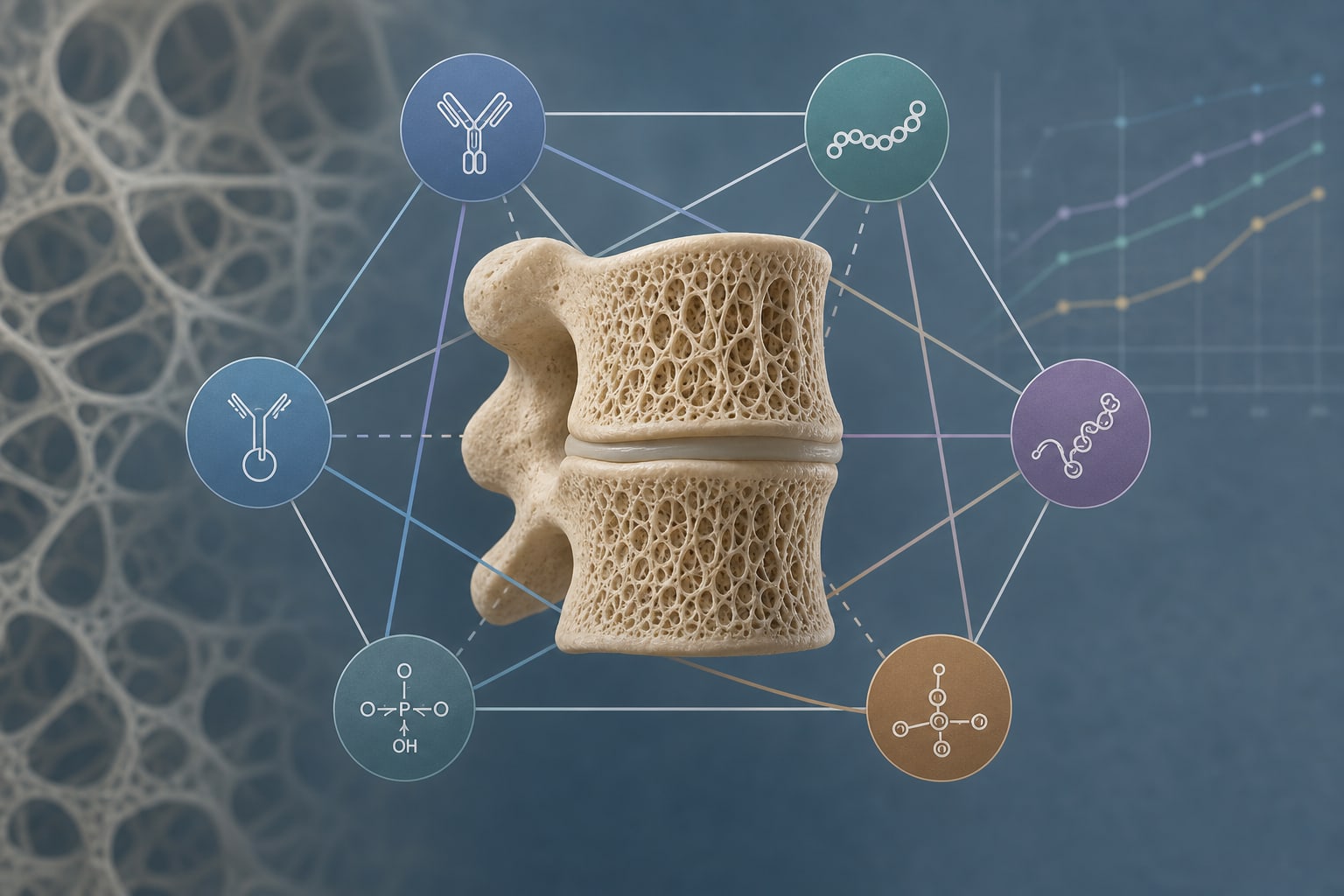
Clinical Scorecard: Uridine Suppresses ROS-Driven Osteoclast Differentiation and Mitigates Osteoporosis Through PI3K/Akt–FoxO Pathway Modulation
At a Glance
Category
Detail
Condition
Osteoporosis characterized by excessive osteoclast activity and bone degradation
Key Mechanisms
Uridine modulates PI3K/Akt–FoxO pathway to reduce ROS accumulation, suppress NFATc1 activation, and inhibit osteoclast differentiation
Target Population
Primarily postmenopausal women and individuals at risk of osteoporosis due to estrogen deficiency
Care Setting
Preclinical research with potential translation to clinical management of osteoporosis
Key Highlights
Uridine levels decline significantly during RANKL-induced osteoclast differentiation.
Exogenous uridine supplementation suppresses osteoclast development and bone resorptive function in vitro and mitigates bone loss in ovariectomized mice.
Assess osteoclast activity and bone microarchitecture deterioration in patients with osteoporosis risk factors.
Consider metabolic profiling including pyrimidine metabolites such as uridine in research settings.
Management
Explore uridine supplementation as a potential therapeutic strategy to inhibit osteoclast differentiation and bone resorption.
Continue use of established antiresorptive agents (bisphosphonates, RANKL inhibitors) while investigating novel metabolic regulators.
Monitoring & Follow-up
Monitor bone density and microarchitecture improvements following therapeutic interventions.
Evaluate biomarkers of oxidative stress and osteoclast activity to assess treatment efficacy.
Risks
Long-term safety and efficacy of uridine supplementation require further clinical validation.
Potential adverse effects of current antiresorptive therapies necessitate development of safer alternatives.
Patient & Prescribing Data
Preclinical mouse model of postmenopausal osteoporosis (ovariectomized mice)
Uridine administration improved trabecular bone microarchitecture, reduced osteoclast burden, and mitigated bone loss without reported adverse effects in the animal model.
Clinical Best Practices
Target osteoclast differentiation pathways, including metabolic and redox signaling, for comprehensive osteoporosis management.
Incorporate metabolic modulators such as uridine to complement existing therapies aiming to restore redox balance and inhibit osteoclastogenesis.
Use multi-omics approaches to identify novel biomarkers and therapeutic targets in osteoporosis.