Identification of key vaginal microbial signatures and immune remodeling associated with HR-HPV clearance following Kushen Gel treatment: a longitudinal analysis - Scorecard - MDSpire
Advertisement
Identification of key vaginal microbial signatures and immune remodeling associated with HR-HPV clearance following Kushen Gel treatment: a longitudinal analysis
Clinical Scorecard: Characterization of Vaginal Microbial Profiles and Immune Changes Linked to HR-HPV Clearance After Kushen Gel Treatment: A Longitudinal Study
At a Glance
Category
Detail
Condition
High-risk human papillomavirus (HR-HPV) infection
Key Mechanisms
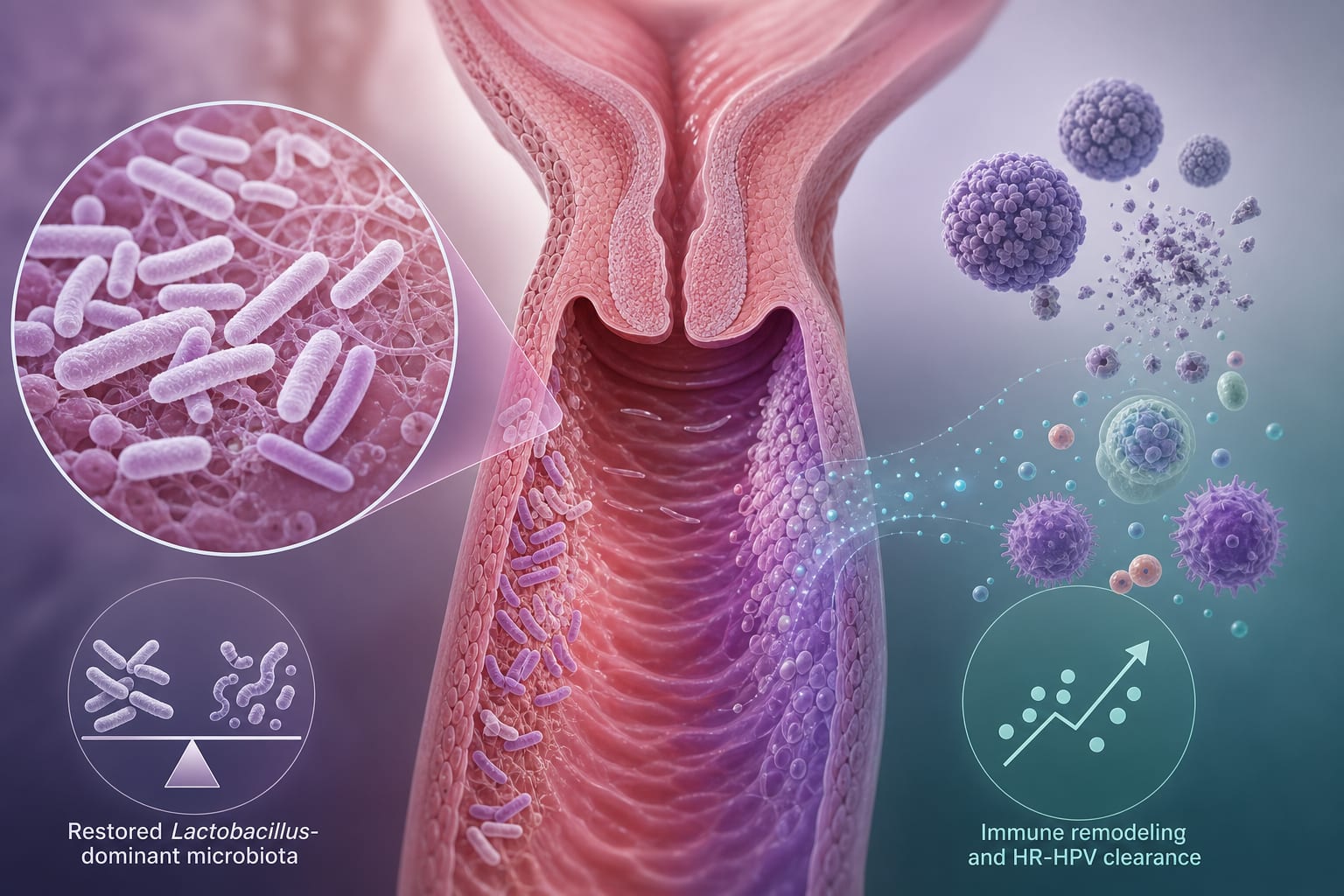
Kushen Gel treatment promotes microbial remodeling and immune shifts, enhancing HR-HPV clearance.
Target Population
Women with persistent HR-HPV infection
Care Setting
Clinical research setting
Key Highlights
Kushen Gel treatment resulted in an 82.9% HR-HPV clearance rate after three menstrual cycles.
Significant reduction in vaginal pH from 4.85 to 4.12 post-treatment.
Post-treatment showed a shift to a Lactobacillus-dominant microbiome.
Pro-inflammatory cytokines IL-8, IL-6, and TNF-α significantly decreased.
Anti-viral cytokine IFN-γ levels increased significantly in responders.
Guideline-Based Recommendations
Diagnosis
Laboratory-confirmed positive HR-HPV DNA for ≥12 months.
Management
Kushen Gel treatment for HR-HPV clearance and vaginal dysbiosis.
Monitoring & Follow-up
Assess vaginal pH and Nugent scores alongside HR-HPV status.
Risks
Persistent HR-HPV infection is associated with cervical carcinogenesis.
Patient & Prescribing Data
Women with persistent HR-HPV infection.
Kushen Gel shows promise in enhancing HR-HPV clearance and restoring vaginal microbiome balance.
Clinical Best Practices
Monitor cytokine profiles to assess immune response to treatment.
Evaluate changes in vaginal microbiota composition post-treatment.
Brief GPT-4o chatbot conversations increased parents' HPV vaccination intentions immediately following exposure, but public health materials showed more durable effects, and no intervention increased self-reported vaccination uptake.