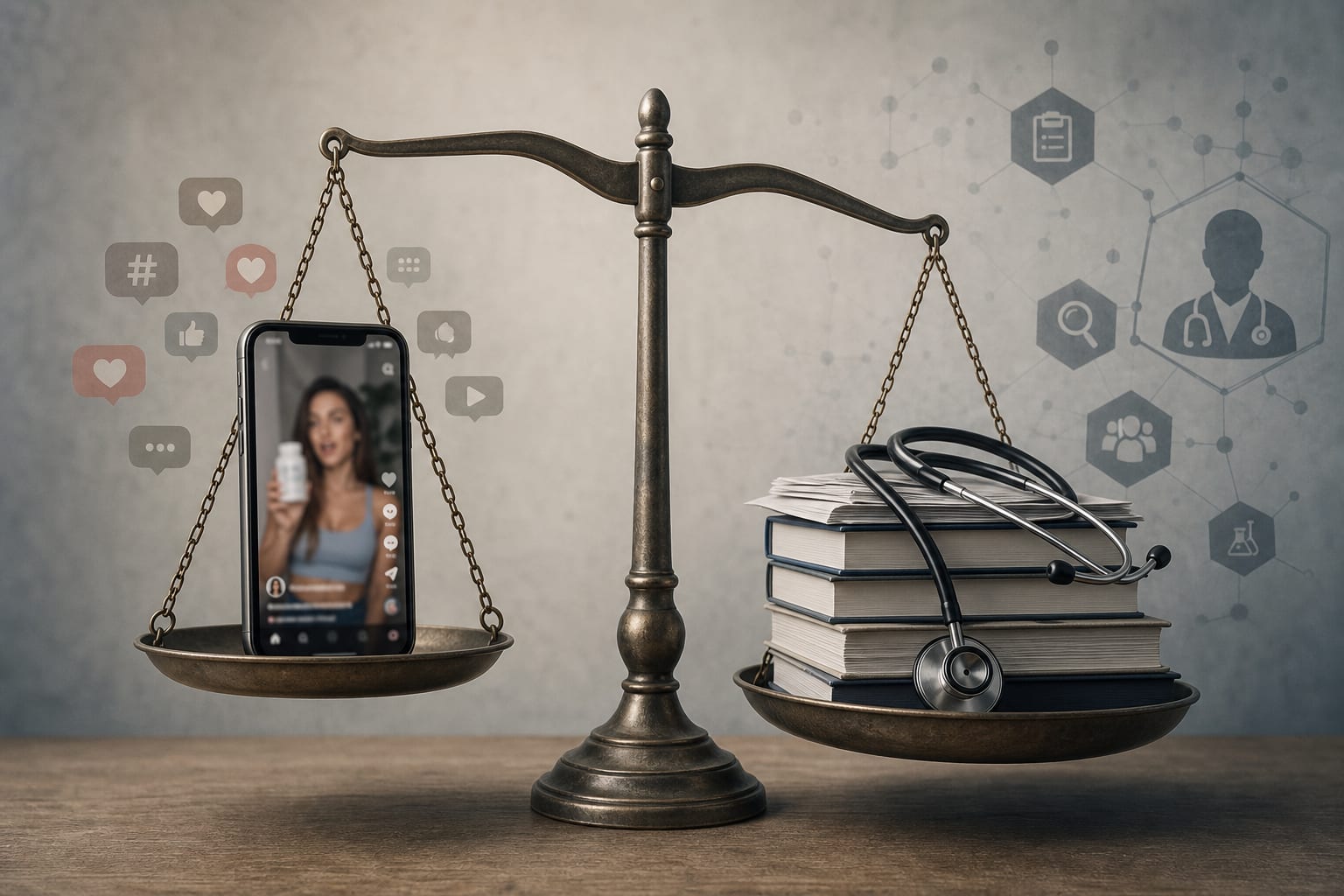
Sharing Our Patients with Influencers: Practicing Medicine in a Social World
By
Barry R. Meisenberg
June 22, 2026
Clinical Scorecard: Collaborating with Social Media Influencers: Navigating Medical Practice in a Digital Age
At a Glance
Category Detail
Condition Influence of Social Media on Healthcare Key Mechanisms Erosion of traditional medical authority and trust due to non-conventional health influencers. Target Population Patients seeking health information and guidance. Care Setting Clinical practice and patient interactions.
Key Highlights
The rise of non-traditional health influencers challenges conventional medical authority. Trust in physicians and hospitals has declined post-pandemic. Patients often turn to social media for health advice, sometimes disregarding evidence-based practices. The doctor-patient relationship can become adversarial due to conflicting health information. Successful doctoring requires building trust and educating patients amidst competing narratives. Guideline-Based Recommendations
Diagnosis
Management
Engage with patients about their sources of health information in a non-judgmental way. Monitoring & Follow-up
Risks
Potential erosion of trust in physician-patient relationships due to social media influence. Patient & Prescribing Data
Patients influenced by social media health advice.
Alternative and complementary medications are widely used, with some patients favoring non-evidence-based treatments.
Clinical Best Practices
Improve the effectiveness of social media offerings by medical practitioners. Recommit to being a trusted source of health information. Related Resources & Content