Single-cell and spatial multi-omics reveal estrogen-mediated vaginal wall microenvironment remodeling and a perivascular reparative niche in postmenopausal pelvic organ prolapse - Scorecard - MDSpire
Advertisement
Single-cell and spatial multi-omics reveal estrogen-mediated vaginal wall microenvironment remodeling and a perivascular reparative niche in postmenopausal pelvic organ prolapse
Clinical Scorecard: Single-cell and spatial multi-omics analyses uncover estrogen-driven remodeling of the vaginal wall microenvironment and a reparative niche surrounding blood vessels in postmenopausal pelvic organ prolapse
At a Glance
Category
Detail
Condition
Pelvic Organ Prolapse (POP)
Key Mechanisms
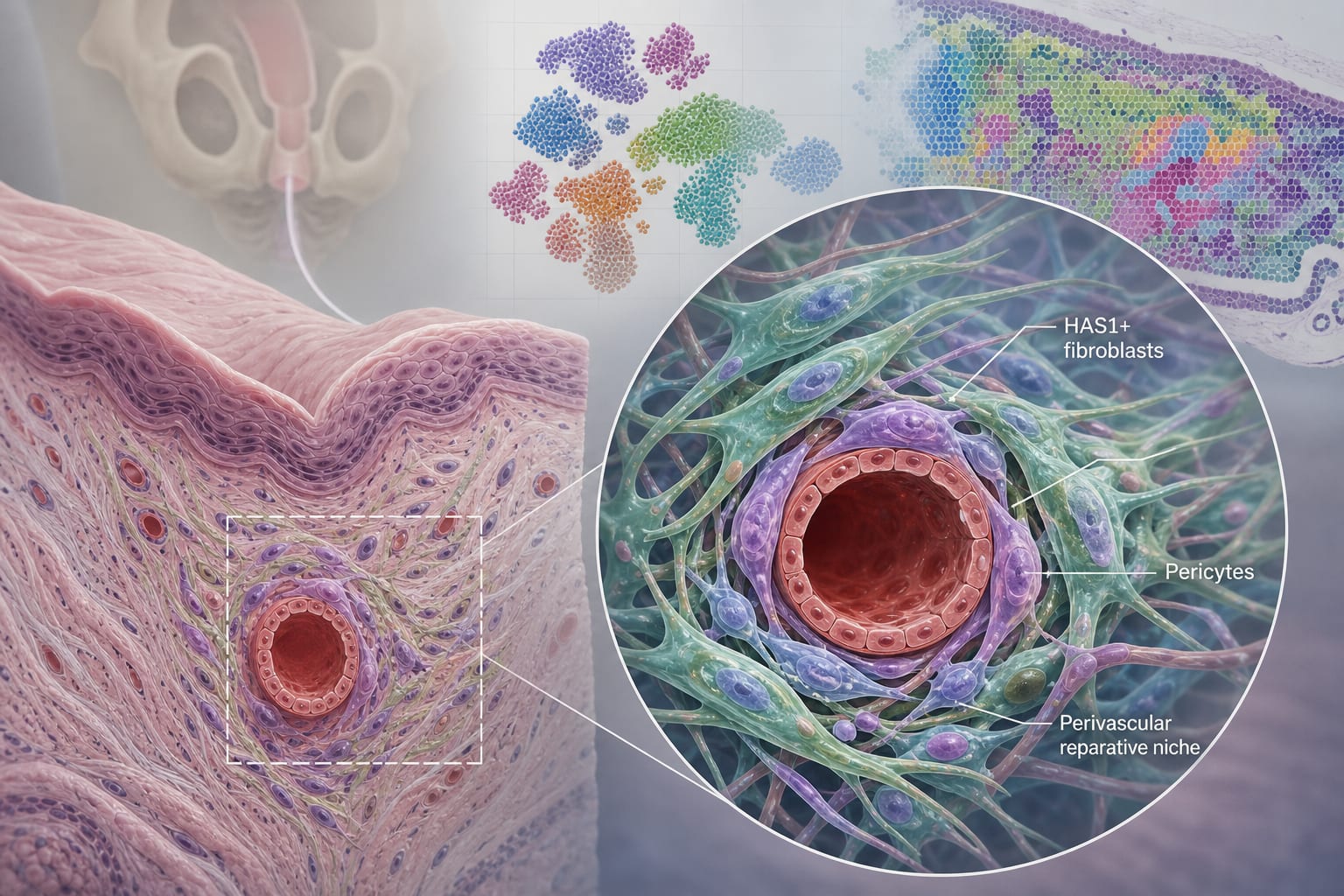
Estrogen drives selective expansion and spatial redistribution of fibroblasts, forming a structured perivascular niche.
Target Population
Postmenopausal women with pelvic organ prolapse
Care Setting
Clinical management of pelvic floor disorders
Key Highlights
Estrogen influences the spatial localization of fibroblast subpopulations in the vaginal wall.
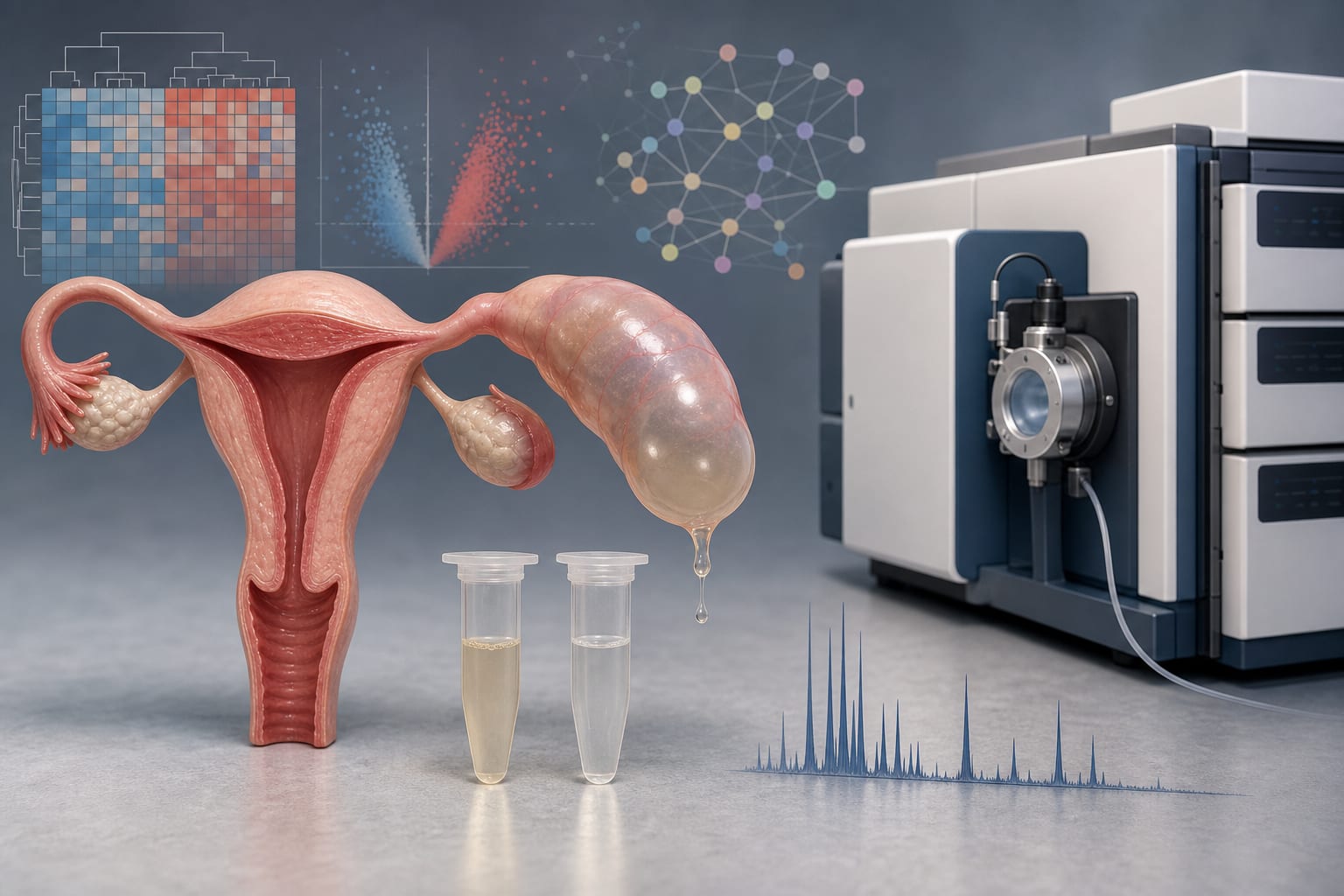
The study utilizes single-cell RNA sequencing and spatial transcriptomics for analysis.
Estrogen enhances fibroblast-pericyte crosstalk and activates pro-repair signaling cascades.
Clinical outcomes of local estrogen treatment for POP are inconsistent.
The research provides a theoretical basis for developing targeted therapies for POP.
Guideline-Based Recommendations
Diagnosis
Assess pelvic organ prolapse symptoms and anatomical severity.
Management
Consider local estrogen therapy for improving vaginal mucosal status.
Monitoring & Follow-up
Evaluate treatment response and symptom relief in patients receiving estrogen therapy.
Risks
Surgical intervention carries a risk of recurrence in POP patients.
Patient & Prescribing Data
Postmenopausal women experiencing pelvic organ prolapse.
Local estrogen may improve vaginal tissue thickness but has limited benefits for long-term prolapse outcomes.
Clinical Best Practices
Utilize advanced imaging techniques to assess cellular composition in the vaginal wall.
Integrate findings from single-cell analyses into clinical management strategies.