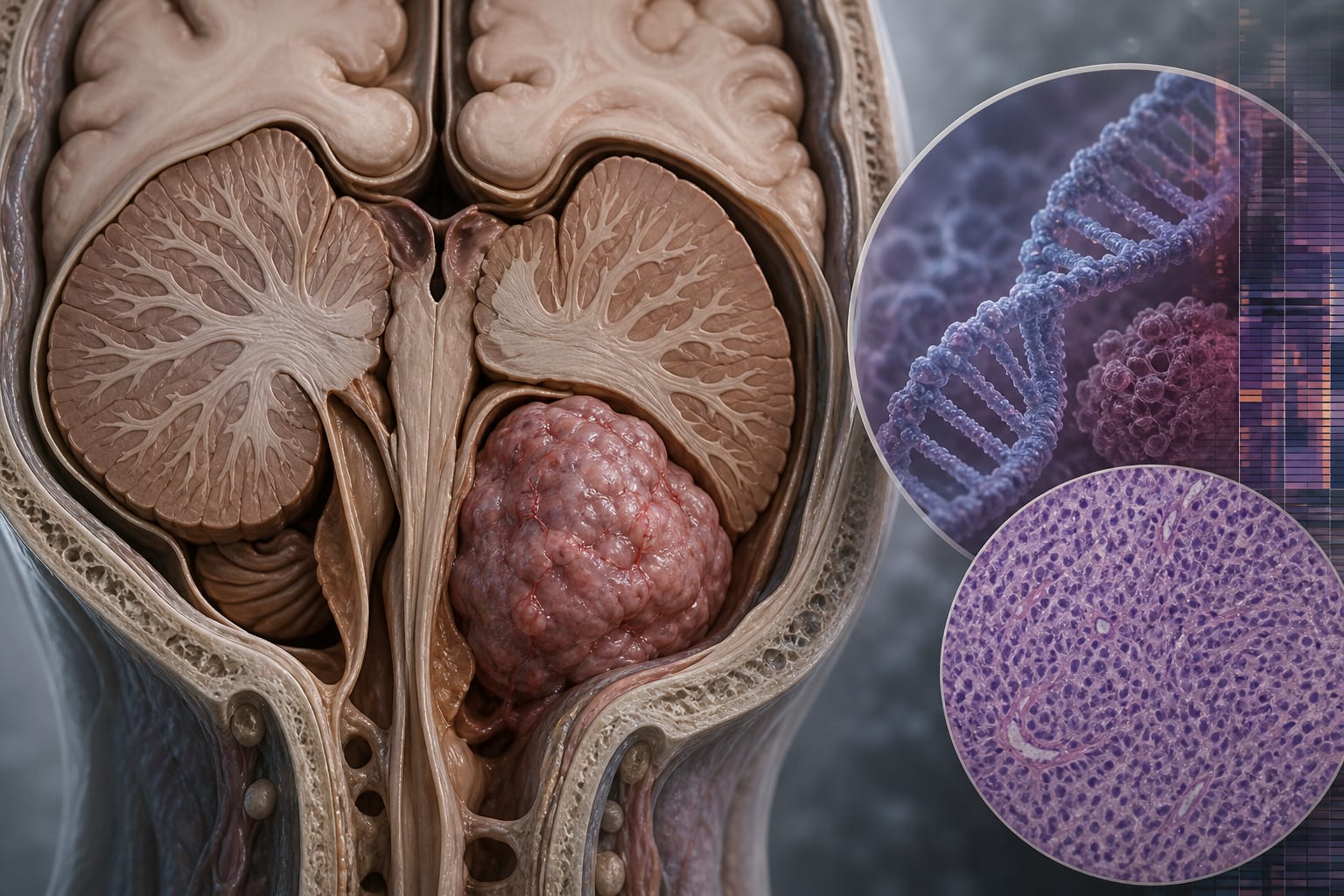
Posterior fossa ependymoma: a comprehensive review of molecular classification, management guidelines, and clinical outcomes (Part I of ependymomas across compartments) - Scorecard - MDSpire
Conexiant’s news site is now MDSpire News. Learn more
Advertisement
Ependymomas in the Posterior Fossa: An In-Depth Analysis of Molecular Classification, Treatment Protocols, and Clinical Outcomes (Part I on Ependymomas in Various Locations)
Clinical Scorecard: Ependymomas in the Posterior Fossa: An In-Depth Analysis of Molecular Classification, Treatment Protocols, and Clinical Outcomes (Part I on Ependymomas in Various Locations)
At a Glance
Category
Detail
Condition
Ependymomas in the posterior fossa
Key Mechanisms
Molecular classification into Posterior Fossa ependymoma group A (PFA) and Posterior Fossa ependymoma group B (PFB) based on epigenetic and genomic characteristics.
Target Population
Pediatric patients, particularly those with posterior fossa ependymomas.
Care Setting
Neurosurgical and oncological management in pediatric populations.
Key Highlights
Ependymomas represent approximately 5% of pediatric CNS tumors, with two-thirds in the posterior fossa.
Molecular profiling has shifted WHO classification from histologic to integrated molecular entities.
PFA tumors are linked to poorer outcomes and specific genomic alterations like 1q gain and/or 6q loss.